Fieldwork
On-site Research Project
On-site Research Project - Canada Project (Guest)
2025
Aug. 25 - Sep. 5, 2025
Why did you choose to join ‘Canada Project’?
I had lived in the United States for several years, and my experiences with school life and daily living there sparked my interest in coexistence with foreigners. I wanted to pursue this as my research topic in university. The Faculty of Policy Science offered an On-Site Research Project enabling overseas research. Among its projects was the Canada Project, focused on immigration as its theme, so I chose the Canada Project. I also applied because it presented an opportunity to engage with Policy Science students from a Japanese-based.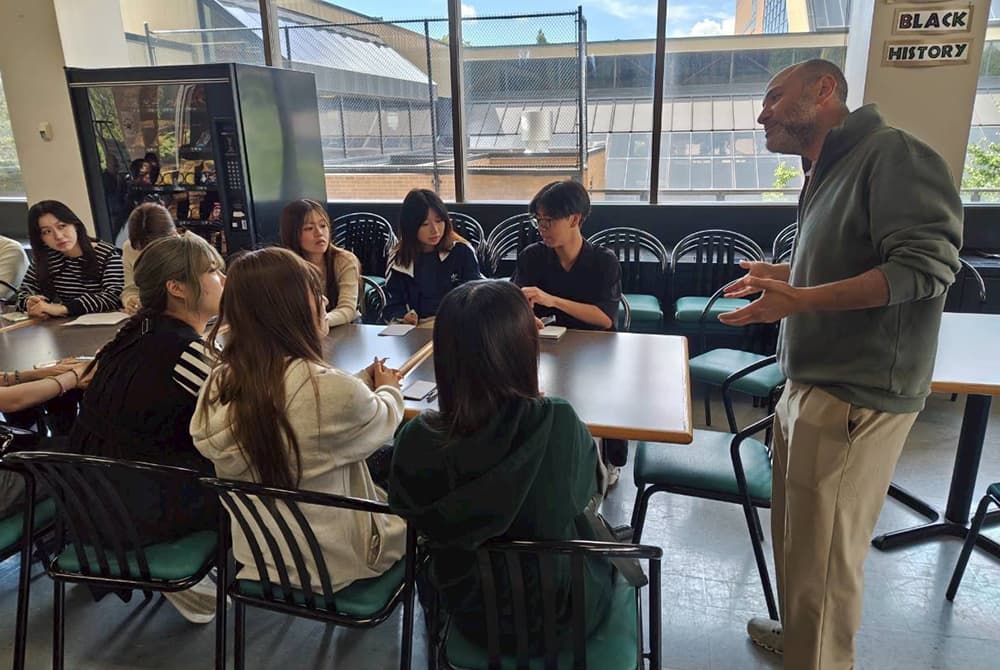
Photo taken during the visit to Toronto District School Board on 9/3
What was the research theme of your group? How did you decide on that research theme?
Our research theme was: “A Study on Canada’s Efforts to Overcome Language Barriers for Immigrants:
A Comparative Analysis of Policies in Ontario and Quebec’s Elementary Education.” We chose this as our research topic because almost everyone among the Canada project members is interested in both immigrants and education as a general theme. We combined both and established a theme, like how the education, particularly second language education for immigrant children, is in Canada. We went to Ontario and Quebec during our On-site Research Project, so we compared these two provinces to see whether they have different, unique policies, etc.
How did you prepare for the field work?
We prepared two things before going to Canada. One is to read articles regarding second language education for immigrant children living in Canada, to understand their educational policy and framework. We found out the approaches each province takes to the students, like the class allocation, the budget, teachers’ help, the criteria, etc. Other preparations are for on-site field work. We decided to visit the Board of Education in each province instead of going to school because schools were closed due to the summer break, which was the time when we visited. Thus, we sent an email to both school boards and prepared some questions to ask if what we found is true, or if not, how things work differently.
How was the fieldwork conducted? (ex. Itinerary, main activities during the field trip etc.)
For Quebec, we were unable to adjust the common time with the school board called Centres de services scolaires (CSS), so we asked questions to them via email only, with no in-person meeting. They provided us with important and detailed materials that they have been using for immigrant children in Quebec. For Ontario, we were able to visit the school board, called the Toronto District School Board (TDSB), on 9/3. We had a meeting with Mr. Omar Awara, who is an international manager of the Toronto District School Board. Throughout the 1-hour discussion, we could understand how TDSB helped the immigrant children’s school life and English improvement with warm support.What was the most memorable learning experience throughout the field work?
The most memorable learning experience throughout the field work was the significant difference in language support for immigrant children between Canada and Japan. For example, in Toronto, immigrant students are placed in ESL (English as a Second Language) or ELD (English Language Development) programs where dedicated teachers directly instruct them in English. Japan lacks such programs; immigrant students are placed in regular classes without any specific support or designated programs. This has created a major problem for the children and for Japan's educational policy as well. By Mr. Awara explaining their programs, I strongly felt that Japan must learn from Canada with its advanced language education systems and make improvements.
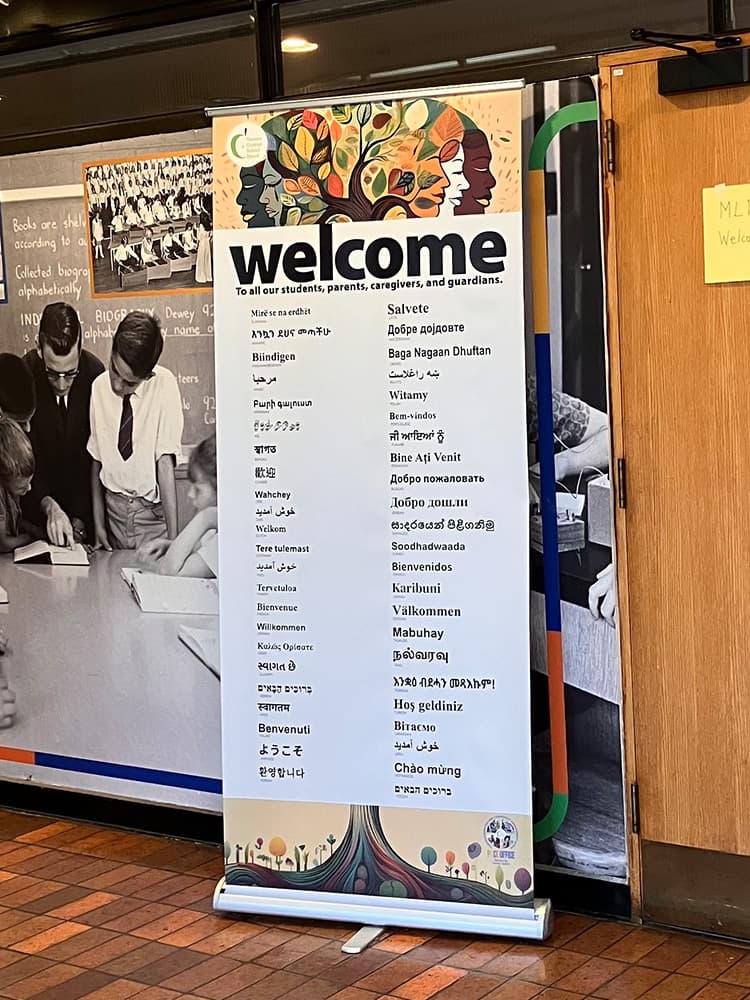
A thoughtful gesture only possible from a Canadian school board that values different backgrounds, nationalities, and languages.