

People
Voice
Current Students
Moe Thae Nge Nge
College of Policy Science, Community and Regional Policy Studies Major (CRPS)
from Myanmar
Profile
Scholarships Received:
- Japanese Government (MEXT) Scholarship (University Recommended Scholars, Special Type)
High School:
Basic Education High School No. 1 Dagon
Why did you choose to study in CRPS?
During my middle and high school years, I was often drawn to discussing social issues, despite being a STEM student. This interest led me to study Political Science at a university in Myanmar for one semester. During that time, I also participated in a grant application process where we had to conduct research. That experience deepened my curiosity about how policies are made and what factors influence them.
I became more interested in understanding not only political theories but also the policy-making process itself, like how ideas are turned into actual public policies and what social conditions shape them. While browsing through different university programs, I came across the CRPS program at Ritsumeikan University. It immediately caught my attention because it aligned perfectly with my interests.
What attracted me most was that CRPS offers many discussion-based classes, which I believe are a great way to learn through exchanging ideas with others. I was also very intrigued by the on-site research programs that students conduct in their first year, as they provide hands-on experience to apply what we learn in class. The university also offer several scholarships such as Tuition Reduction Scholarships and MEXT scholarship. Another appealing point was the university’s location, especially the Osaka campus, as it is easily accessible and close to cities like Kyoto, Shiga, Kobe, and Wakayama, making it a convenient and lively environment to study in.
What is your life in CRPS / Ritsumeikan like?
The most unforgettable / interesting course so far and why?
Actually, there are a few courses that I really liked, but if I have to choose one, it would be a course called Vision Building Special Lecture Ⅱ by Professor Narita Hiroki. The course focused on political philosophy and public policy. Throughout the course, the professor provided reading materials on various topics such as euthanasia, hate speech, affirmative action, distributive justice, and so on. We had very interesting discussion topics in each class, especially since we had a diverse student body, the topics and perspectives that students brought up were really fascinating depending on their cultural background. When I was taking that course, I was able to explore my interests through many of the discussions, and it helped me gain a better understanding of the basic concepts and arguments of political philosophy and public policy.What is the most important learning / finding in your study so far?
The most important learning experience in my studies so far has been taking computing-related courses at the university. Since I’m not very good at STEM-related subjects, I struggled a lot at first when I started taking computing classes. Among them, two classes left a strong impression on me: Spatial Analysis and Policy Information Processing II. Through the Spatial Analysis class, I learned how to use ArcMap and create maps, which I found very useful for my future research. In the Policy Information Processing II class, I was introduced to R programming, that teaches about quantitative research methods such as data processing, data analysis, and graphics, which I will be using for my thesis. Taking these classes has helped me a lot in preparing for my future studies and given me useful tools that I can apply throughout my academic journey.
What is your daily life like? (class, circles, part-time jobs, friends, dormitory life)
As a third-year student, my schedule is packed almost every day. My weekdays are a mix of classes and social activities. I usually begin my classes from the second period, so I head to the university around 10 a.m. Between classes, I often spend time at the library or attend meetings during lunch breaks. In the afternoon, I either continue with my third and fourth period classes or attend my shift or work on events at Beyond Border Plaza (BBP). After school, I like to have dinner or study together with friends, and sometimes I go for a run around Ibaraki. I really appreciate that Ibaraki is a very safe and peaceful place to live.
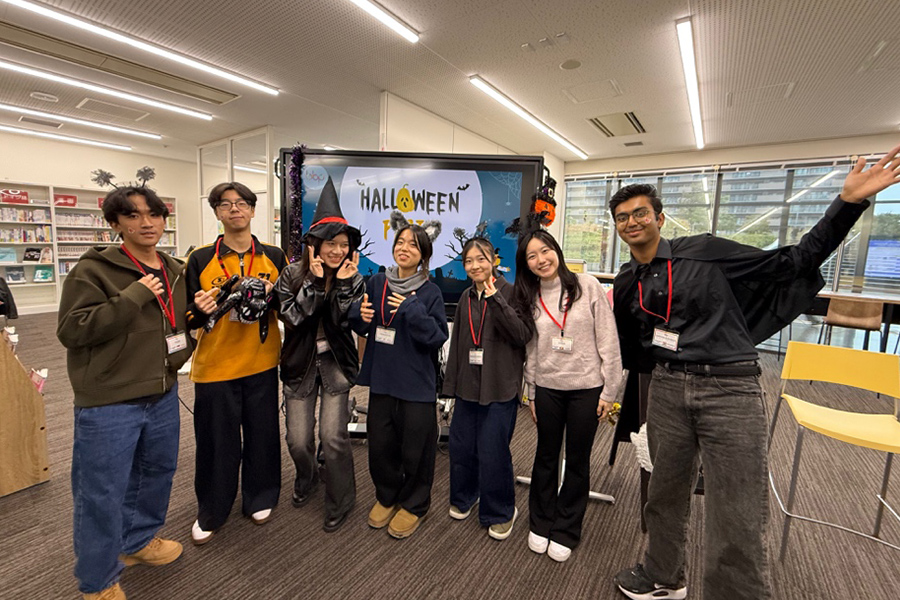
Since last semester, I have also started my thesis seminar, which takes up a significant amount of my time. Outside the classroom, I am involved in two student organizations: Beyond Border Plaza (BBP), and the Peer Mentor Support Group (PMSG), both play a big role in my student life at Ritsumeikan. At BBP, we celebrate diversity by hosting several cultural exchange events and social events that bring international and domestic students together.
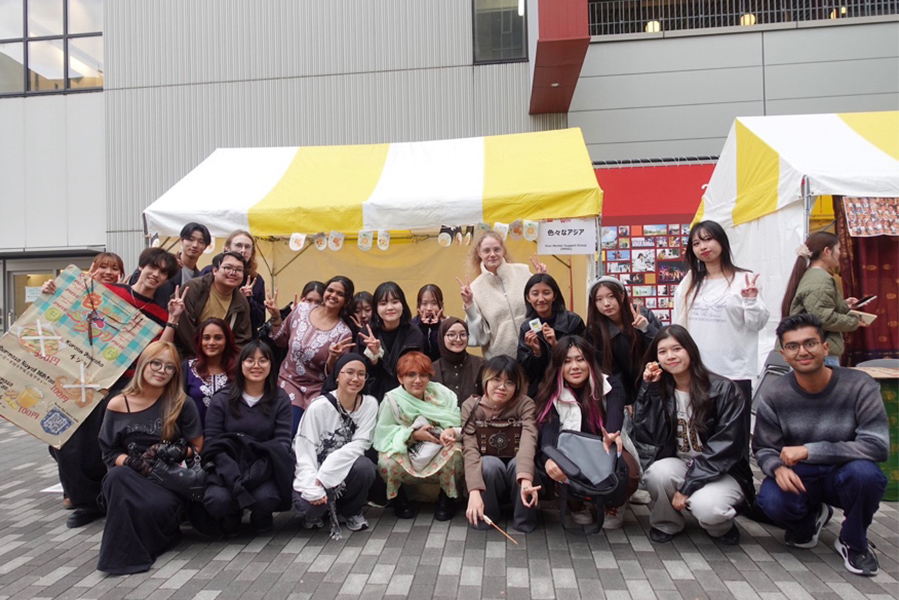
In PMSG, which is like a student council for CRPS students, we organize various events to help CRPS students connect and support one another. These include bonding activities, academic support for first-year students, and cultural exchange events with Japanese Policy Science students, since we all belong to the same department. Recently, PMSG also took part in Global Week, an annual festival at Ritsumeikan, held every November. For this event, we ran a booth where we sold Burmese tea, Vietnamese ginger tea, and Korean pancakes, representing the diverse backgrounds within our community.
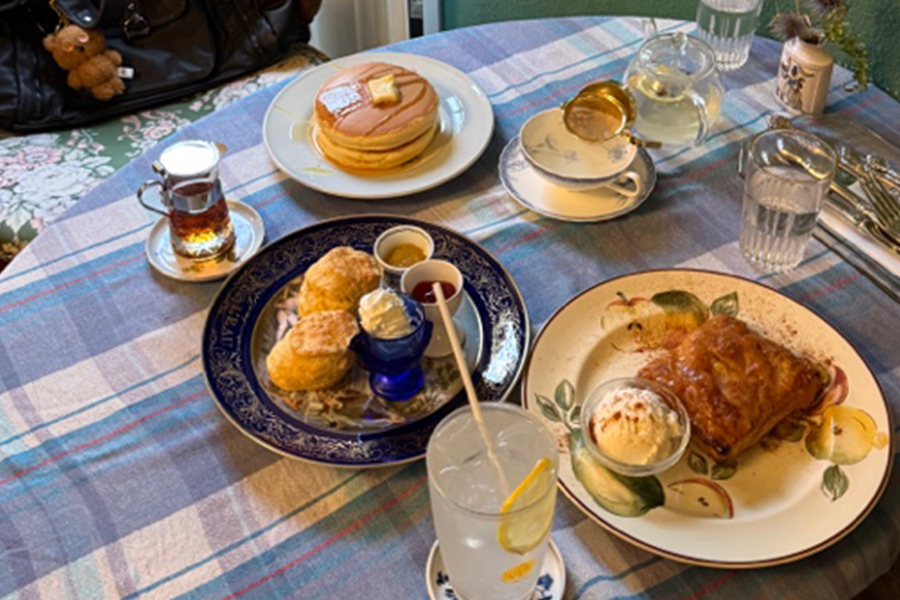
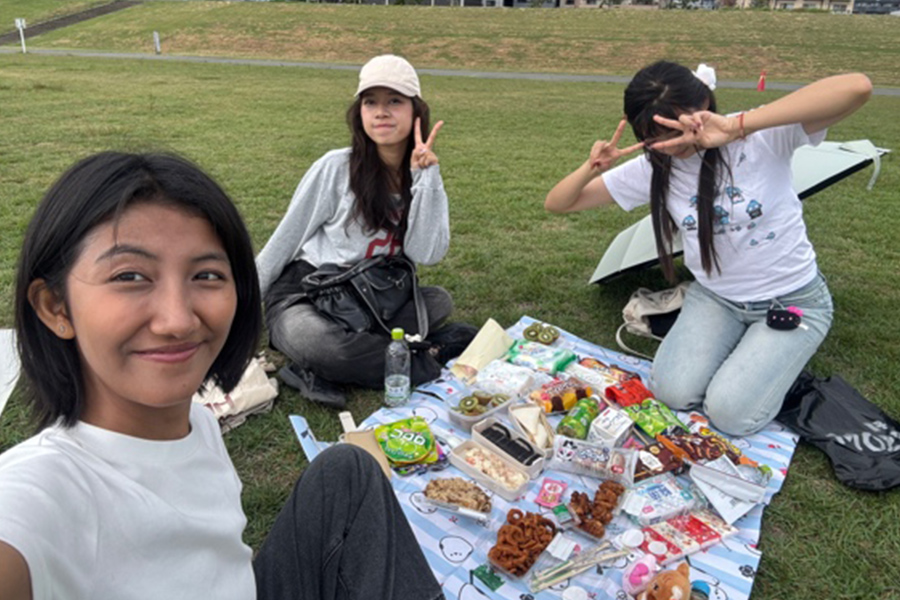
On weekends, I usually teach English conversation classes to both kids and adults at my part-time job in Ibaraki. When I’m not working, I love exploring Kyoto or Osaka with my friends.
What is it like to be an international student in Japan?
Being an international student has been both a challenging and rewarding experience for me. Every day, I get to encounter different cultures and customs. As an international student, you don’t just experience Japanese culture, but also the diverse cultures and beliefs of other international students from various backgrounds. Being in this environment has taught me a lot and helped me grow as a person.
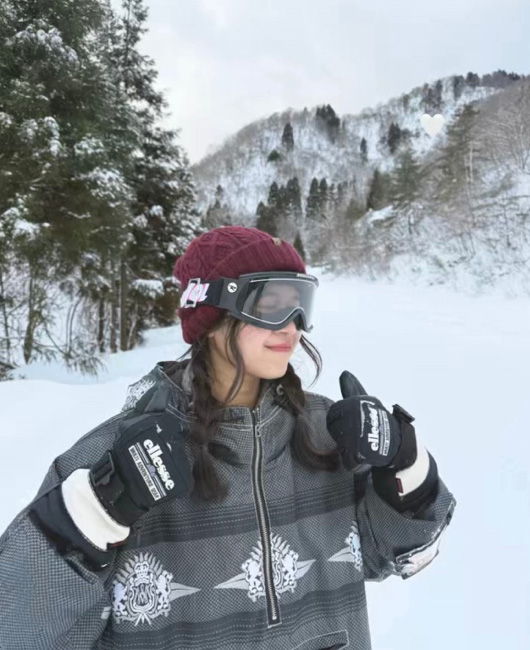
When I first arrived, I used to feel anxious and nervous about meeting new people and interacting with others. However, studying in such a diverse and open environment has helped me overcome those fears and become more confident. Over time, I’ve realized that studying abroad is not only about attending classes but also about exploring the country and learning beyond the classroom. I love traveling around in Japan, such as going for snowboarding in winter, visiting traditional villages like Shirakawago or visiting onsen city, Beppu. These experiences made my time as an international student more memorable and meaningful.
What are your plans after CRPS?
For now, I’m planning to go to graduate school after completing my bachelor’s degree at Ritsumeikan. If possible, I would like to study in another country, as I want to experience living in different cultures and broaden my worldview. In graduate school, I hope to continue studying public policy, with a particular focus on social welfare. My goal is to become proficient in this field so that I can contribute to society in meaningful ways through the knowledge and skills I gain.
How would You recommend CRPS?
Don’t be afraid to start something new and be open to any opportunities coming your way! CRPS is a small but diverse community with a supportive environment where you can freely share your thoughts and learn from others at the same time. Living in a new country may come with challenges, but it also brings excitement and personal growth!