Prospective Faculty
Expanding the sphere of human habitation and activity:
My desire to contribute to the construction of a lunar base
PROFILE
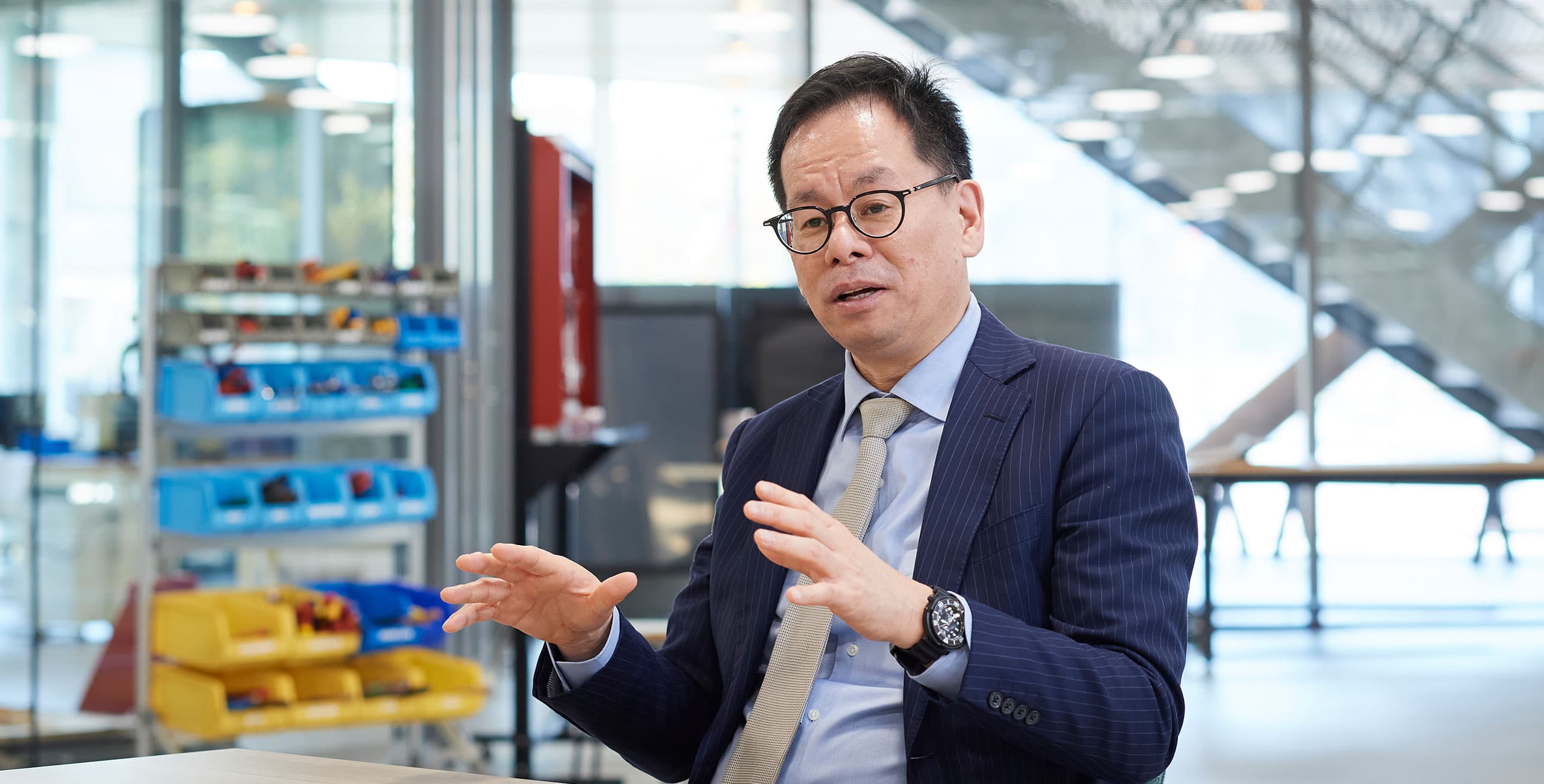
Kobayashi graduated from the Department of Civil Engineering, College of Science and Engineering, Ritsumeikan University in 1998. Remaining at Ritsumeikan University, he completed a master’s degree Major in Eco-Environmental Civil Engineering in 2000 and a doctoral degree Major in Science and Engineering in 2003. He holds a Doctor of Engineering.
After serving as Research Associate Assistant and Assistant Professor in the Faculty Council of Engineering at Kyushu University (2004~), a Visiting Researcher at the Colorado School of Mines (2009~), and Associate Professor at the University of Fukui (2011~), he assumed his current position in 2017.
His specializations are civil engineering and geotechnical engineering. He has served as a Road Disaster Prevention Doctor / TEC-FORCE Advisor for the Ministry of Land, Infrastructure, Transport and Tourism, a member of the Road Earthworks Committee of the Japan Road Association, Chair of the Construction Robotics Committee of the Japan Society of Civil Engineers, Project Manager for the Cabinet Office’s 3rd SIP Smart Infrastructure Project, and a member of JAXA’s International Space Exploration Committee.
His hobbies include visiting National Treasures, and he often visits museums while traveling for work. He is drawn not only to Buddhist statues and paintings, but also to finely crafted traditional arts such as lacquerware. He is a fan of Taro Okamoto and enjoys recreating recipes from YouTube on his days off.
INDEX
- Tell us about your research
- For humanity to venture out to the Moon, the research findings and technologies developed here on Earth will be indispensable.
- What can students learn in your laboratory, and what kinds of research topics can they pursue?
- What kinds of careers can students who have studied in your lab expect to pursue after graduation?
- What kind of students would you like to join your laboratory?
- Message for prospective students
Tell us about your research
My specialty is civil engineering, particularly geotechnical engineering, which deals with soil.
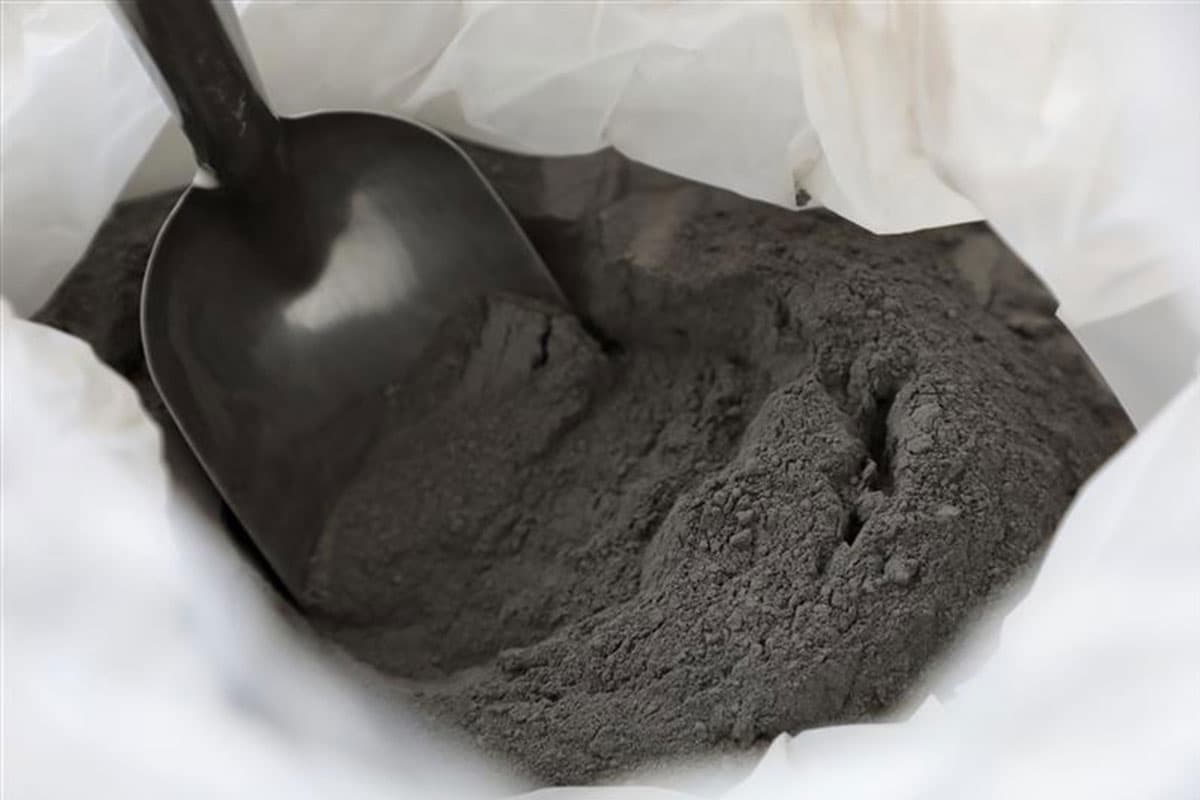
Since my student days, I have mainly studied regolith, or the soil on the surface of the Moon. Spacecraft (landers) that land on celestial bodies cannot be designed without understanding the properties of the ground at the landing site. The surface could be soft enough to sink into or hard enough to cause a bounce. The same goes for exploration rovers. Currently, I am conducting joint research on the mobility performance, including factors such as climbable slopes, of the crewed pressurized rover that is being jointly developed by JAXA and an automobile manufacturer. This field, which deals with the interaction between machines and soil, is called terramechanics. Although the original focus was on construction and agricultural machinery on Earth, this field is now also essential for the development of machines that operate on the Moon and Mars.
For humanity to venture out to the Moon, the research findings and technologies developed here on Earth will be indispensable.
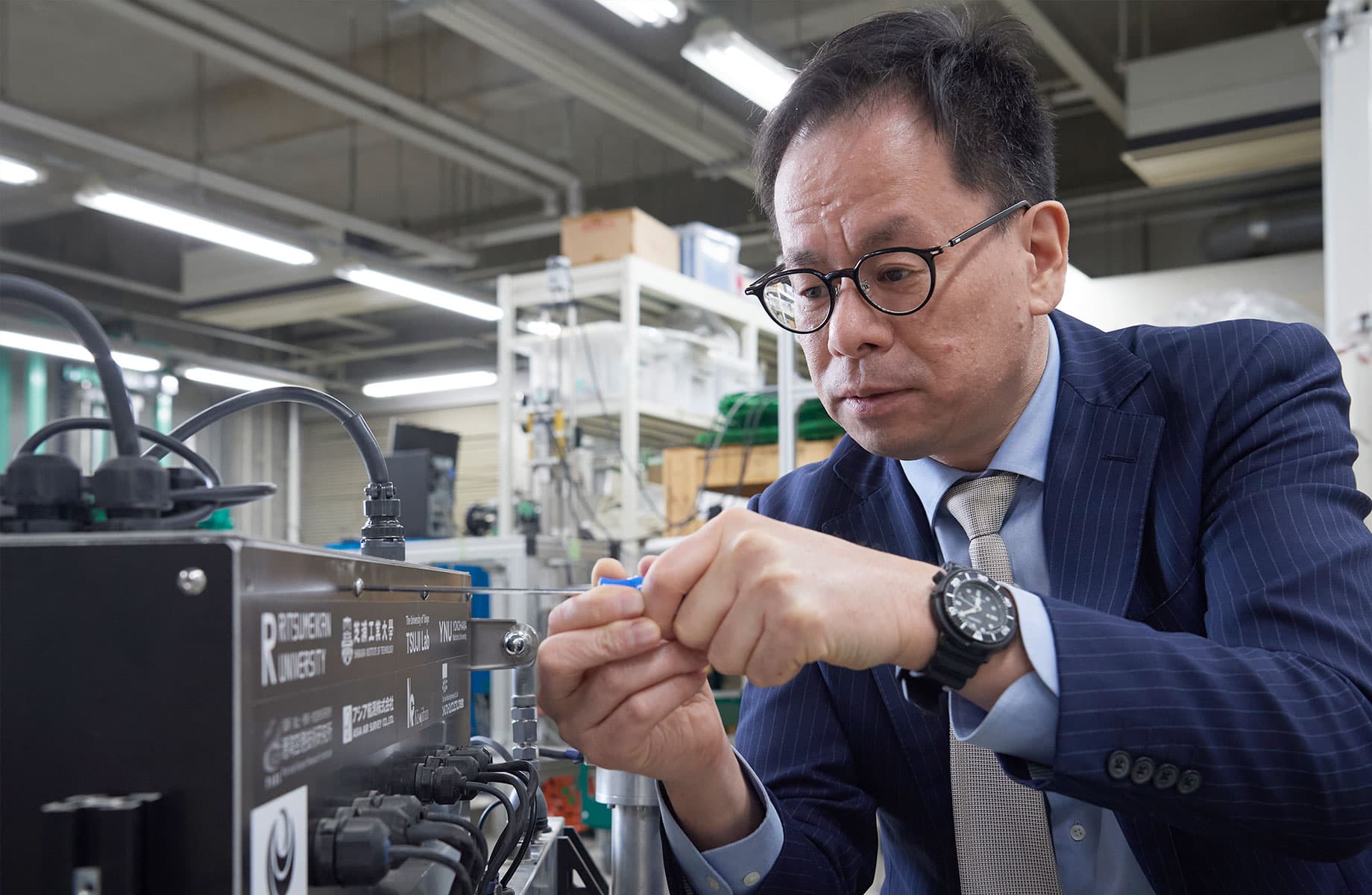
My primary goal is to contribute to the construction of a lunar base. With an eye toward expanding the sphere of human habitation and activity, I aim to help pioneer the infrastructure that will be needed on the Moon. Just as surveying and ground investigation are essential before erecting structures on Earth, the same applies to lunar bases. With a target launch around 2030, we are currently working on the development of a technology demonstrator for conducting surveying and geotechnical investigations on the lunar surface.
Going forward, I would also like to take on the challenge of automating construction machinery for operation on the Moon. In this field, Japan is a global leader on Earth, and it is expected to demonstrate the same strength on the lunar surface and lead the world. Since automation and uncrewed construction machinery are also needed on Earth, I intend to advance my research in collaboration with construction companies and machinery manufacturers. Furthermore, this development requires cooperation across various engineering fields, including information engineering and robotics. I aim to make my laboratory into a hub where faculty members, engineers, and students from diverse disciplines can come together to create new value.
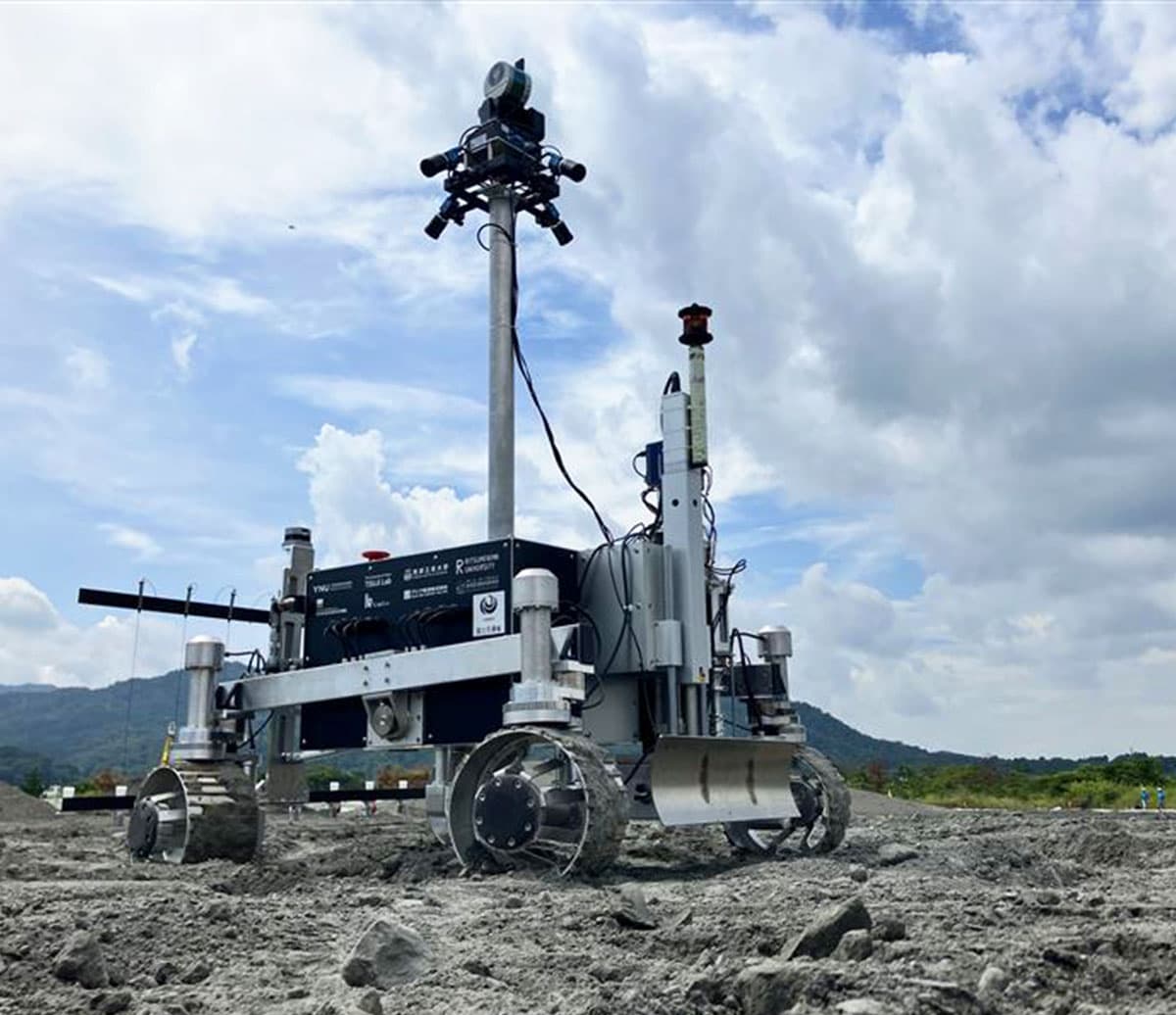
* The rover was developed as part of the Ministry of Land, Infrastructure, Transport and Tourism’s “Space Construction Innovation Project.”
What can students learn in your laboratory, and what kinds of research topics can they pursue?
Students will be expected to participate in actual missions, such as the lunar technology demonstration of the surveying and geotechnical investigation device mentioned above. In addition, we are participating in a JAXA-led mission involving a simple geotechnical investigation device mounted on a lander to be launched to the Moon by a U.S. startup. Students will also be involved in instrument development and data analysis for this mission, which is scheduled for launch in 2027. In the long term, I would like to work with students on research related to lunar base design using geotechnical data obtained from the Moon as well as construction techniques using uncrewed construction machinery.
Through seamless collaboration with JAXA, other universities, private companies, and the Earth & Space Exploration Center (ESEC), students can gain a wide range of experience through participation in real missions.
What kinds of careers can students who have studied in your lab expect to pursue after graduation?
I hope students will succeed as researchers at organizations like JAXA, and I also hope to nurture my successors. While there have been very few researchers in Japan working on space base construction to date, this will undoubtedly become necessary, and I believe opportunities in this area are sure to expand.
I also think our graduates will be able to work in construction companies, as well as in energy and resource companies, general trading companies, think tanks, and consulting firms.
When developing spacecraft, working within a project that brings together many people across many different fields gives you the opportunity to develop skills in integration and management. I believe these are skills that can be applied across all industries, including manufacturing.
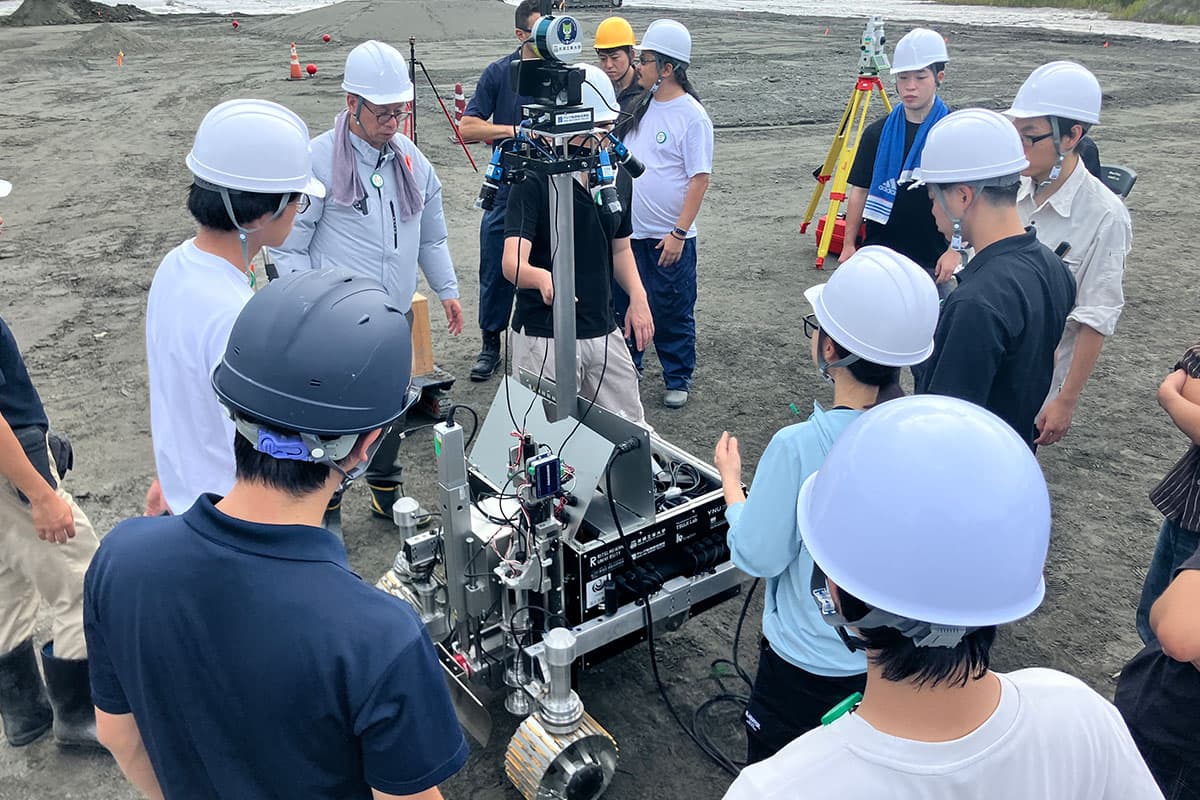
* The rover was developed as part of the Ministry of Land, Infrastructure, Transport and Tourism’s “Space Construction Innovation Project.”
What kind of students would you like to join your laboratory?
Until now, the aim of space exploration has been “going there.” From now on, we will live in an era that asks, “Why go?” and “What will we do there?” I would like to work with people who can think about these questions—those with a frontier spirit who want to create something from nothing with their own hands. We're not looking for any particular specialization. We want people who are passionate about what they do, or who are ready to throw themselves into something wholeheartedly.
For working professionals, I would especially welcome those who want to launch new businesses and lead their own initiatives.
Some people may feel that the space sector is difficult. It is true that a wide range of knowledge is required, from mechanical and electrical systems to control and communications. However, you do not need to know everything. Once you become involved in a spacecraft development project, you will become aware of the knowledge you lack. If you do not have certain knowledge, you will have no choice but to learn it step by step while moving forward, and there will be no time to worry about whether you like it or not. That being said, learning through practice is far more enjoyable than studying in a classroom while wondering how it will be useful, and the speed at which you absorb knowledge is significantly faster.
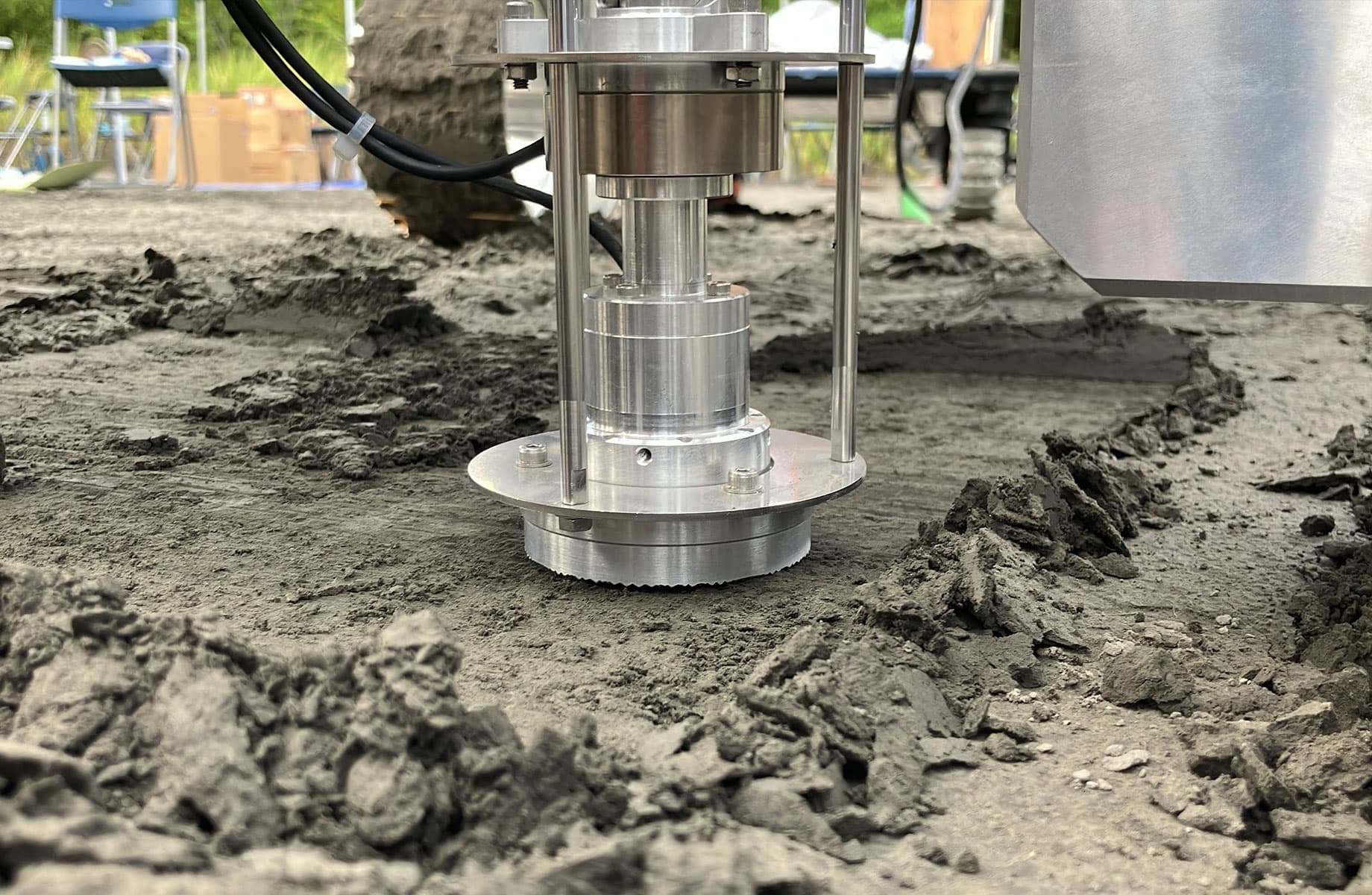
* The rover was developed as part of the Ministry of Land, Infrastructure, Transport and Tourism’s “Space Construction Innovation Project.”