Prospective Faculty
Analyzing Lunar Rocks
to Unravel the Processes Behind Earth’s Formation
PROFILE
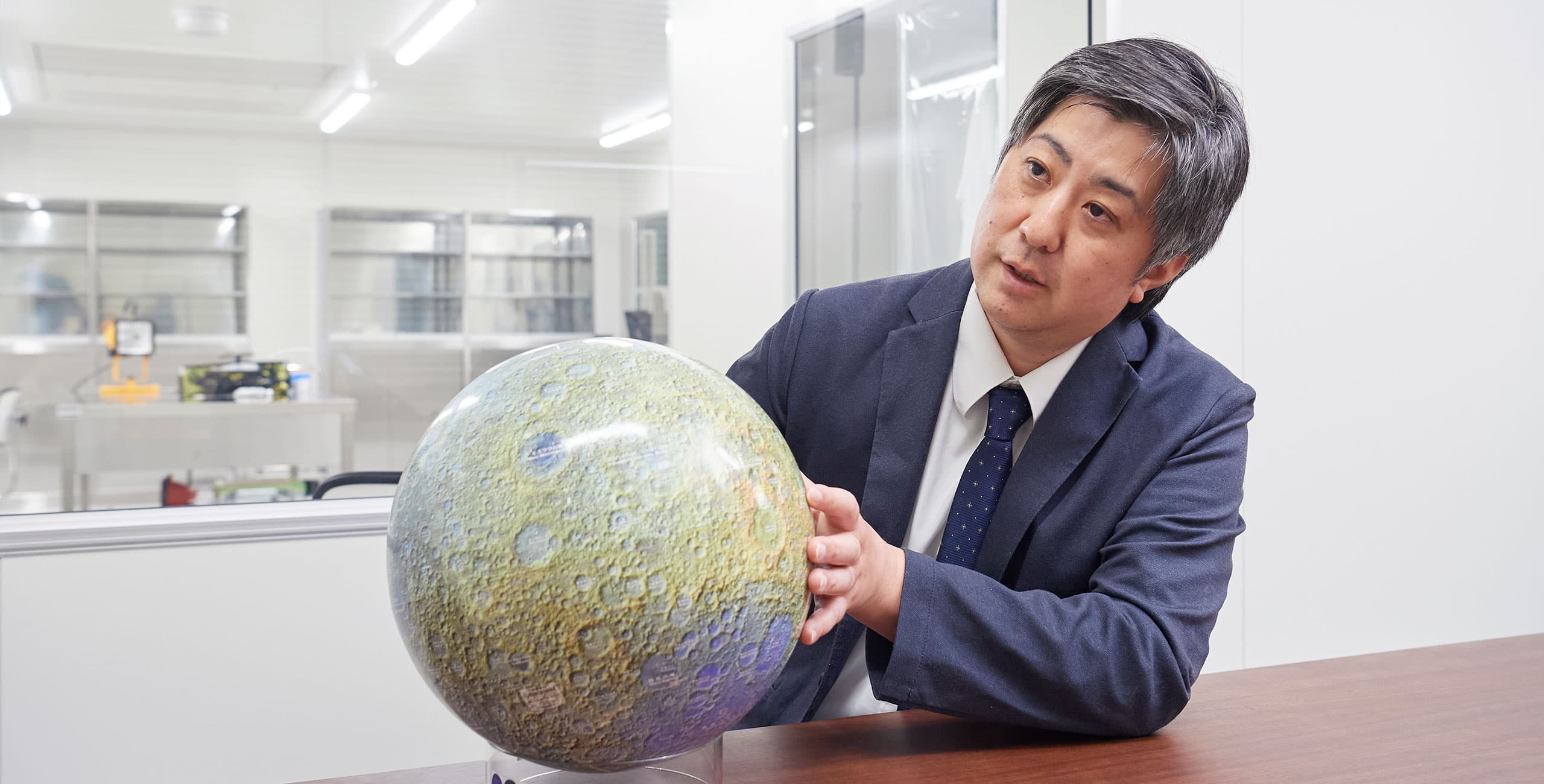
NAGAOKA graduated from the Department of Physics, Faculty of Science and Engineering, Waseda University in 2008. After completing the Master’s Program in Pure and Applied Physics at the Graduate School of Advanced Science and Engineering, Waseda University, in 2010, he completed coursework for the doctoral program in the same field in 2013. He holds a PhD in Science.
After serving as a Research Assistant in the Department of Physics, School of Advanced Science and Engineering, Waseda University (2013~), Senior Researcher at the Waseda Research Institute for Science and Engineering (2016~), JSPS Research Fellow at the Institute of Space and Astronautical Science, JAXA (2018~), Specially Appointed Associate Professor at the Graduate School of Computer Science and Engineering, the University of Aizu, and Research Scientist with the Extreme Natural Phenomena RIKEN Hakubi Research Team, RIKEN Cluster for Pioneering Research, RIKEN (2021~), he assumed his current position in 2023.
His specializations include planetary science, planetary exploration, and radiation and nuclear spectroscopy. He also serves on the editorial board of the academic journal Earth, Planets and Space.
For relaxation, he enjoys walking. It takes him 40 to 50 minutes to walk from home to the university, often while thinking about data analysis or research papers. When he travels to JAXA or RIKEN for business, he takes his tennis racket with him so he can play with his old friends from high school.
INDEX
- Tell us about your research
- What can students learn in your laboratory, and what kinds of research topics can they pursue?
- What kinds of careers can students who have studied in your lab expect to pursue after graduation?
- What kind of students would you like to join your laboratory?
- Message for prospective students
Tell us about your research
What I most want to understand is a simple but profound question: How was Earth formed? My greatest motivation is to systematically uncover the process through which the solar system was born, small celestial bodies emerged, and eventually developed into planets such as Mars and Earth.
However, Earth is still a geologically active planet, so information from the time of Earth’s formation has disappeared because geological activity is constantly rewriting it. The Moon, however, still preserves rocks dating back 4.4 to 4.5 billion years, older than anything found on Earth. Because Earth and the Moon have existed side by side for 4.5 billion years, I explore whether the Moon can reveal information about Earth’s distant past that can no longer be obtained here on Earth. Ultimately, my goal is to clarify the processes behind Earth’s formation. Currently, I am mainly analyzing lunar rocks using radiation and nuclear spectroscopy techniques, while also developing observation instruments for future lunar exploration missions.
What can students learn in your laboratory, and what kinds of research topics can they pursue?
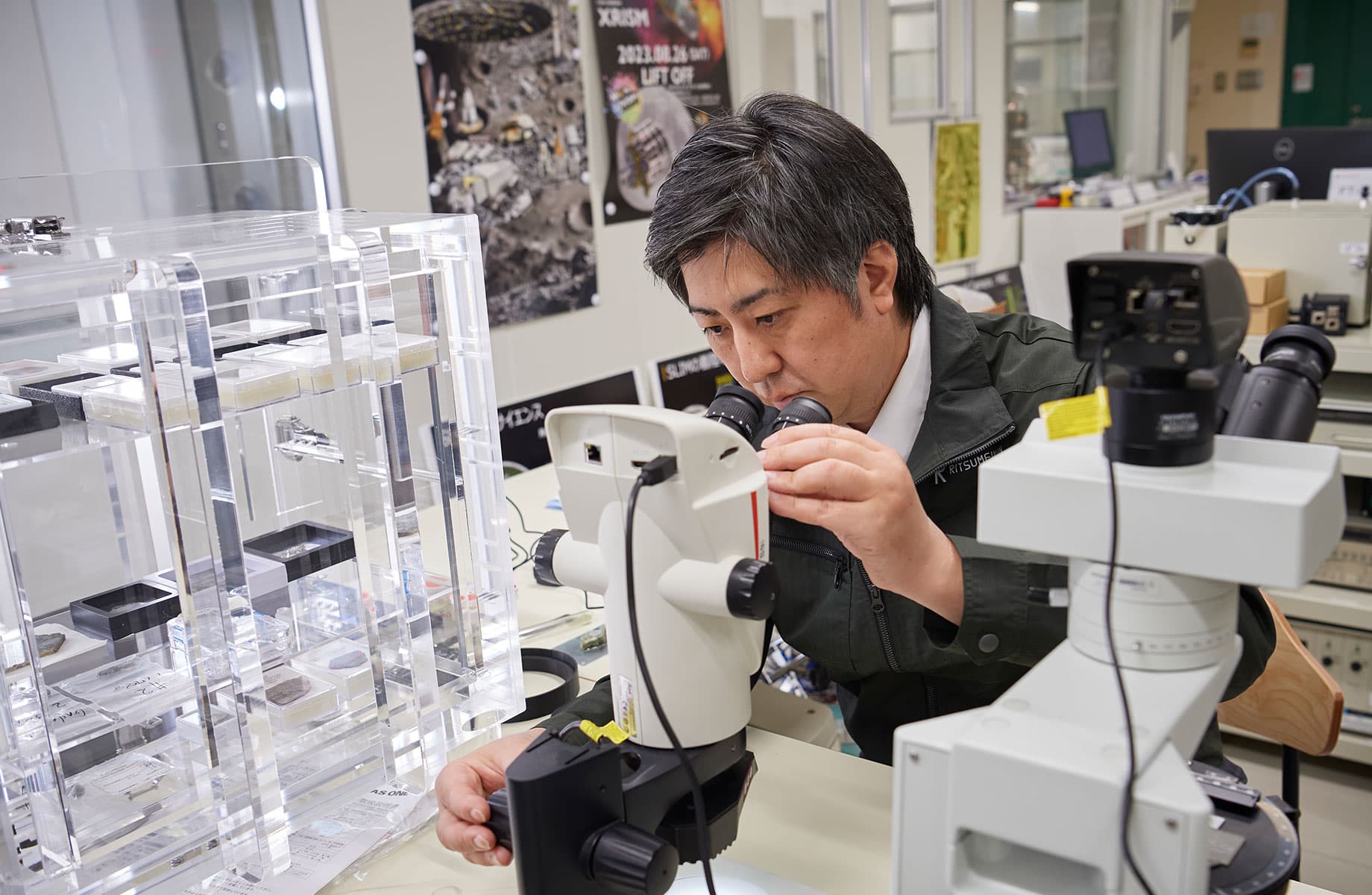
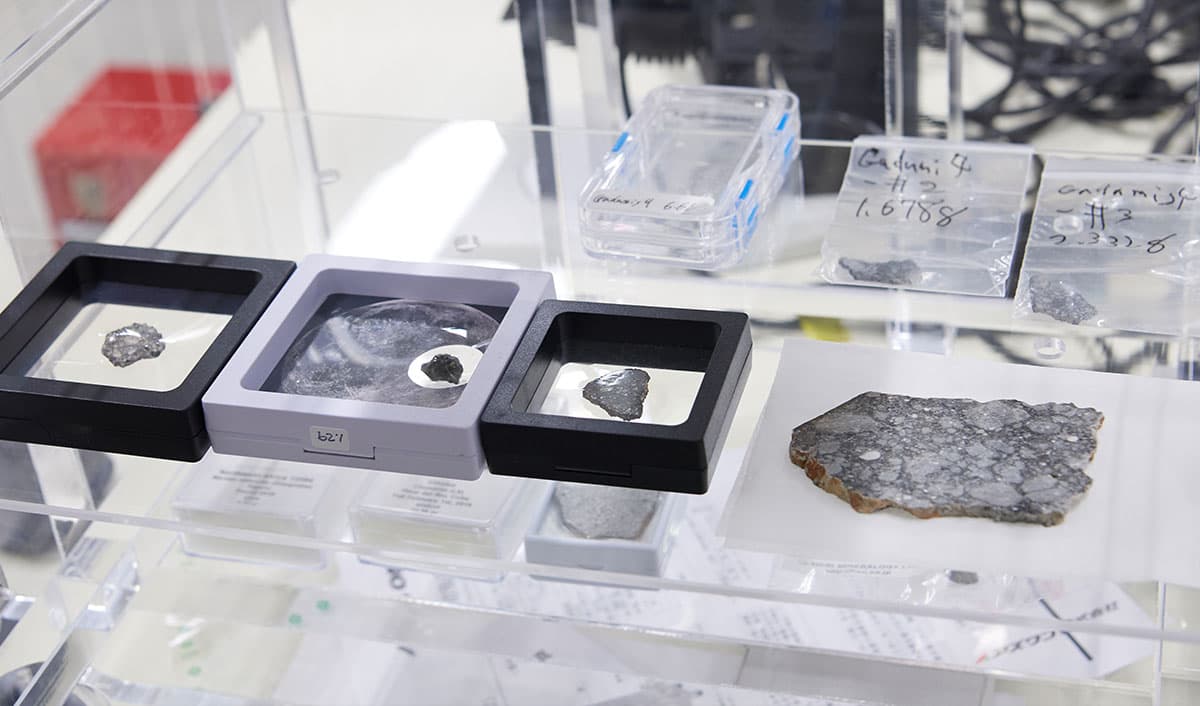
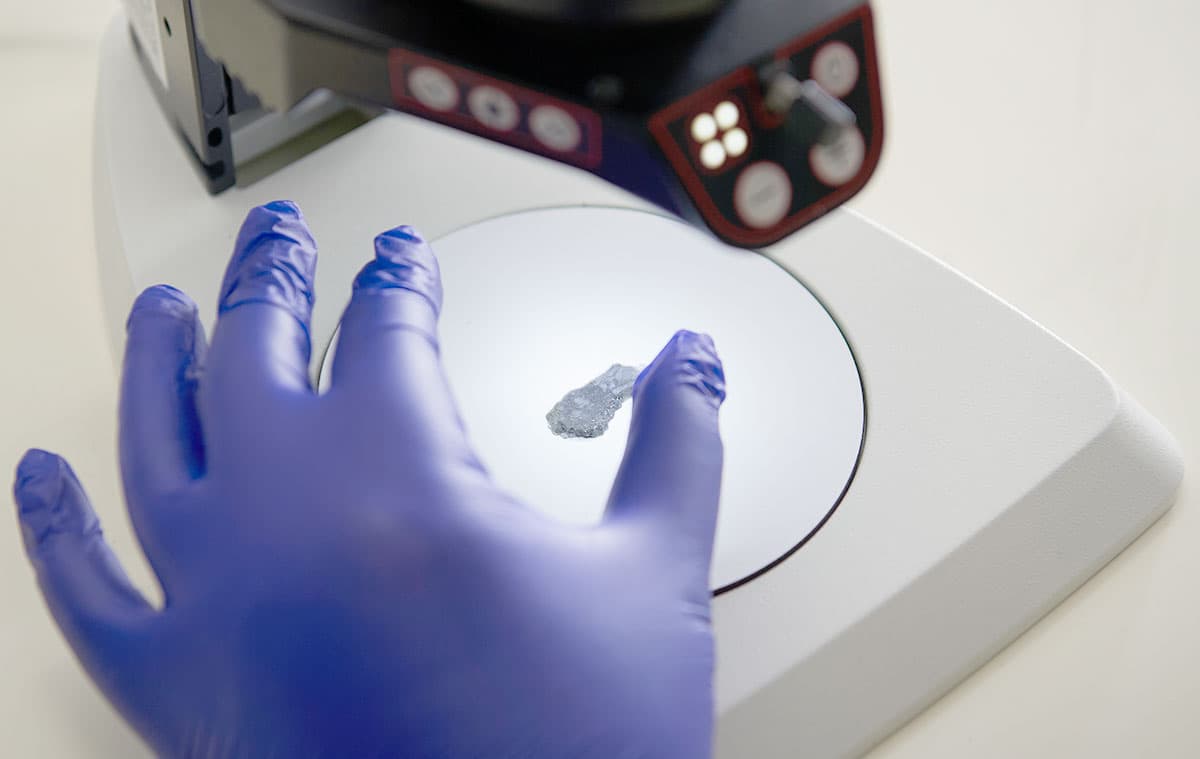
A major focus of my research is the analysis of meteorites and returned samples brought back from the Moon. Going forward, I hope to participate in lunar exploration projects aimed at returning lunar materials to Earth, extract the information preserved within them from the era when Earth and the Moon were formed, and gain new insights into how our planet came into existence.
If humanity is to travel to and live on the Moon, we first need to understand the lunar environment. One important research topic is extracting both historical and current environmental data that is relevant to the purposes of and motivations behind lunar utilization. Another important topic is providing valuable and accurate data to those who are trying to make use of the lunar environment. In the future, lunar utilization will expand far beyond the world of science alone and into many other fields. To support that development, I want to advance research that provides a clear scientific understanding of the lunar surface environment for those wishing to use the Moon or venture even farther beyond it, thereby contributing to the development of lunar activities that are both safe and beneficial for humanity.
I believe my laboratory is a place where both students interested in fundamental scientific inquiry and those interested in practical real-world applications can find meaningful research topics to pursue.
What kinds of careers can students who have studied in your lab expect to pursue after graduation?
I hope some students will aspire to become researchers and continue pursuing research careers. Nothing would make me happier than to see our students grow into people who can extract necessary information from exploration mission data, determine what is needed next while looking ahead to the future, and ultimately propose mission projects themselves. I also hope some graduates will go on to become researchers at institutions like JAXA and the National Institute of Advanced Industrial Science and Technology (AIST). Radiation technologies are already used in a wide range of fields, including Earth observation and orbital applications, and I hope students will further expand upon those applications and broaden the field itself.
For international students, I hope they will become researchers capable of leading the space agencies of their home countries—or, if no such agency exists, perhaps even establishing one themselves and serving as project leads. Overseas, venture companies are already launching rockets, so starting a venture company is another exciting possibility. In any case, I would be very happy if our students grow into people who can lead the future of space development in their own countries.
Graduate-level study means tackling research where no clear answers exist, and students are likely to encounter many difficult situations. In particular, the Graduate School of Frontier Exploration in Earth and Space deals with unexplored domains, meaning students must confront especially challenging problems. The ability to overcome those challenges is a skill that can be applied across a wide range of fields in society, and I believe cultivating that strength is one of the defining missions of this graduate school. After graduation, I hope our students will fully apply that skill within their own chosen fields.
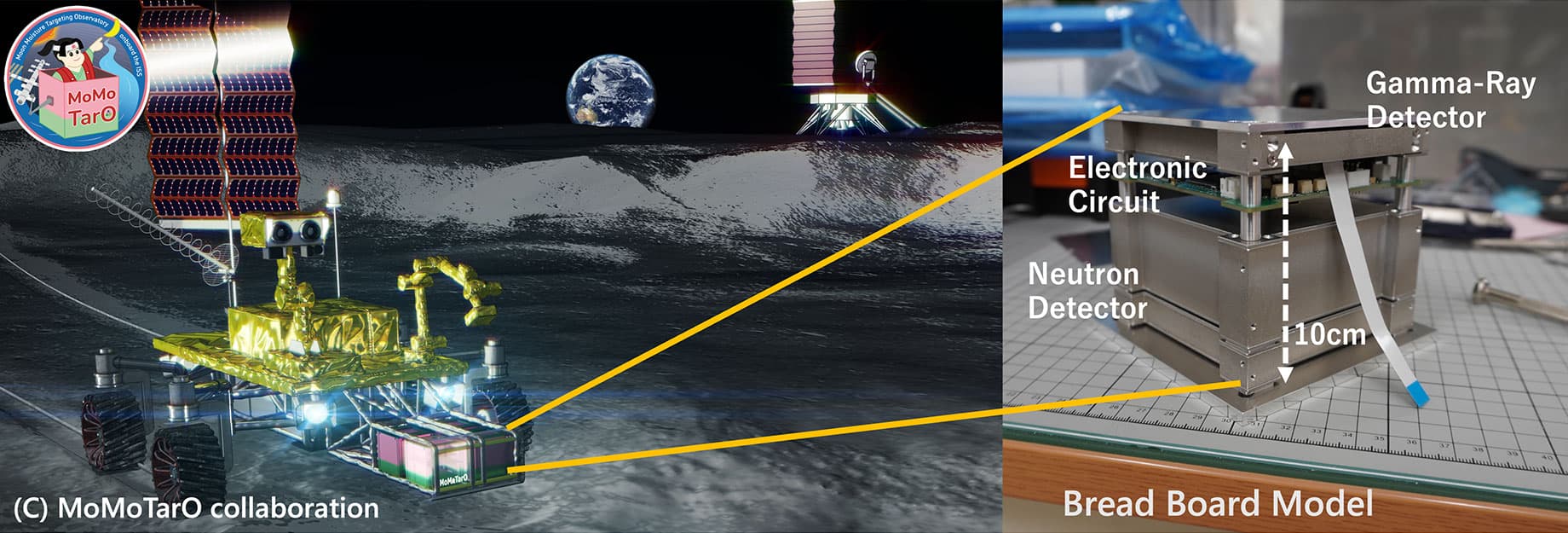
He is now pursuing radiation measurements on the Moon once again, with the aim of supporting water resource exploration and environmental monitoring for future crewed activities
in collaboration with Kyoto University, RIKEN, and other partners (MoMoTarO Project).
The image shows a BBM of a 1U-size compact radiation detector capable of measuring gamma rays and neutron radiation.
What kind of students would you like to join your laboratory?
It is important to have a clear vision of what you want to do, whether that is solving the mysteries of the Moon, participating in lunar or space exploration, or pursuing a specific vision in space. I also think students who come with the desire to continue using the knowledge and expertise gained in this graduate school throughout their future careers will be able to maintain strong motivation.
As long as students possess a foundation in mathematics and physics—or at least the motivation to learn them—I do not place importance on their undergraduate background. Solving a problem requires working through multiple processes one by one, so I value students who have the perseverance to keep tackling each step and continue learning whatever is necessary along the way.