Prospective Faculty
Unraveling material evolution inside celestial bodies:
Contributing to the utilization of lunar resources
Director, Earth & Space Exploration Center (ESEC)
PROFILE
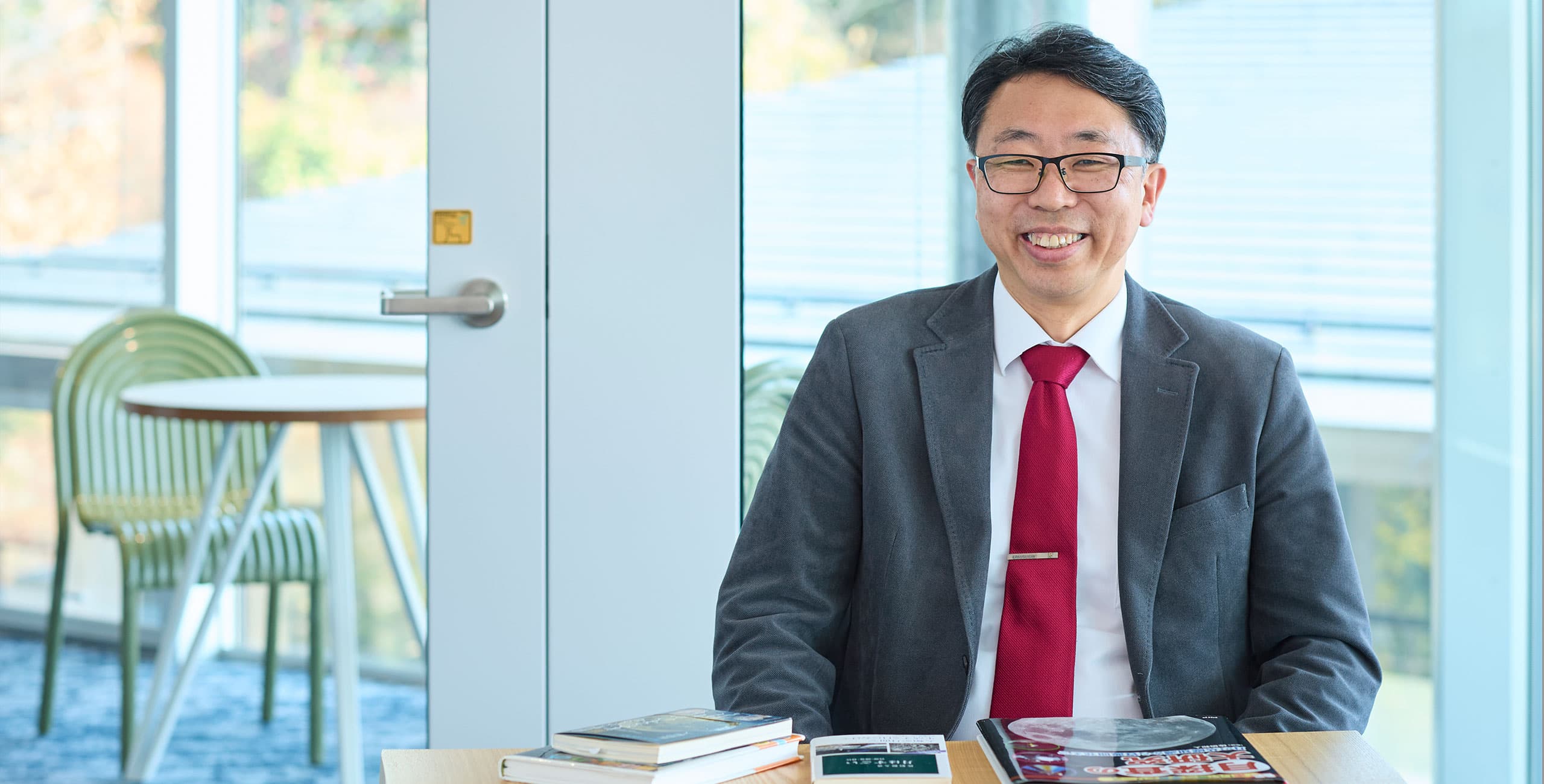
Saiki earned a Ph.D. in Science from the Graduate School of Science, The University of Tokyo in 1995.
After serving as a researcher at Blaise Pascal University (France), Research Assistant and Lecturer at Akita University, and Associate Professor at Osaka University, he joined the Research Organization of Science and Technology at Ritsumeikan University as a Professor.
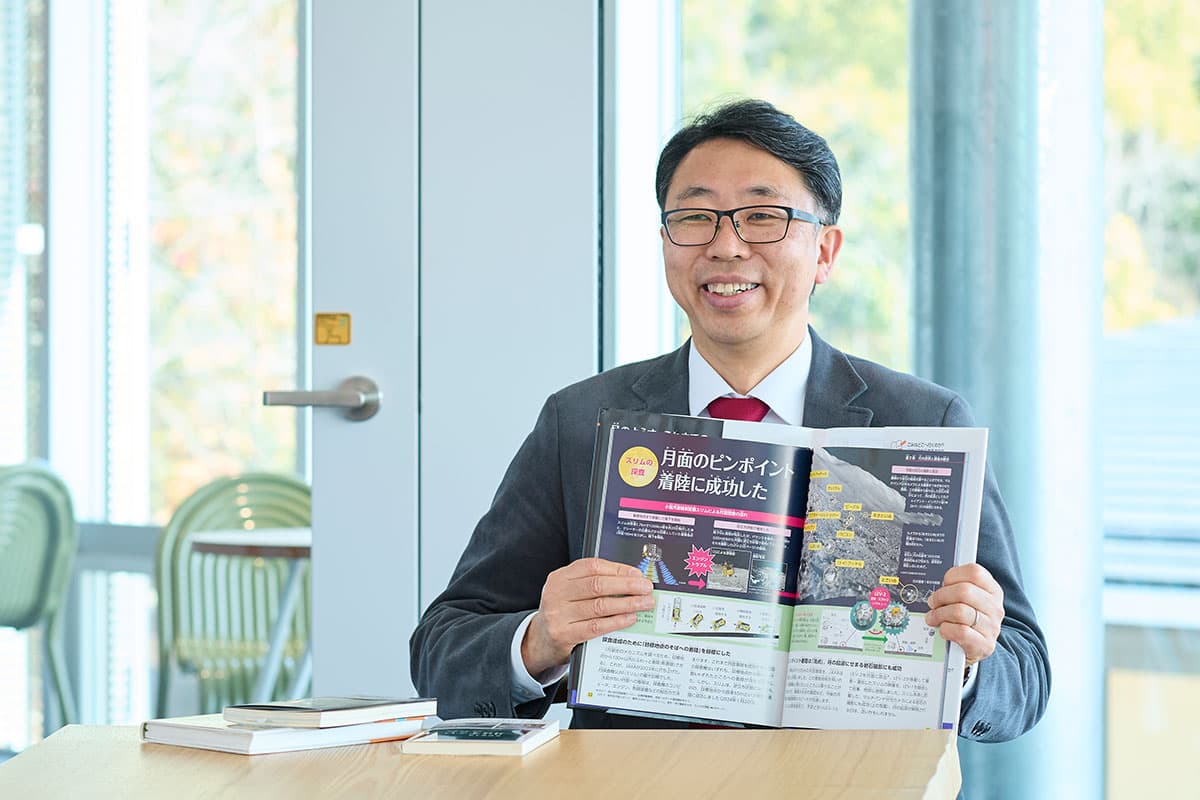
He has participated in multiple lunar exploration projects, including JAXA’s Kaguya mission. He has also served as development lead for instruments such as the Multi-Band Camera (MBC) that was mounted to the Small Lander for Investigating Moon (SLIM) and the Advanced Lunar Imaging Spectrometer (ALIS) to be mounted on the uncrewed rover for the LUPEX lunar polar exploration mission scheduled for launch in FY2028.
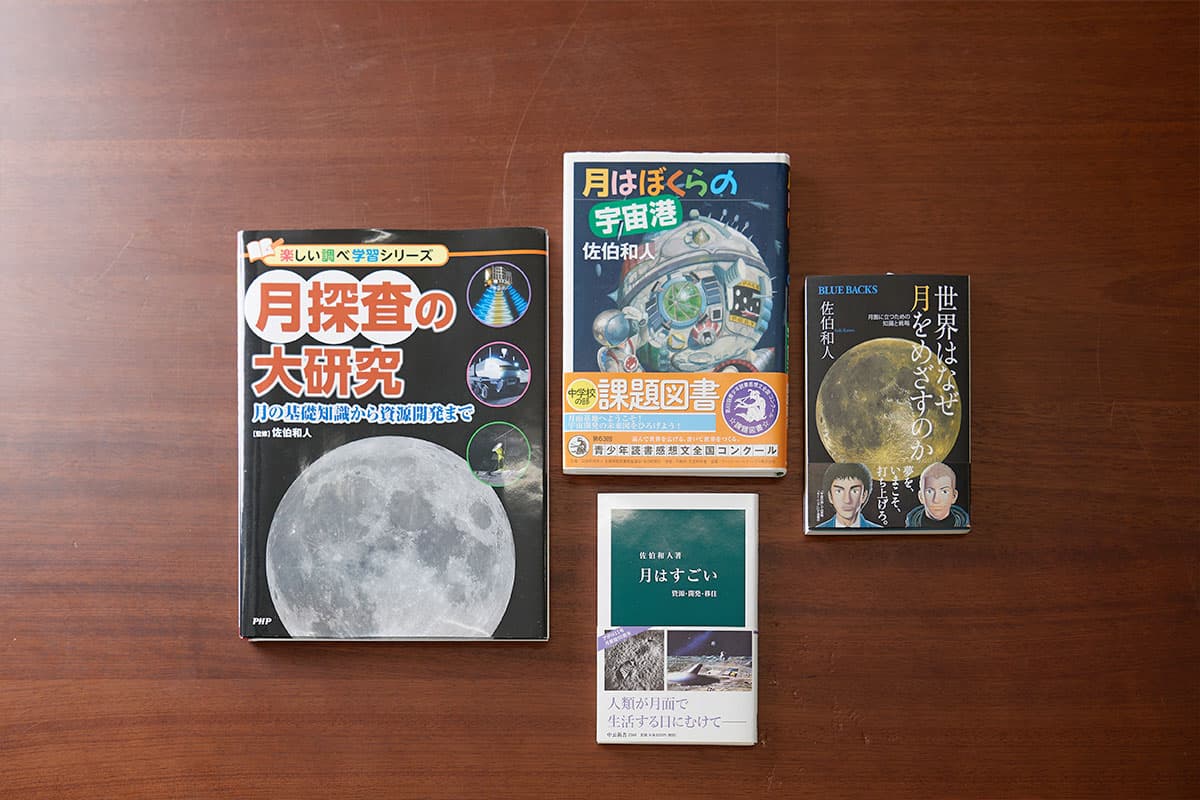
He has authored several books on lunar science, including The Moon as Our Spaceport (Shin Nihon Publishing), which was selected as a recommended book for the 2017 National Reading Essay Contest for Young People (junior high school division).
He will try anything that sparks his interest, having taken up skateboarding in his 50s. At a local skate park, he continues to challenge himself while learning from younger skaters, even after breaking a rib. He is (possibly) the first person to ever skateboard at Japan’s Showa Station in Antarctica.
INDEX
- Tell us about your research
- What can students learn in your laboratory, and what kinds of research topics can they pursue?
- How are research findings from the Earth & Space Exploration Center (ESEC) at Ritsumeikan University used for learning in your lab?
- What kinds of careers can students who have studied in your lab expect to pursue after graduation?
- What kind of students would you like to join your laboratory?
- Message for prospective students
Tell us about your research
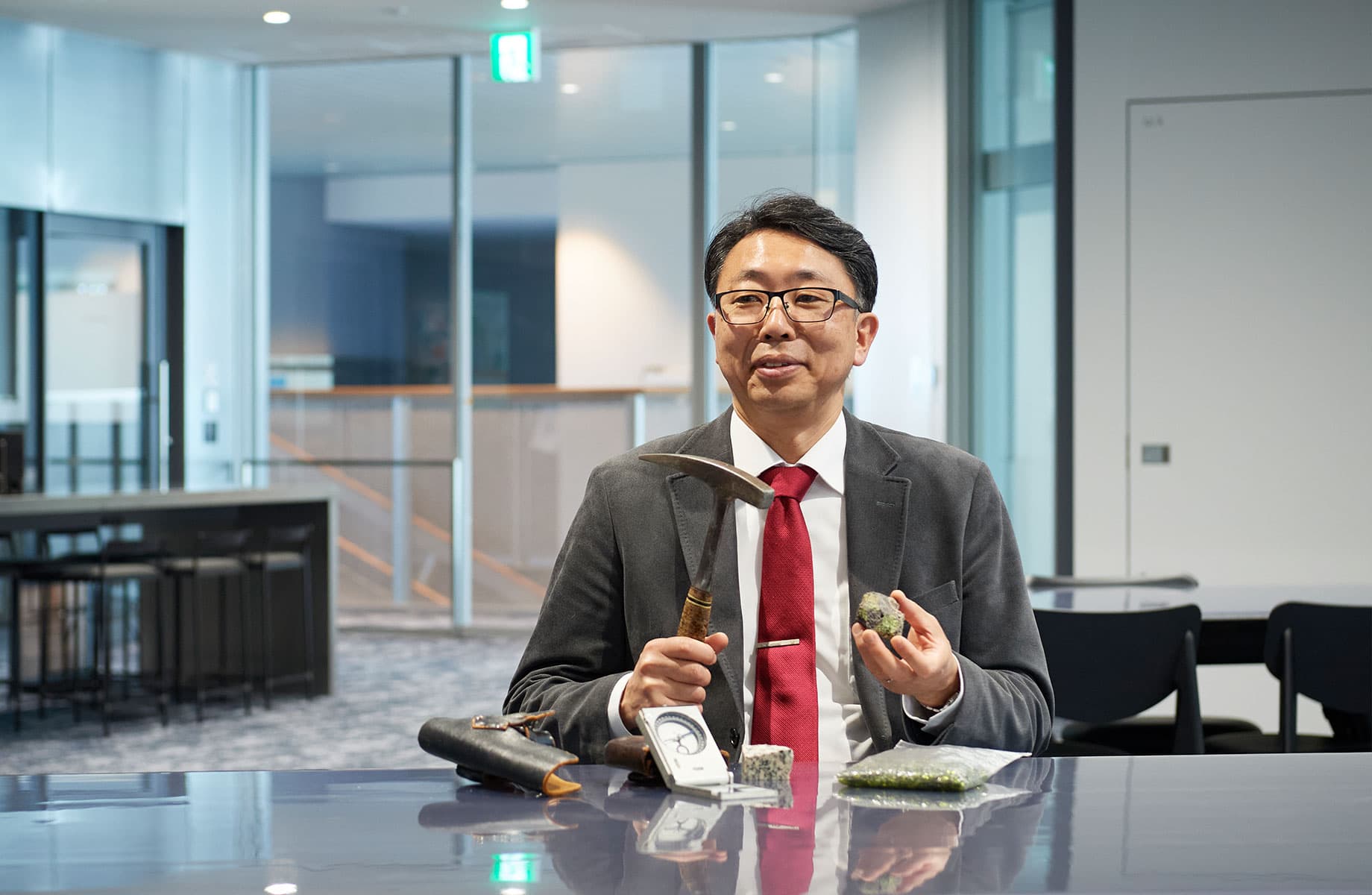
I originally studied meteorites. Among the many types, I was particularly interested in “differentiated meteorites.” These are fragments of celestial bodies in which rock once melted into magma inside an asteroid, leaving crystals to separate out to form internal structures.
The Earth itself is also thought to have once been in a magma ocean state in its early formation. As magma cools, different minerals form one after another depending on the temperature, sinking and settling into layers. At each stage, the composition of the remaining magma shifts progressively, and in this way the internal structure of a celestial body takes shape.
My interest lies in the processes by which materials change and move within celestial bodies, as this leads to understanding how those bodies were formed. This also connects to my current work on the utilization of lunar resources. Humanity is entering an era in which water and mineral resources on the Moon will be utilized. To understand why these resources exist and in what quantities, it is necessary to understand the processes of material transformation within the Moon.
What can students learn in your laboratory, and what kinds of research topics can they pursue?
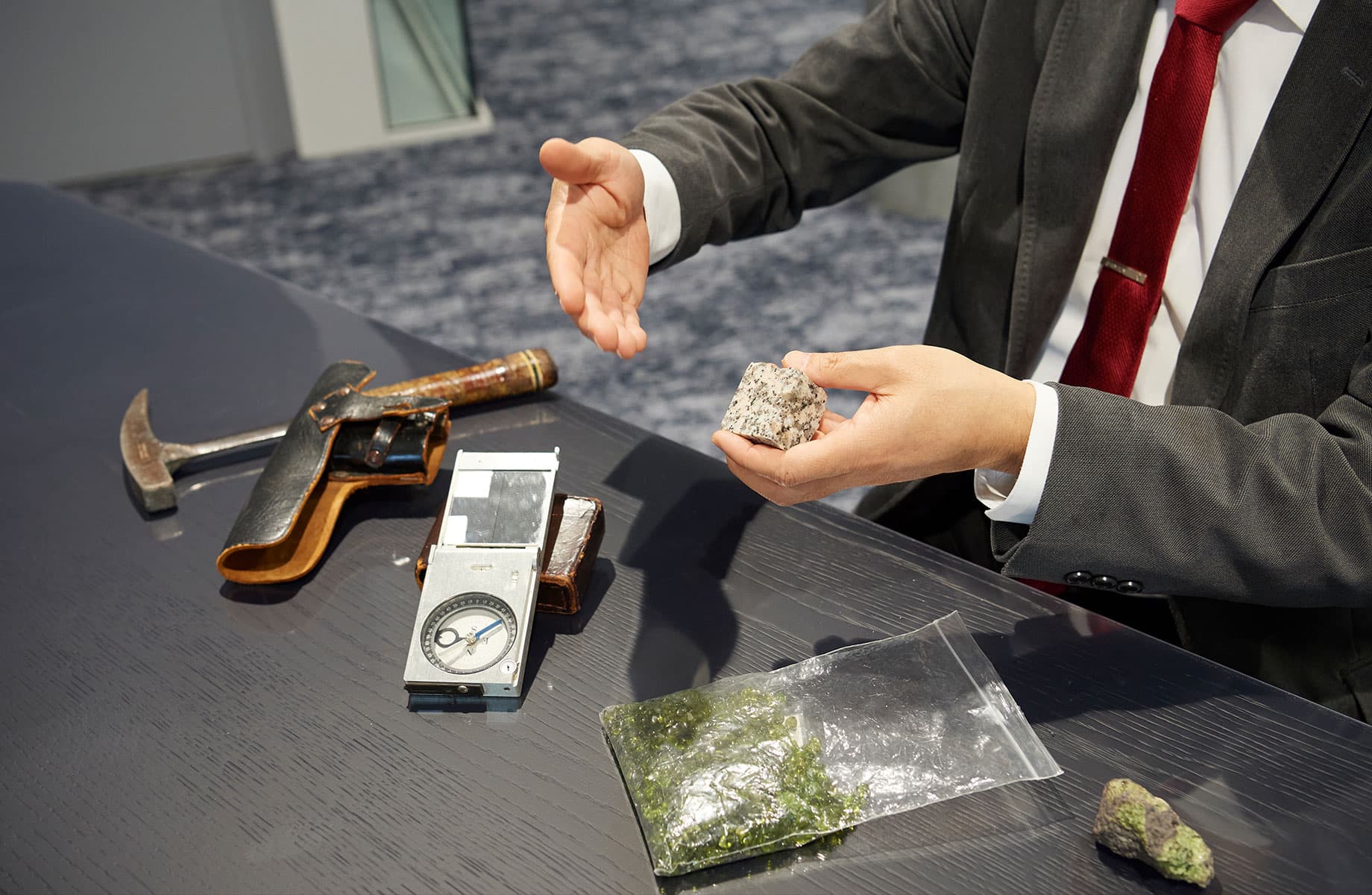
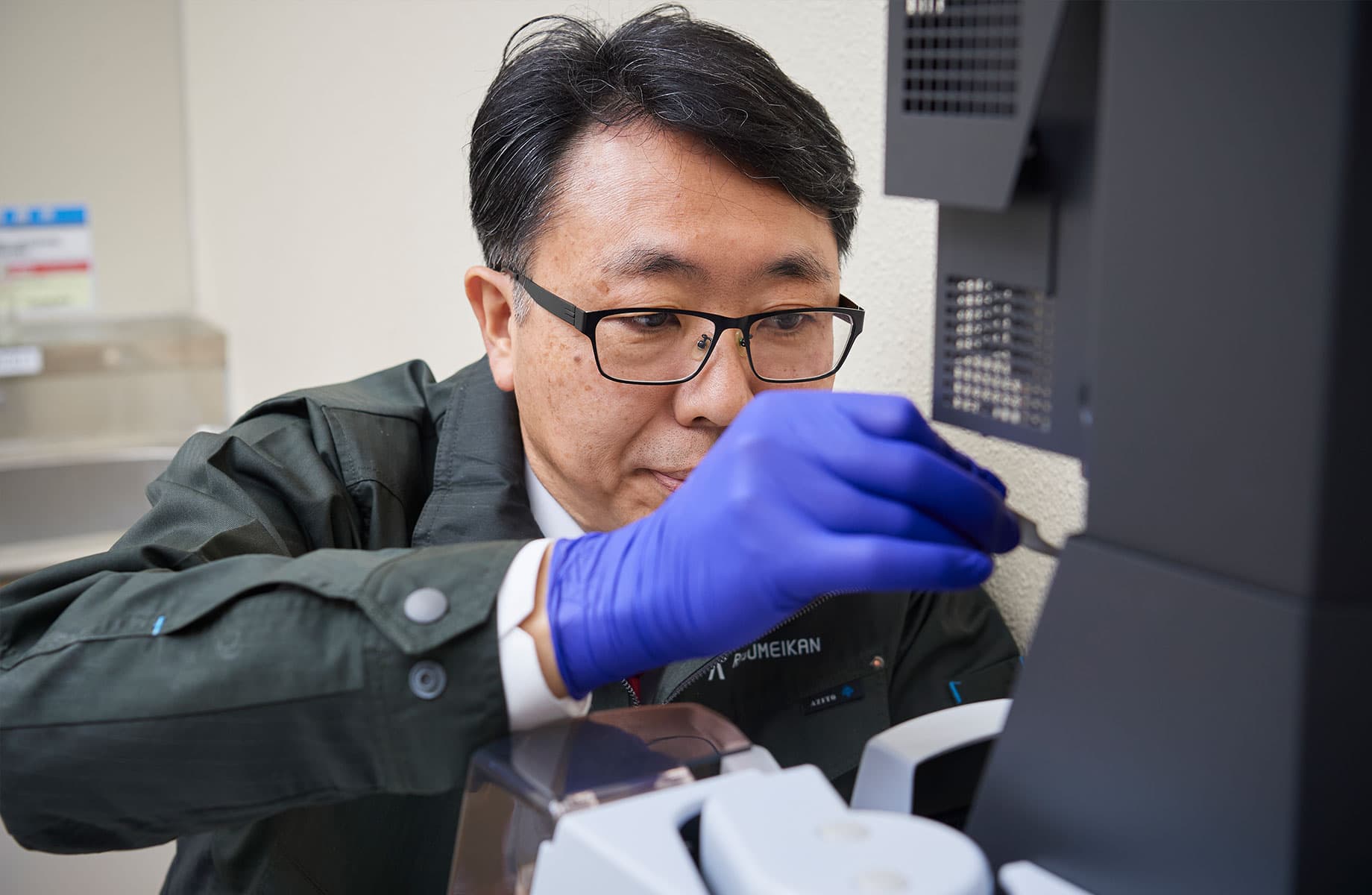
It is predicted that large amounts of water ice exist in the Moon’s extremely low-temperature regions known as “permanently shadowed areas.” If electrolyzed into hydrogen and oxygen, this water could be used as fuel for spacecraft returning to Earth or traveling onward to destinations such as Mars. I am currently working to determine where this water originated, how it moved, how it accumulated, and what happens over time, through laboratory experiments and observations. In my laboratory, students might participate in these kinds of experiments. They can also analyze meteorites and lunar/planetary exploration data and work on modeling how celestial bodies are formed.
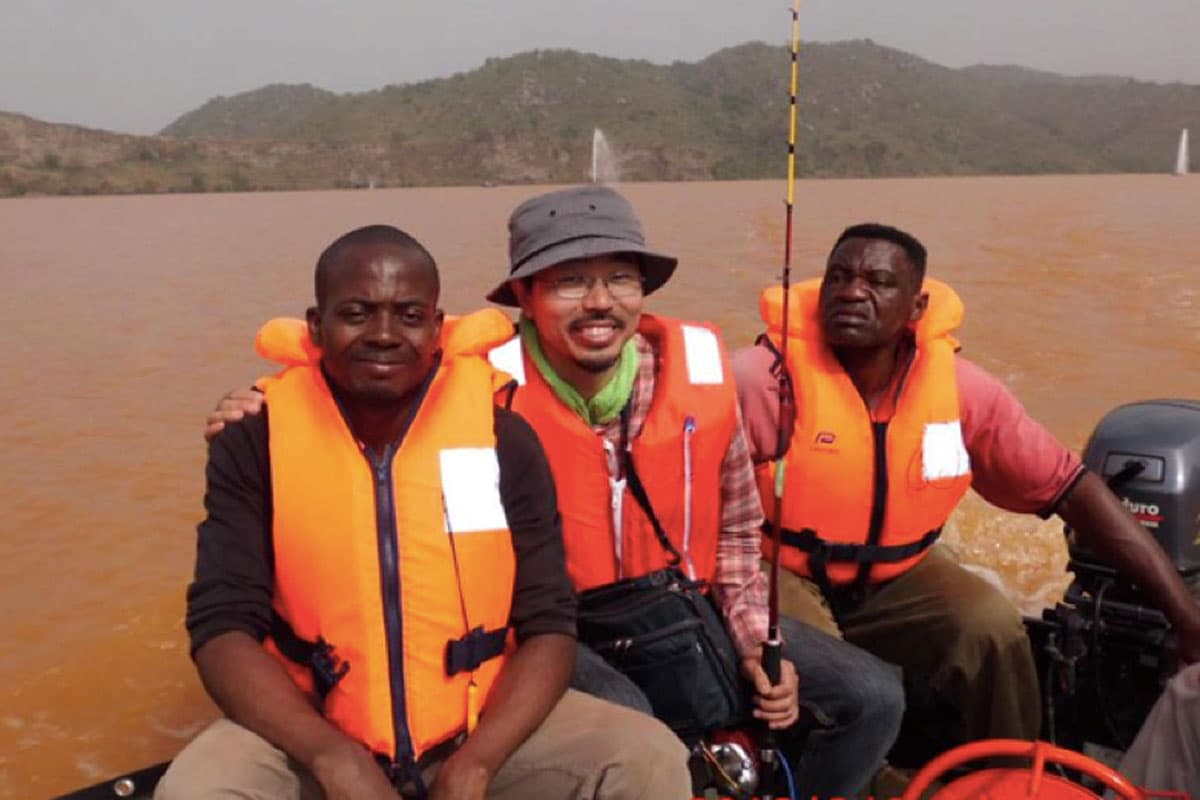
In my laboratory, I place importance on modeling and reproducing real natural phenomena to test hypotheses. If a model is incorrect, unexpected results emerge, so you naturally learn that you are wrong. That experience is essential. I also focus on fieldwork in natural environments such as volcanoes because this allows students to develop the ability to select meaningful data from the vast amount of information available in nature. Through such experiments and fieldwork, students repeatedly test and verify their ideas until they are satisfied, learning directly from nature, and I hope they will go on to tackle challenges in space exploration.
How are research findings from the Earth & Space Exploration Center (ESEC) at Ritsumeikan University used for learning in your lab?
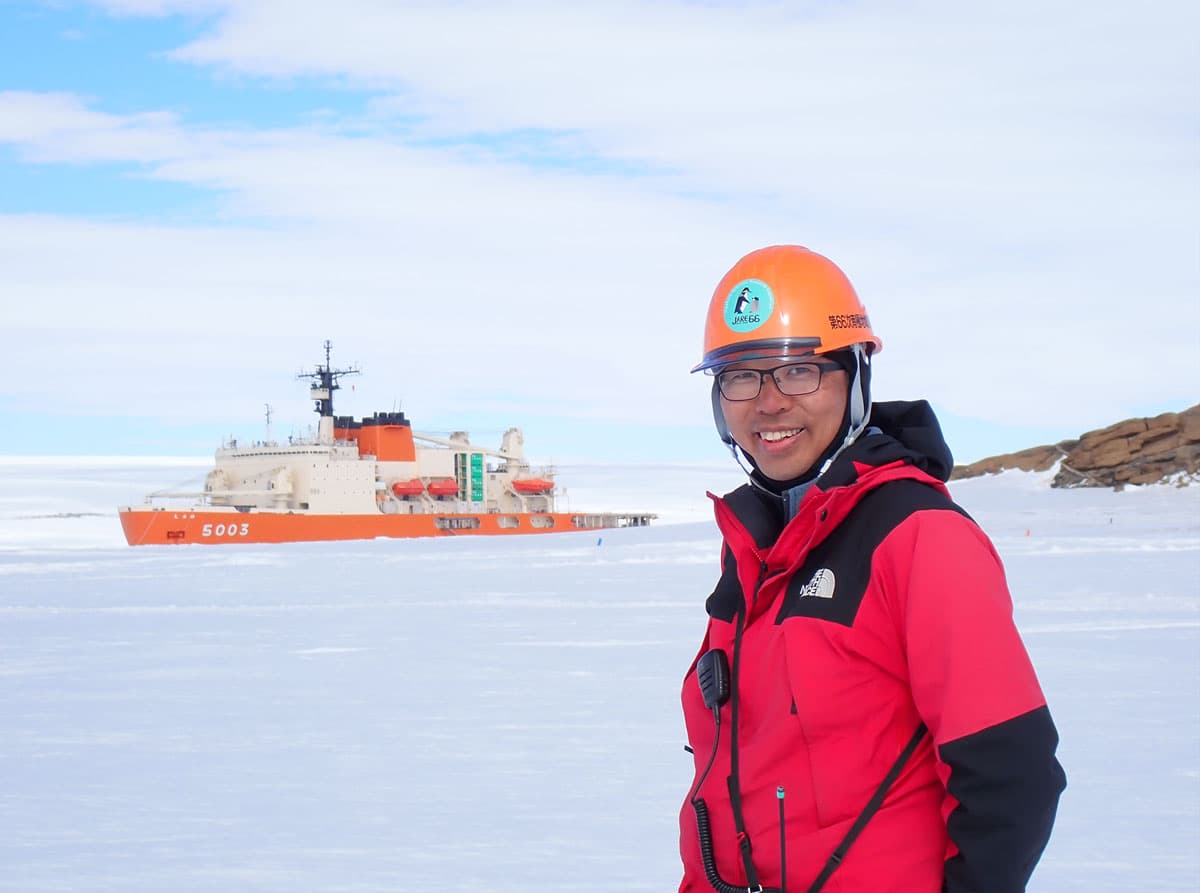
Students will have opportunities to be involved in the space exploration projects implemented by the Earth & Space Exploration Center (ESEC), depending on project requirements such as nationality. I encourage students to learn firsthand what kinds of activities are carried out in these projects and the mindset required to participate in them.
What kinds of careers can students who have studied in your lab expect to pursue after graduation?
With the ability to understand natural phenomena and apply that knowledge to solving social issues, I expect students to succeed not only in the space field but across many sectors. They may pursue careers in basic research at universities, or work in research roles in fields such as disaster prevention and meteorology. For example, many volcanic specialists are employed by Japan’s Nuclear Regulation Authority to assess risks such as volcanic ash affecting nuclear power plants.
Opportunities also exist in overseas plant construction. In the Graduate School of Frontier Exploration in Earth and Space, we aim to develop individuals capable of managing large-scale projects. Students in my laboratory, which is grounded in science, may also work on areas such as green extraction of products from natural environments or addressing issues in chemical plants, applying physics and chemistry to solve problems.
Naturally, I hope some of my students will find successful careers in the space field. International students, in particular, are often expected to contribute immediately in Earth observation in their home countries as specialists who can use satellite data. While building instruments is important, I hope they will also develop the ability to determine what should be measured. If they can do this, I think they can become extremely useful professionals who can solve issues using satellites and probes.
What kind of students would you like to join your laboratory?
I am looking for students who love nature and have a desire to understand how it works. And those who find an exciting thrill in abstracting the complex phenomena of the natural world.
I also welcome students who are interested in how the findings of basic research can be applied in the real world. Students from all science fields—and even humanities fields—are welcome if they have an interest in natural phenomena. A foundation in mathematics, physics, and chemistry is essential, so some basic study tailored to your area of interest will be necessary. That said, even if you don't yet have that knowledge, I believe the path will open up for those who want to join this graduate program badly enough to put in the effort to learn.