


In China and Japan, currency began with shell coins, followed by metal coins of various shapes and weights. Professor Toru Ogata, an expert on the history of such coins, analyzes not only Chinese coins but also Japanese Fuhonsen and Wadokaichin coins, paying particular attention to the characters on the coin faces to decipher national origins and ideologies from the country names, era names, and auspicious phrases.
The history of currency, which began with shells to ward off evil spirits
“East Asian currency began with shell coins,” explains Ogata, who points to the cowrie shell as the starting point for unraveling the history of currency in China and Japan. Known in Japan by the common name of koyasugai, these small shells have a beautiful luster and pattern. “Koyasu means ‘safe childbirth’ in Japanese, and according to Kumagusu Minakata and Namio Egami, the name comes from the shell's shape, which resembles a woman's vagina. As such, the shells came to be associated with childbirth and rebirth, and they were used as charms or talismans to attract the eye of masculine evil spirits and ward off the ‘evil eye’ not only in China and Japan, but also in the Middle East and Europe,” he explains. Given the value these shells had as protection against evil, they became an accessory to be worn, and in addition to this, they became exchangeable for other articles, thus becoming currency. Later, coins were to be made from metal.
According to Ogata, many shells have been excavated as burial goods from Shang dynasty ruins in China, and most of the shells had their surfaces scraped and holes drilled through them. “It can be inferred that the holes were drilled so strings of shells called a ho could be made. Ancient records reveal a saying ‘use 10 ho when counting shells,’ a reference to the number of shells per string. In the bronzeware script used during the Shang and Zhou dynasties, there is indeed a pictograph that represents this saying,” he explains.
The custom of making square or circle holes in coins was copied by later generations, including the Qin dynasty's Banliang (“half liang”) coins and the Han dynasty's Wu Zhu (“five zhu”) coins. “One liang coins and five zhu coins were those based on weight. As time passed, however, the coins became smaller and thinner and the holes became larger. Scholars believe the reason behind this was to collect and melt down coins so they could be cast into larger coins to make a profit,” explains Ogata. Various other forms of coins, such as sword-shaped coins, were used in different countries and periods.
Coins with the country's name, year, and auspicious phrases were used to promote the country both at home and abroad
Many Chinese coins issued by successive dynasties bear names of the year and the country. Ogata is now conducting a fascinating study of the relationship between coins and era names. “In East Asia, for a country to have an era name and their own currency was, in a sense, a symbol of its nationhood. It is thought that the purpose of having the year and country name on the coins was to make an ostentatious display of the fact that an emerging or weak country had the ability to coin its own currency, as well as to make the country name and year known to its people and the surrounding countries,” he explains.
According to Ogata, era names came into use during the reign of Emperor Wu of the Han dynasty. One of the Sixteen Kingdoms of the Five Barbarians, Cheng Han (304–347), minted a coin called the Hanxing during the Hanxing era (338–343). This coin bore both the country name “Han” and the era name “Hanxing,” making it an example of coin with inscriptions of both the country name and era name. “With just two characters, a message was succinctly conveyed that ‘a state called Han has arisen and its era name is Hanxing’,” explains Ogata.
Meanwhile, the Yongan Wuzhu coin of the Northern Wei dynasty not only bears the era name “Yongan,” but also has the character 土 (earth) above the square hole in the coin, which can be read as 吉 (auspicious). For this reason, it is regarded as a precursor to auspicious phrase coins. Similarly, the Wuxing Dabu coin from the reign of Emperor Wu of the Northern Zhou dynasty, which means “the Five Elements extend throughout the realm,” is also considered a type of auspicious coin. The Gaochang Jili coin of Gaochang in Turpan, Xinjiang, likewise bears both the country name and an auspicious phrase.
Ogata also focuses on the Kaiyuan Tongbao issued by Emperor Gaozu of the Tang dynasty. Generally, the inscription is read in standard order as Kaiyuan Tongbao, but it can also be read in reverse as Kaitong Yuanbao. It is said that the characters for Kaiyuan were selected and written by a scholar and calligrapher named Ouyang Xun. The style of the script is distinctive, and the character 開 (kai) in particular has notable features. Ogata posits that behind these characters lies the history of non-Han states striving to become “Chinese-style” states. “These states imitated China by denoting country and era names in Chinese characters and by minting coins. The custom of inscribing country and era names on coins also originated from this same intent.” He goes on to argue that Japanese coins such as the Fuhonsen and Wadokaichin may also be interpreted within the same context.
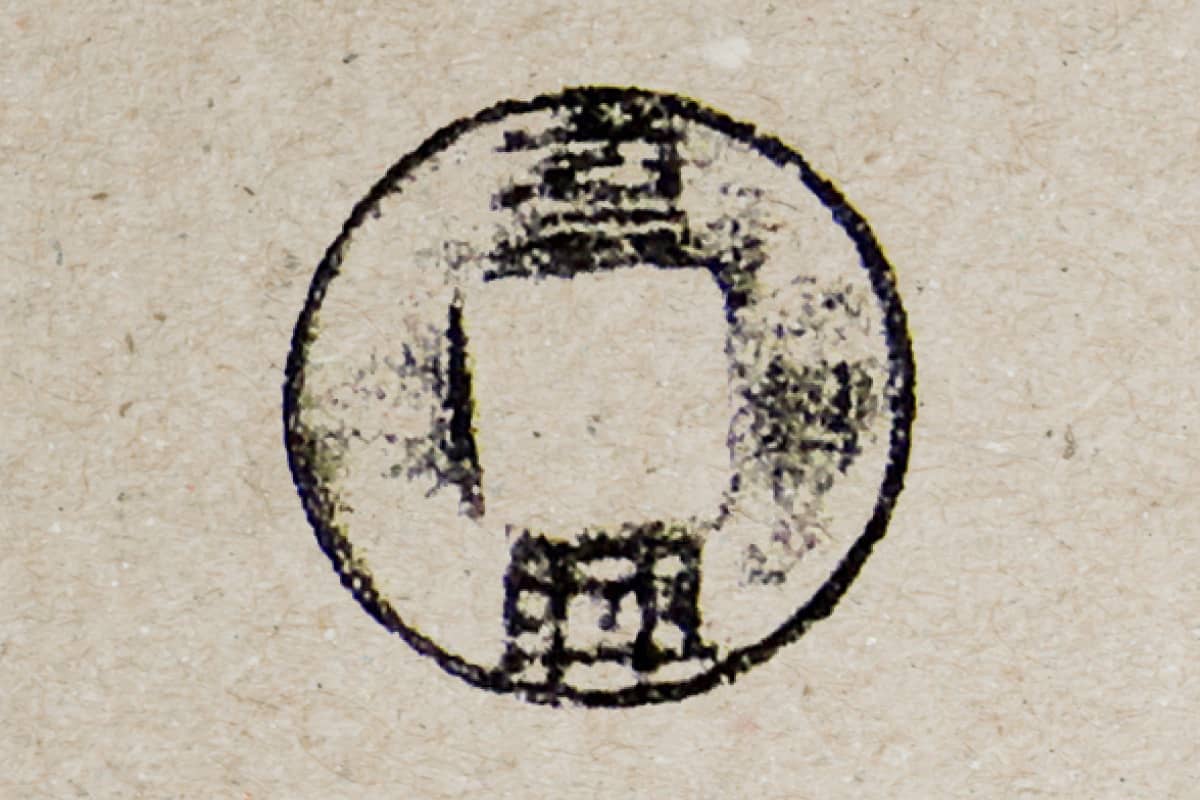
Country name coin Era name coin
Han = Country name of one of the Sixteen Kingdoms of the Five Barbarians
Hanxing = Era name
“The Han arises”
*The vertical-style rendering of the characters is the same as on the Fuhonsen.
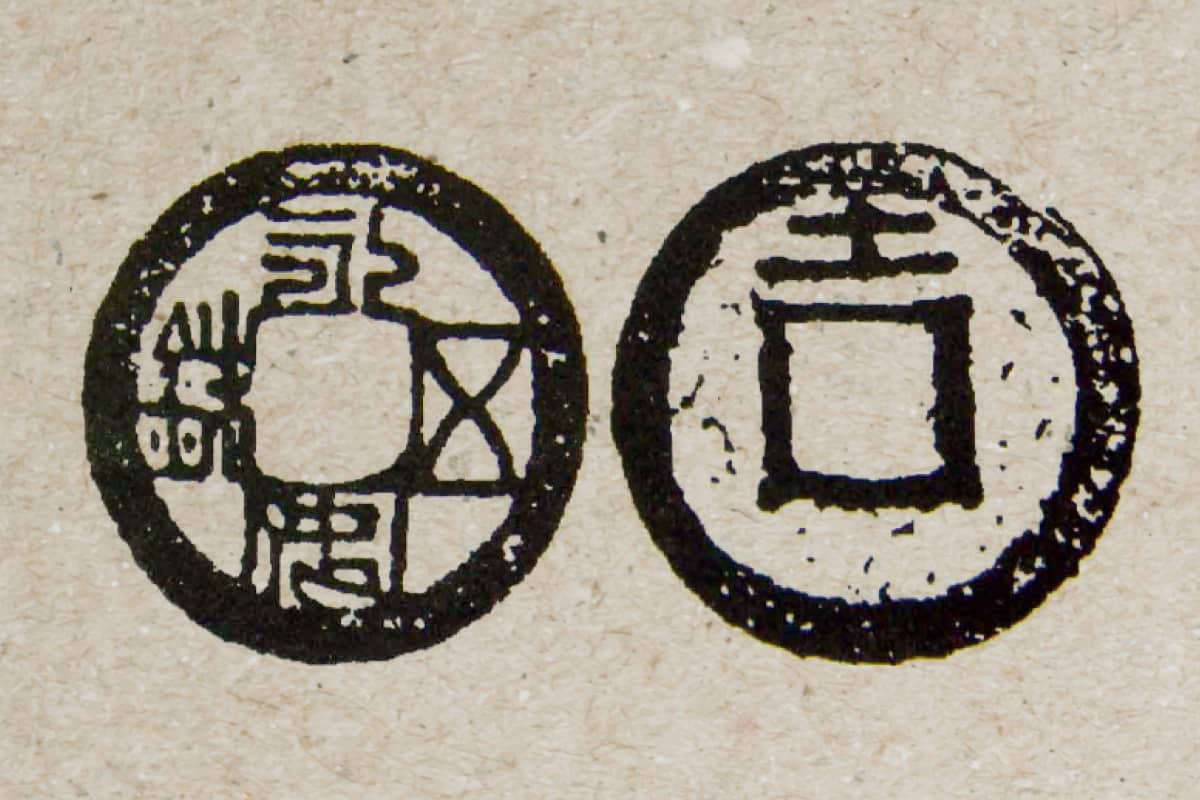
Era name coin Auspicious phrase coin
Northern Wei
土 (Earth) refers to the dynasty of earthly virtues in Wuxing (Five Elements philosophy).
土 (Earth) + central hole = 吉 (good fortune)
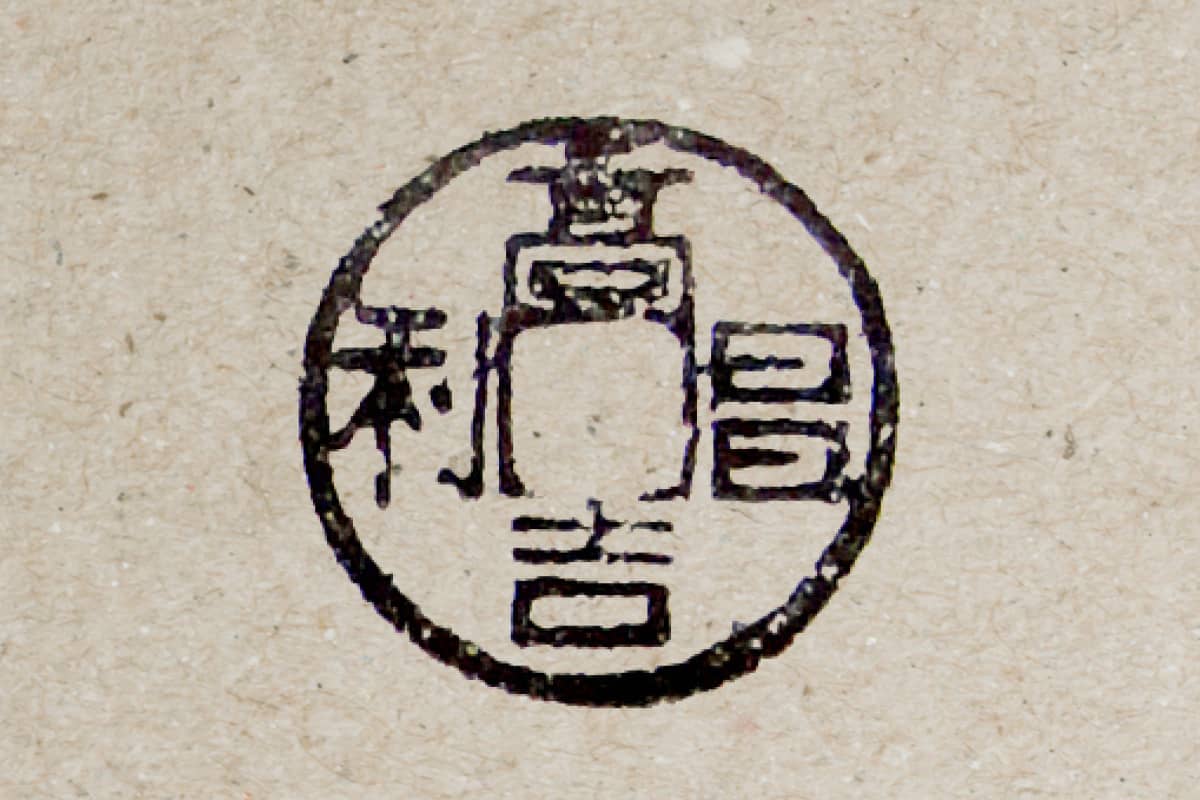
Country name coin Auspicious phrase coin
Gaochang was a country in Turfan.
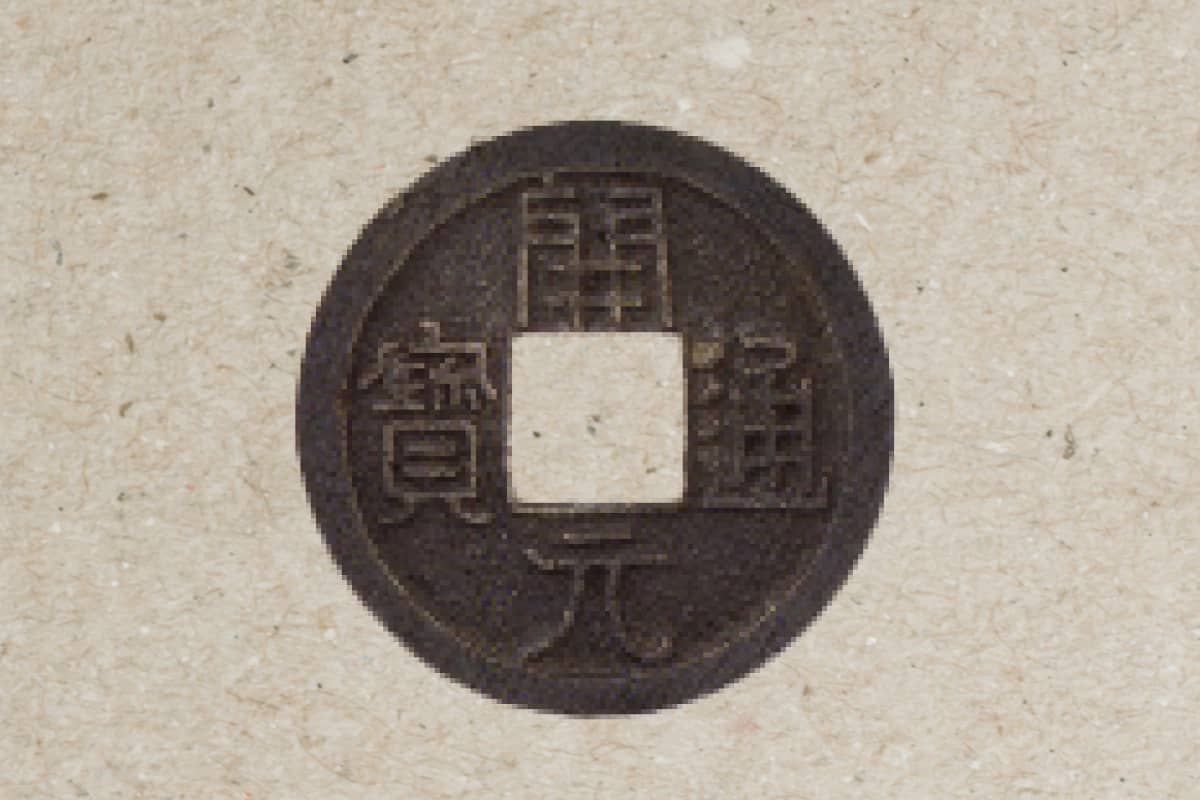
Although not an era name coin,
Kaiyuan was later used as an era during the reign of Emperor Xuanzong.
The characters were selected and written by Ouyang Xun. Note the distinctive script,
especially in the character 開.
→ This is the same 開 as in the Wadokaichin (standard coin).
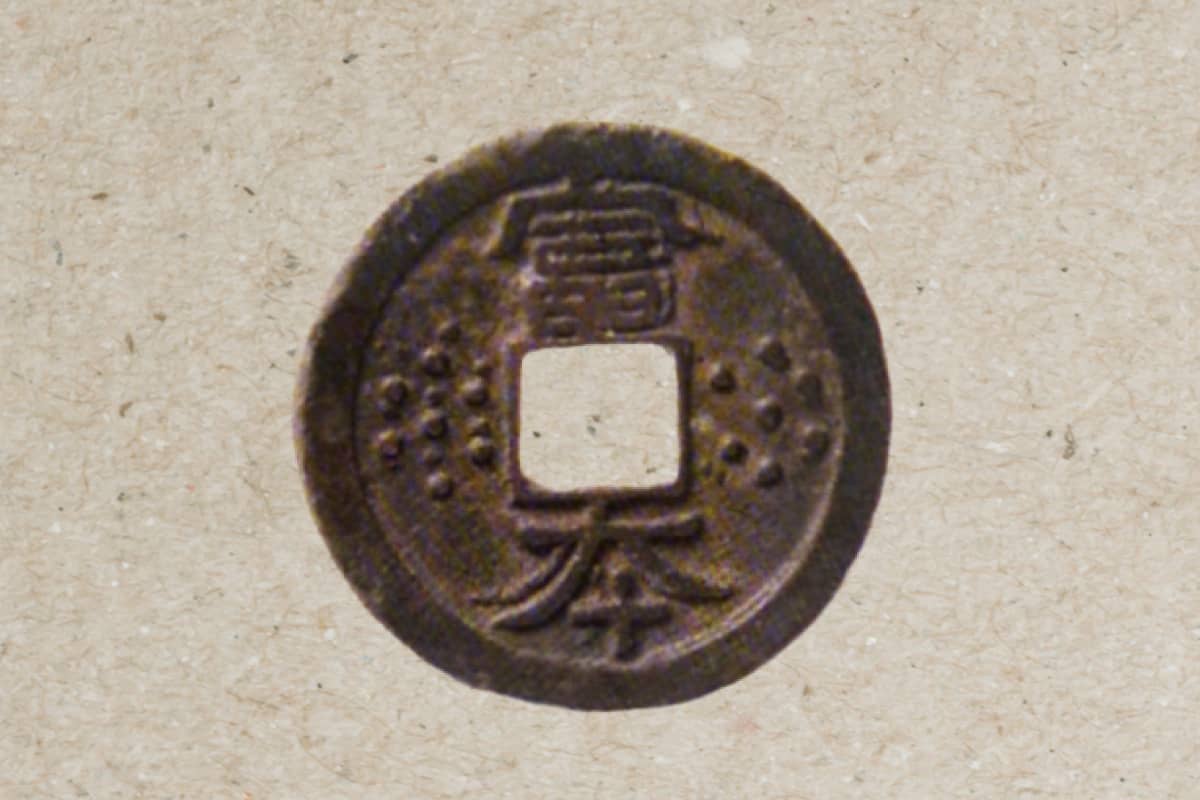
Possibly a country name coin? Auspicious phrase coin
富 (“fu,” wealth) + seven days of the week (sun, moon, and five planets) + 本 (“hon,” origin)
*In Japan, where there was no dynastic change, it could be interpreted as
incorporating all of the Five Elements plus yin and yang.
*富 + 日 from the seven days of the week + 本 = 富日本 (“prosperous Japan”)
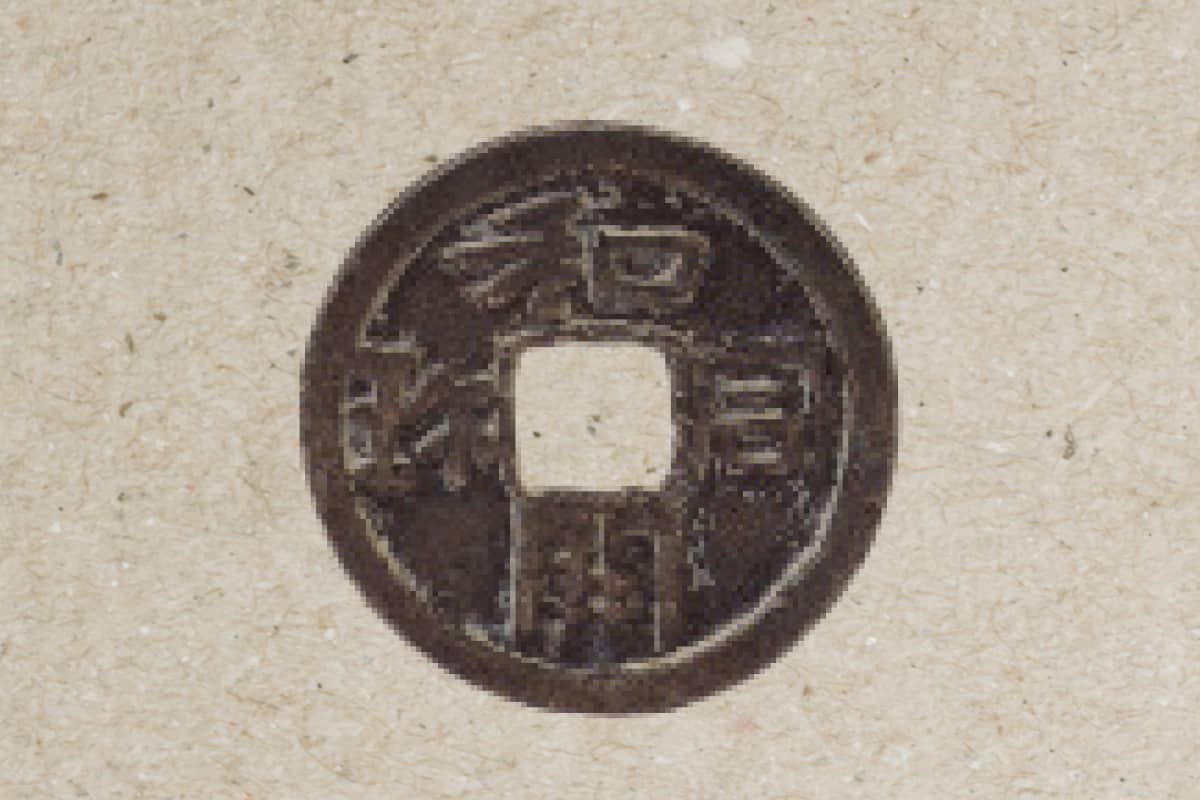
Possibly a country name coin? Possibly an era name coin? Auspicious phrase coin
The silver and copper coins were presented as gifts to China.
倭≓和≓大和≓日本 (all of these characters and combinations refer to Japan)
Wado (an auspicious phrase) ≓ Wado (refined copper/era name/Japanese copper)
通 (tsu)≓同 (do)≓銅寳 (copper coin)≓珎 (chin)
珎≓珍≓鎮 (all convey meanings of preciousness, rarity, and esteem)
Country names, era names, and auspicious phrases on Fuhonsen and Wadokaichin coins
The oldest known Japanese coin today is the Fuhonsen, which was discovered in 1985 at the site of Heijo Palace. It is a bronze coin that places the character 富 (“fu,” wealth) above the square hole, 本 (“hon,” origin) below it, and a seven-star pattern on either side. In 1999, an excavation at the Asukaike site in Asuka Village, Nara Prefecture, confirmed the initial minting date of the coin, revealing that it predated the Wadokaichin, which had previously been thought to be the oldest coin in Japan.
Although the Fuhonsen is generally interpreted as a numismatic charm, Ogata offers an additional interpretation: “If one reads the characters on the Fuhonsen in rotating order— 富 (‘fu,’ wealth), the seven days of the week (sun, moon, and five planets), and then 本 (‘hon,’ origin)—it becomes ‘富日本’ (Japan will prosper). If this is the case, this can be considered coin with the country's name woven into it.”
On the other hand, says Ogata, some old documents read Wadokaichin as Wadokaichin while others read it as Wakaidochin. Wa can be understood to mean Japan, and “Wado” is both an auspicious phrase that has the same pronunciation as the era name. In other words, the Wadokaichin can be interpreted as a coin that carries both the name of the country and the name of the era as well as a coin inscribed with an auspicious phrase. Delving even deeper, Ogata focuses on the character 開 (kai; “opening”) on the coin. “The character 開 on the old Wado coin (Kowadō) shows no special treatment, but in the new Wadō (standard Wadokaichin), it takes on a distinctive form. When you take an image of a Wadokaichin, make it transparent, and superimpose it on an image of the Chinese Kaiyuan Tongbao, the character 開 matches perfectly. In other words, the Wadokaichin was modeled on the Kaiyuan Tongbao.”
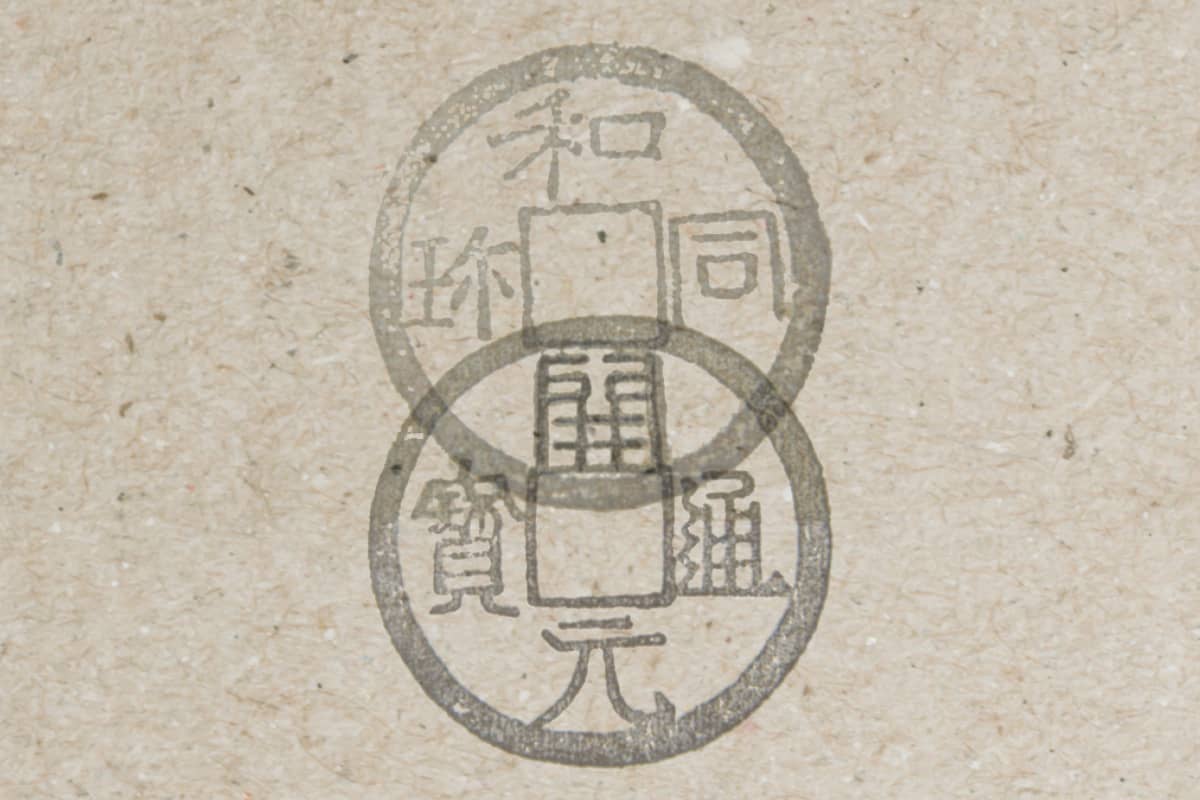
Ogata continues: “When you look at Japan's old coins in this way, the Fuhonsen and Wadokaichin also seem to have been carefully designed to embed country names, era names, and auspicious phrases, giving them multiple layers of meaning and interpretation.” He adds that the very origins and political ideas of the state are concealed within these old coins, and that uncovering those hidden meanings is what makes this research so compelling.