


The history of modern Japanese painting is now undergoing a significant global re-evaluation. This trend is symbolized by a series of successful exhibitions at major institutions, led by the British Museum, and is accompanied by growing academic interest.
At this critical juncture, two leading art experts are to join Ritsumeikan University's new College of Arts and Design: Professor Sayoko Ueda, a specialist in the history of modern painting in Kyoto and art management, and Professor Ryoko Matsuba, a researcher of early modern Japanese publishing culture, who has also served as a curator at the British Museum.
Drawing on their respective research and practical experience, both professors address fundamental questions concerning authenticity in archives, approaches to social issues through art, and the future of curatorial practice. From their new standpoint in education, a new vision is set forth here.
Researcher introductions
UEDA : My research focuses on the history of modern Japanese painting. Traditionally, Western-style painting (yōga) and Japanese-style painting (Nihonga) have been studied as distinct fields. However, my work takes a cross-disciplinary approach, focusing on the commonalities of both.
Previously, I concentrated on prominent yōga and Nihonga artists based in Tokyo, such as Yokoyama Taikan and Kuroda Seiki. Since relocating to Kyoto, I have developed a strong interest in the city’s unique painting culture and am continuing my research in this specific area.
Before joining academia, I spent over a decade working in planning and management roles at the National Art Center, the Tokyo National Museum, and the Museum of Kyoto. I will be serving as a professor in the field of Art Management at Ritsumeikan University’s College of Arts and Design when it is newly established in April 2026.
MATSUBA : My research began with early modern (Kinsei) Kabuki theater and later expanded to ukiyo-e as a form of pictorial data. This shift led to a practical role at the British Museum, where I served as a project curator. There, I contributed to the curation and digital archiving of the Shunga (2013), Hokusai (2017), and Manga (2019) exhibitions.
A consistent thread running through my work—from Kabuki to Manga—is an interest in the historical transition of publishing culture from the early modern period to the present day, and a fascination with what has remained unchanged. One such enduring element is the "format." Even as new technologies and expressive methods emerge, the format tends to stay the same. My ongoing research question is: Why does this continuity persist?
The relationship between Kyoto and Tokyo: the reception of Japanese art
UEDA : The new College of Arts and Design at Ritsumeikan University will be located on the Kinugasa Campus in Kyoto—a place rich in history. Now a quiet residential area, it once served as a villa district for aristocrats during the Heian period. Many temples and shrines remain, including Kinkaku-ji, built during the Muromachi period. The area remained rural until it was incorporated into Kyoto City during the Taishō era.
At that time, many artists moved from the city center to Kinugasa in search of larger studios. Its natural surroundings became a key source of inspiration, and as famous painters relocated, their apprentices followed, shaping the area into a hub of Kyoto’s art world.
Today, Kinugasa still houses the Dōmoto Inshō Museum and major cultural landmarks like Kitano Tenmangū Shrine, reinforcing its cultural importance. While many original buildings remain and some artist families still live here, Kinugasa is beginning to embrace new forms of expression—such as digital art—sparked by the energy of young creators and the University’s vision.
MATSUBA : While my research on ukiyo-e printed books is mainly based in Tokyo, the relationship between Kyoto and Tokyo is fascinating from an early modern art perspective. I previously discussed the term utsushi—a concept that goes beyond imitation to include recreation and succession, grounded in reproducible artistry and intervisuality.
In the early modern era, Edo emerged as an utsushi of Kyoto. In the modern period, this was reversed, with Kyoto and Osaka adopting Edo’s culture. For example, illustrated books by Hokusai, an Edo-based artist, published in the 1820s, were sold in Kyoto and Osaka as design samples after his death in the 1880s. This mutual copying reveals the complex interplay between the two cities.
UEDA : After living in Tokyo, I’ve come to truly “rediscover” Kyoto. From a Tokyo perspective, Kyoto’s uniqueness can be hard to grasp. But being here has revealed its distinct standing in modern Japanese painting. Still, challenges remain. Kyoto is often viewed through stereotypical images of “Japan”—cherry blossoms, Geisha, and Kyoto itself. We must ask who creates these images and why.
Rather than simply producing and consuming such symbols, we need to explore how deeply their essence can be conveyed—and how authentically it can be received.

A comparison of museum operations in Japan and the UK: specialization and collaboration
MATSUBA : I believe there is a significant difference between exhibition management in the British Museum and museums in Japan. The British Museum is characterized by a very high degree of specialization, which is a noteworthy point. Among fields like design, art handling, and educational approaches, the curatorial role is just one part. Of course, curators develop the proposal and select the objects, but a “no” from the design team could lead to a 30% cut of the items. The division of labor between curation, writing, education, design, and exhibition is different from museums in Japan. During the Manga exhibition, for example, the catalog was outsourced to the publisher Thames & Hudson, and we were sometimes asked to adjust the content to suit the catalog.
UEDA : In Japan, using my former workplace, the Museum of Kyoto, as an example, the staff numbers are very small. It's common for one main person, with one assistant, to handle everything from planning and catalog content to administrative tasks and exhibition preparation. When I worked at the Tokyo National Museum, the division of labor was more advanced. A planning department would take the lead, with separate departments for publication planning, administration, and exhibition design. In a way, they were likely inspired by overseas museums like the British Museum.
MATSUBA : While I think it must be incredibly demanding for Japanese curators to manage everything in small teams, it also means that the person deeply involved in the content oversees the entire process. There are pros and cons to both specialized and integrated systems.
Furthermore, the time spent on exhibitions differs greatly. The installation process alone is a striking example. For the Hokusai exhibition at the British Museum, the installation took a full month. The same exhibition content was shown at the Abeno Harukas Art Museum in Osaka, Japan, as a joint project. There, it was completed in 4 to 5 days. The work in Japan was handled by the world-class professionals from Nippon Express, whose quality of work impressed the British Museum staff considerably. The art handlers at the British Museum are not necessarily experts in Japanese art, although they are supervised by curators and specialists, so more time is naturally required.
UEDA : The sharing and succession of expertise by these professional art handlers is also crucial for the future of art management. This is because I believe the experience of appreciating an artwork is not defined by the single object in isolation, but by a comprehensive whole that includes its materials, techniques, conservation methods, and exhibition approaches.
Considering reproductions from the perspective of contemporary social issues
MATSUBA : Speaking of the changing circumstances surrounding art, sustainability has become a major topic for museums and galleries worldwide. A single special exhibition can incur enormous costs in terms of budget, energy, and resources. For example, Tate in the UK has shown strong environmental awareness. In 2019, Tate declared a climate emergency and set ambitious targets to reduce its carbon emissions by 50% by 2023 and to reach net zero by 2030. In July 2023, Tate Modern also hosted the first UK-wide “Museums’ COP” sustainability summit, highlighting its leadership in promoting sustainability in the museum sector. Another key contemporary issue is human rights—including movements such as Black Lives Matter—which, in turn, connects to sustainability, and by extension, to the issue of animal rights. The Musée de la Chasse et de la Nature in Paris once covered its taxidermy displays with amigurumi (small knitted stuffed animals) to provoke thoughts about the relationship between humans, animals, and nature. Prof. Ueda, with your extensive experience in Japanese museums, how do Japanese institutions approach these issues, including the broader topic of human rights?
UEDA : While sustainable practices in museums have been discussed at conferences held by the Japanese Association of Museums and ICOM Japan, I must admit that efforts remain limited compared to global trends. For example, even at national museums, custom-made wooden boxes used to transport artworks are typically not reused. It’s hoped that this will change in the future.
MATSUBA : Thank you. One recent example is the exhibition at the British Museum, “City Life and Salon Culture in Kyoto and Osaka: 1770–1900,” held in the Mitsubishi Corporation Japanese Galleries, which was composed almost entirely of objects from the museum’s own collection. This approach addressed not only financial concerns related to transportation but also the environmental and energy costs, as well as insurance challenges.
Such projects also raise questions about authenticity and the use of reproductions—a topic that remains under debate. We are exploring how to reduce costs by using facsimiles instead of original pieces, while also grappling with how to convey the “experience of the authentic” through substitutes. It’s a sensitive issue that museums around the world are trying to navigate.
UEDA : Regarding facsimiles, high-definition reproductions of cultural properties—such as the Pine Trees screen by Hasegawa Tōhaku—have been created. A particularly interesting example involves the Wind God and Thunder God screens by Ogata Kōrin and the Summer and Autumn Grasses screen by Sakai Hōitsu. Originally, these artworks were painted on the front and back of a single screen, but now they are preserved separately for conservation reasons. A Kyoto-based company, Benridō, produced a high-definition reproduction that reunited them into a single-folding screen. These reproductions are now used in educational projects and can be viewed up close, outside of display cases. That said, the prevailing belief in art appreciation remains that experiencing the original would be ideal. While reproduction technologies have improved remarkably through digital advances—and there is much to learn from facsimiles—some viewers may still feel that “something is missing.” It’s a dilemma for those of us working on the ground, and we are still exploring the best ways to utilize them.
MATSUBA : In 2024, I was involved in a Hokusai exhibition in Norwich, UK. In collaboration with the Hokusai-kan Museum, which holds many of his original works, we curated the exhibition using only high-definition facsimiles. As Norwich is a regional city, we couldn’t expect a large number of visitors, and an exhibition of originals would have resulted in a significant deficit. By using only facsimiles, we were able to host the exhibition free of charge.
While its role differs from that of a major museum, I believe it provided an opportunity for audiences in regional areas—many of whom may have been unfamiliar with Hokusai—to experience his art. This is an example of how reproductions can serve as a catalyst for developing connoisseurship.
UEDA : It’s true that one-of-a-kind artworks have their limitations in widespread educational activities. High-definition, full-scale reproductions provide an experience that the internet cannot replicate and hold great potential for public engagement.
MATSUBA : Another ongoing discussion is that of repatriation. For example, many museums outside of these communities hold craft items once used by indigenous peoples, such as the Ainu or Māori. There have been attempts to display facsimiles within the local community, but questions continue to arise: Why hasn’t the original been returned?
We’re currently in the midst of this debate. While it provides opportunities for dialogue and exchange with local communities, it remains a complex issue. At the British Museum, certain objects—such as the Rosetta Stone—are bound by regulations that prevent their removal. While relocating items from major museum collections is challenging, these institutions often provide benefits such as advanced conservation and research. Whether an object should remain in a major museum or return to its place of origin is a question that requires ongoing dialogue—including how we regard and utilize reproductions.
Digital archives and masterpieces
UEDA : Digital archiving technology is continuously advancing. Materials that once required applications, permissions, and travel to access can now be viewed right from our desktops. In modern Japan, especially, an incredible variety of magazines, including art journals, flourished as a significant cultural phenomenon. The digital archiving of these journals has become quite substantial at institutions like the National Diet Library and the Tokyo National Research Institute for Cultural Properties.
However, when we turn our attention to Kyoto, we see that while numerous art magazines were also produced in the Kansai region—Kyoto, Osaka, and Kobe—during the modern era, their digital archiving has not kept pace with that of Tokyo. This disparity is likely why it was difficult to gain a clear overview of Kyoto's art history when I lived in Tokyo. I believe that by fully utilizing digital technology, we can create an archive for the Kansai region that encompasses not only artworks but also the surrounding print culture.
MATSUBA : In Japan, the term “digital archive” is often used, but in English, the term “digitization” is more commonly applied, especially following the 2011 earthquake and the COVID-19 pandemic, which underscored the urgency of making materials widely accessible. Ritsumeikan University’s Art Research Center has been at the forefront of digital archiving projects since its establishment in 1998, and the new College of Arts and Design places great importance on teaching these practices.
UEDA : On a different note, as curators, we also face the question of what to preserve and highlight—not just in terms of digital records, but also through physical acquisitions. For example, when I published The History of Modern Kyoto Nihonga, I selected 54 painters I believed should be remembered. But I was also acutely aware of the weight of that decision—those not included may risk being forgotten. This illustrates how curators are always confronted with the lasting implications of their choices.
MATSUBA : Yes, and that question becomes even more complex when dealing with contemporary forms like Manga. During the British Museum’s Manga exhibition, we often debated how best to introduce Manga to international audiences. In museum acquisitions, curatorial selection process—shaped by institutional policies, collector interests, and personal perspectives—helps determine what enters the collection and how it is framed. Professor Nicole Coolidge Rousmaniere, the lead curator of the Manga exhibition, selected works that reflected her view of Manga, which doesn’t necessarily align with mainstream Japanese perspectives. But that subjectivity is part of what gives the selection historical meaning: the values that shaped the curator also shape the collection.
UEDA : Curatorial choices often begin with personal interest, but they must be weighed against broader historical and institutional contexts. Whether in acquisition or archiving, each curator carries the responsibility of preserving cultural memory. At the same time, I’ve come to feel that it’s not only individuals who make these decisions—the mood of the era also does some of the selecting for us. What resonates with society at a given time often influences what is preserved, highlighted, or forgotten.
Knowledge in art and design born from practice
MATSUBA : As a place for developing talent, the College of Arts and Design aims to cultivate our connoisseurship—the ability to discern differences—not just as knowledge, but through hands-on experience.
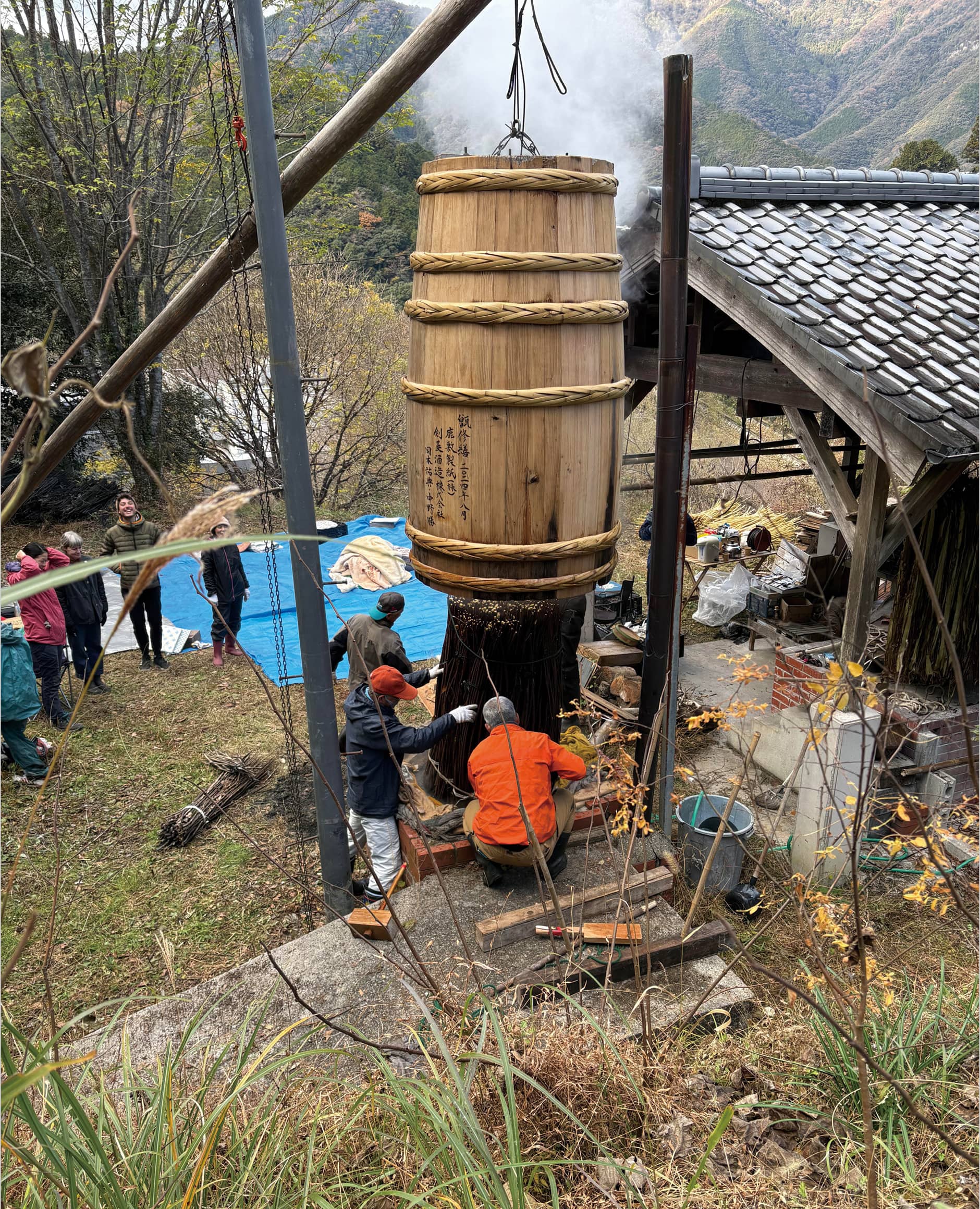
I currently live in Nagano Prefecture, where I personally cultivate tororo-aoi, a plant used as a raw material for washi paper. For example, even with something like washi, it is crucial to understand how differences in raw materials—such as kōzo, mitsumata, and ganpi—affect the final artwork. By having students personally experience the process from planting the seed to cultivation, I aim to foster individuals equipped with a discerning eye. Of course, we also emphasize fieldwork that takes advantage of Kyoto's unique, traditional character.
I believe that for future students, the role of facilitation will become increasingly important. This will be a crucial skill not only in art and design but in many fields. Personally, I anticipate a major shift towards a two-way research method, where student research also feeds back into my own.
UEDA : When I think of collaborative research partners, given my own background in museums, my focus tends to be on curators at art galleries and museums. In this new college, however, we aim to engage with a much broader range of stakeholders, including the aforementioned art handlers, transportation professionals, media business divisions, corporate cultural affairs departments, artwork owners, and artists' families. This, too, is the fieldwork of art management.
I believe that by advancing research through practice alongside our students, we can contribute to solving real-world problems within museums and art galleries. I hope that our students will be proactive.