

Outline of collaborative research
As a densely populated nation with increasing industrial demand, Bangladesh continues to experience severe power shortages, relying on imports for nearly 65% of its total energy supply. Leveraging abundant solar resources, low labor costs, and growing industrial capacity, the country aims to increase renewable energy’s share in total electricity generation from under 3% today to about 40% by 2050. Concurrently, the rapid growth of the electronics sector necessitates the development of advanced devices such as MOSFETs, photodetectors, and solar cells to meet rising domestic and industrial demands.
To this end, a collaborative research framework was established in 2023 between Ritsumeikan University and three Bangladeshi institutions; the University of Dhaka, the University of Rajshahi, and Bangamata Sheikh Fojilatunnesa Mujib Science & Technology University. The initiative integrates Bangladesh’s theoretical and simulation expertise with Japan’s advanced fabrication capabilities to develop energy harvesting and saving technologies using two-dimensional transition metal dichalcogenides (TMDCs), renowned for their superior electronic and optical properties over silicon. This year, our collaboration has further expanded to integrate TMDCs with river sand derived silica, abundant in Bangladesh, for environmental remediation.
This collaboration aims to strengthen global research networks, nurture early-career researchers, and contribute substantively to sustainable energy transitions and carbon neutrality.
Papers, etc.
Peer-reviewed papers
- Abdul Kuddus, Shaikh Khaled Mostaque, Shinichiro Mouri, Jaker Hossain. Emerging II-VI Wide Bandgap Semiconductor Device Technologies. Physica Scripta, 99, 022001 (2024). https://doi.org/10.1088/1402-4896/ad1858
- Tanvir Ahmed, Sheikh Noman Shiddique, Abdul Kuddus, Mainul Hossain, Shinichiro Mouri, Jaker Hossain, Design and analysis of inorganic tandem architecture with synergistically optimized BaSnS3 top and AgTaS3 bottom perovskite Sub-Cells, Solar Energy, 284, 113111, (2024). https://doi.org/10.1016/j.solener.2024.113111
Symposia, seminars, etc.
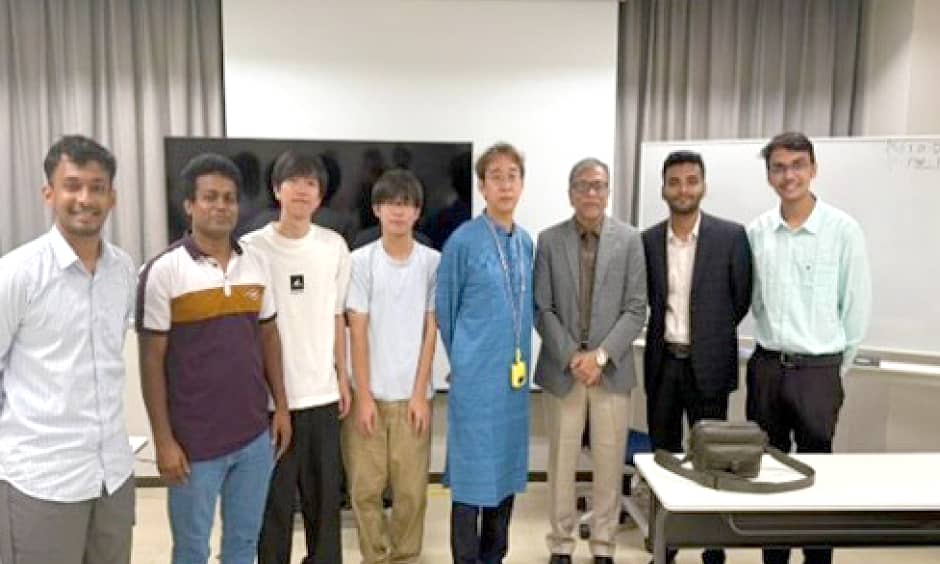
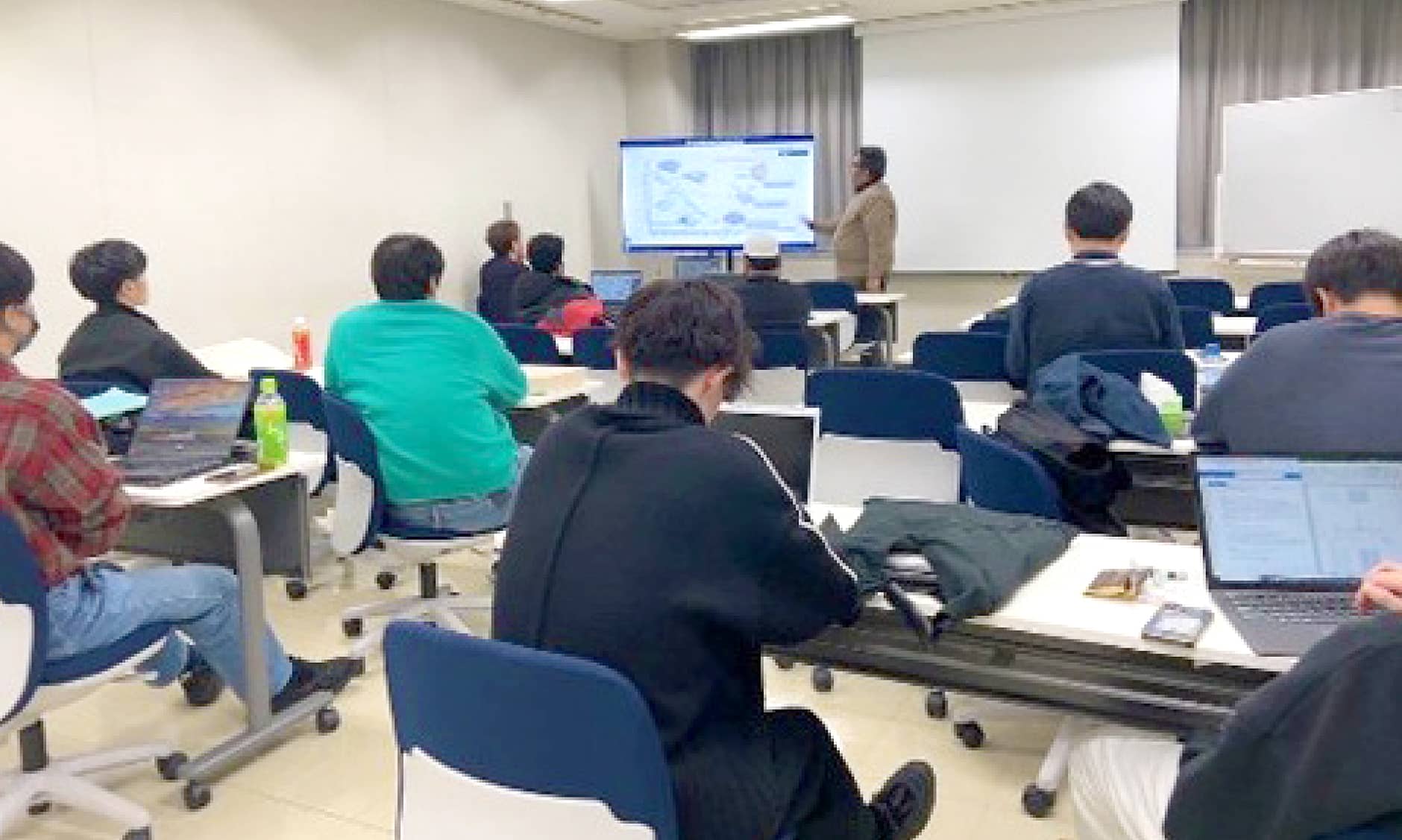
- Joint Research Seminar on “Synergistic Integration of River Sand-Extracted Silica Nanoparticles, Metal Oxides, and Layered Semiconductors for Sustainable Energy and Environmental Remediation”, Ritsumeikan University BKC, Japan, Sep. 18th, (2025).
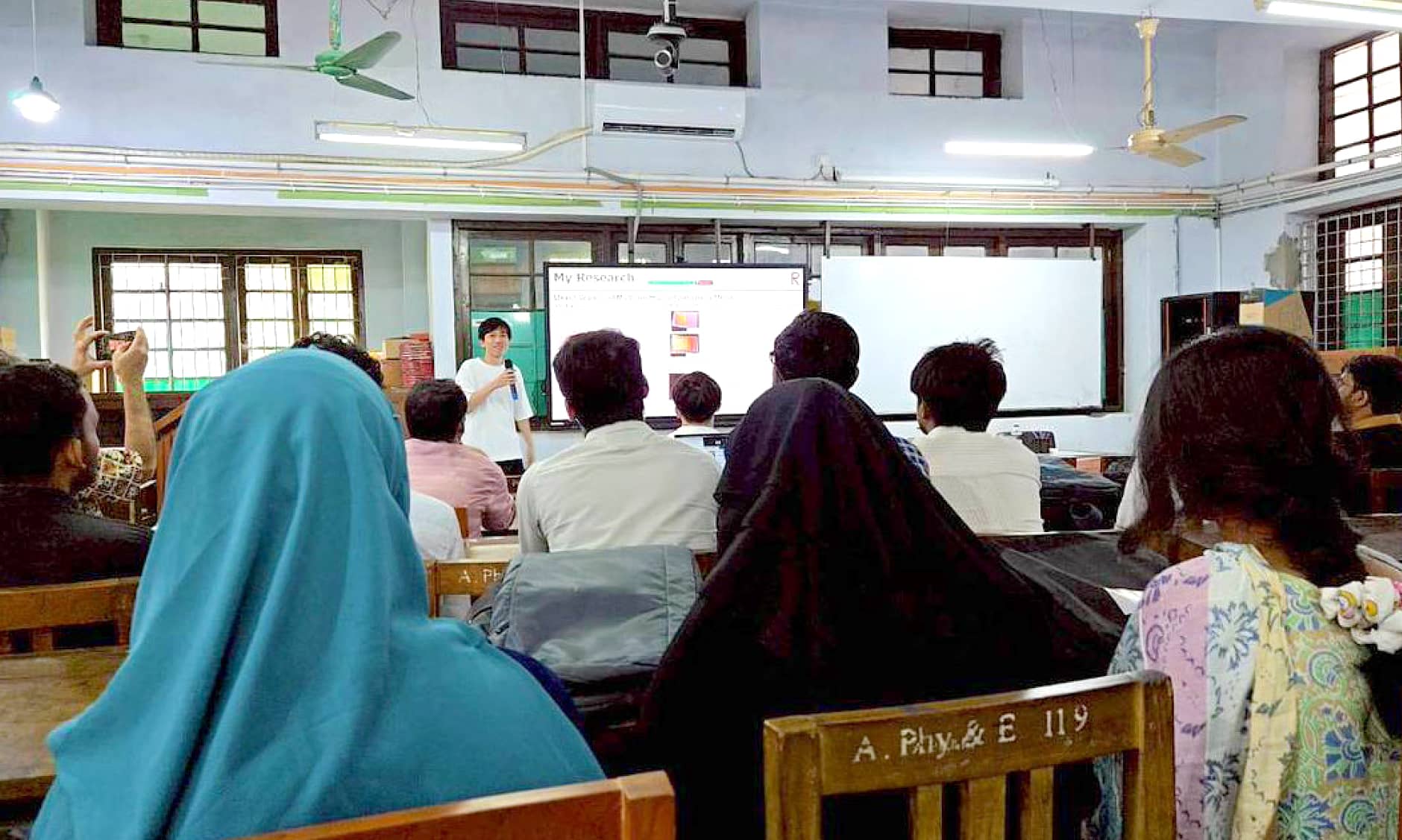
- Joint Research Seminar on “Two-dimensional Transition Metal dichalcogenides-based Devices for Emerging Energy Applications: Design, Simulation, and Experimental study”, University of Dhaka, Bangladesh, Aug. 20th, (2025).
Future prospects/aspiration
Our collaboration aims to address wastewater issues in countries with a textile industry, such as Bangladesh, while contributing to the attainment of the SDGs (Target 6). Through my visit to Bangladesh, I found that many students are highly motivated, and I would like to make efforts to provide them with research opportunities in Japan. We have presented recent findings from this project at national and international conferences (JSAP Meeting 2025 and PVSEC-36 in Thailand), and plan to submit two papers by the end of this year. Additionally, we are preparing applications for national research funding programs such as SATREPS and remain dedicated to further advancing this ongoing collaboration.