


In commemoration of RADIANT's 10th anniversary, we have launched a feature showcasing interviews with international researchers, in the hope that it helps prospective international researchers envision life at Ritsumeikan University.
The Academic Journey and Ritsumeikan
RADIANT, R hereinafter: You have a fascinating background. Can you share a little about your career path before you arrived at Ritsumeikan?
Dr. Paul Haimes, PH hereinafter: My early career started in Australia. After studying information technology and multimedia, I spent about a decade working in the software and web design industry. I eventually decided to pivot back to academia to pursue a PhD in Interaction Design (IxD) at Edith Cowan University. That path brought me to Japan initially for a short stay at the Faculty of Systems Design at Tokyo Metropolitan University (TMU), which led to a two-year postdoctoral researcher position there. I also spent a brief time as a postdoctoral researcher at the Human Informatics and Interaction Research Institute (HIIRI) at AIST in Tsukuba before moving to the Kansai region in early 2019 to join Ritsumeikan.
R: That’s been quite a journey! What was the main reason you decided to come to Ritsumeikan and settle in the Kansai area?
PH: The position at Ritsumeikan really appealed to me because the program was designed to be taught by both international and Japanese faculty, catering to a mix of Japanese and international students. On a more philosophical level, I felt that the University Charter’s emphasis on the ideals of peace, democracy, and academic freedom aligned perfectly with my personal views. And, on a much more personal note, I’ve always found the atmosphere in Kansai to be more relaxing than Tokyo. Plus, I’m a huge fan of okonomiyaki (Japanese savory pancake popular in Osaka), so that definitely helped seal the deal!
Deep Dive into Research
R: Your research spans design and philosophy. Could you give us a brief overview of what you are currently investigating?
PH: My foundational background is in interaction design (IxD), but my interests are quite broad, including areas like architecture. More recently, I’ve developed a deep interest in the philosophy of aesthetics, particularly Japanese aesthetics. I spend a lot of time exploring the influence of traditional arts and crafts on contemporary design, looking at how these influences vary across different cultures, and studying the ‘syncretism’—or merging—that happens when various cultural traditions intersect. This isn’t just academic for me; it also heavily influences my work as a designer and artist, and even dictates how I travel in Japan, as I’m often drawn to historical places known for their arts or crafts.
Life in Kyoto and Days off
R: Shifting gears to daily life—where do you live in Kansai, and what do you enjoy about your neighborhood?
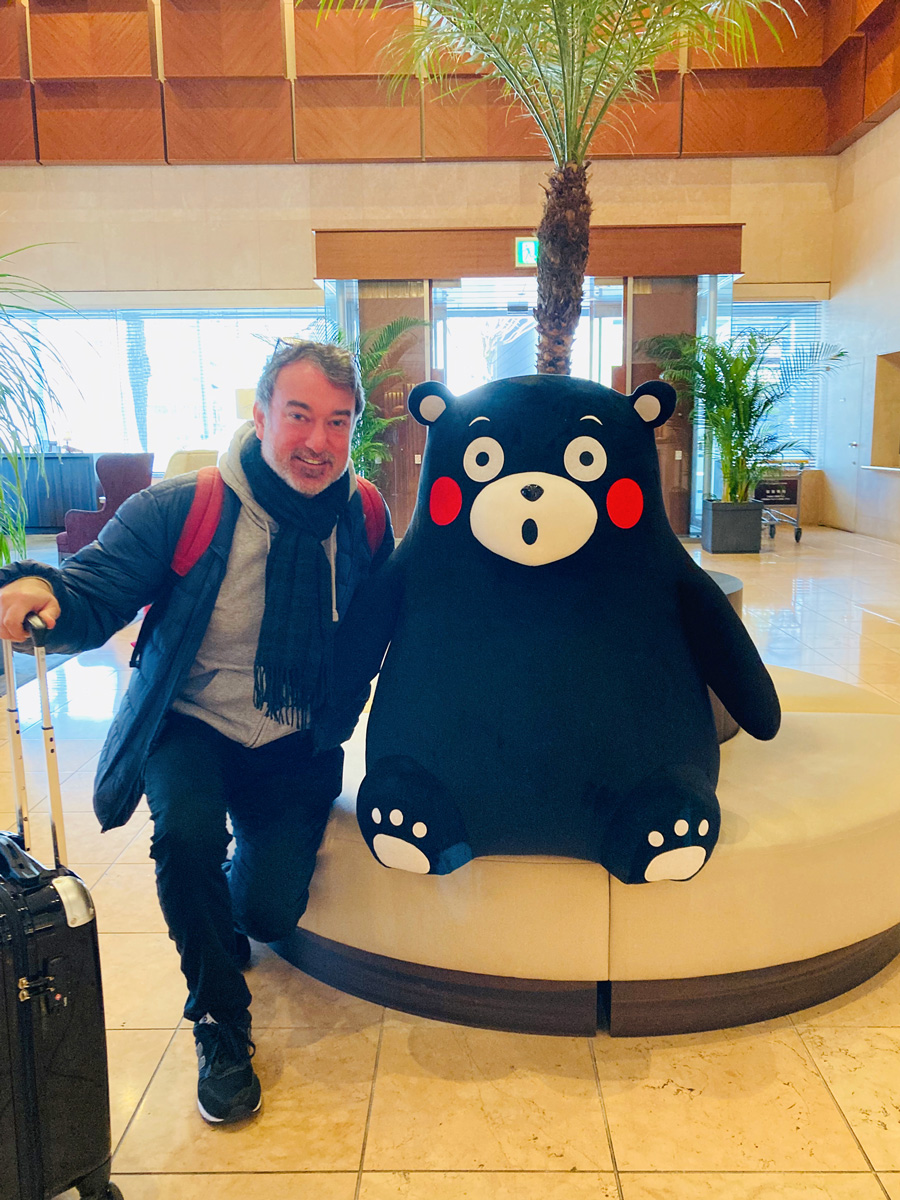
PH: We live very near the center of Kyoto, which is wonderful because we are surrounded by so many great izakayas (Japanese-style pubs) and cafes. Being Australian, good coffee is really important to me. I was happy to discover local spots like Mogu Mogu, IO LITE, and Weekenders that know how to make a proper flat white. We also love attending the local festivals and events in our neighborhood. I’ve even befriended the chef at one of my favorite local izakayas, who has helped me cultivate a taste for nihonshu (Japanese sake) and understand which foods pair well with it.
R: That sounds like a perfect Kyoto life! How do you spend your days off? Do your hobbies intersect with your research?
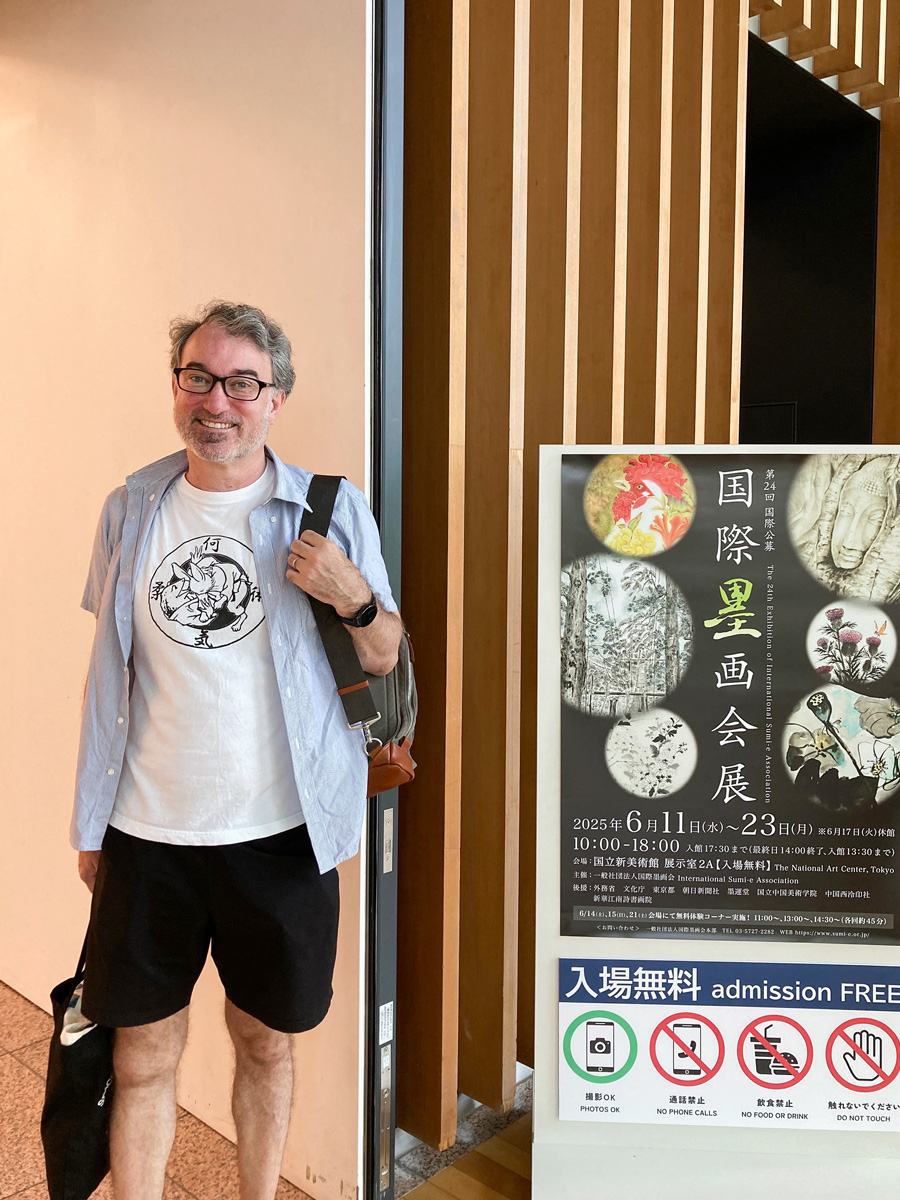
PH: A lot of my interests are indeed connected to Kyoto and my research. My wife and I learn Japanese suibokuga (ink painting) together; it’s fascinating because some of the great masters in the Edo period, like Maruyama Ōkyo and Itō Jakuchū, were from Kyoto. I’ve also returned to photography lately, focusing on social landscapes and architecture, and I always look forward to cultural events like the Bon Odori and the Gion Matsuri. For exercise, I practice Brazilian Jiu-jitsu (BJJ), which has a cool historical link to Kōsen jūdō here in Kyoto. Occasionally, I check out experimental music events at venues like Soto. But most evenings, I cook dinner while cheering on the Hanshin Tigers (a professional baseball team in Japan)!
R: Do you and your family have a go-to spot for relaxation or a quick trip out of the city?
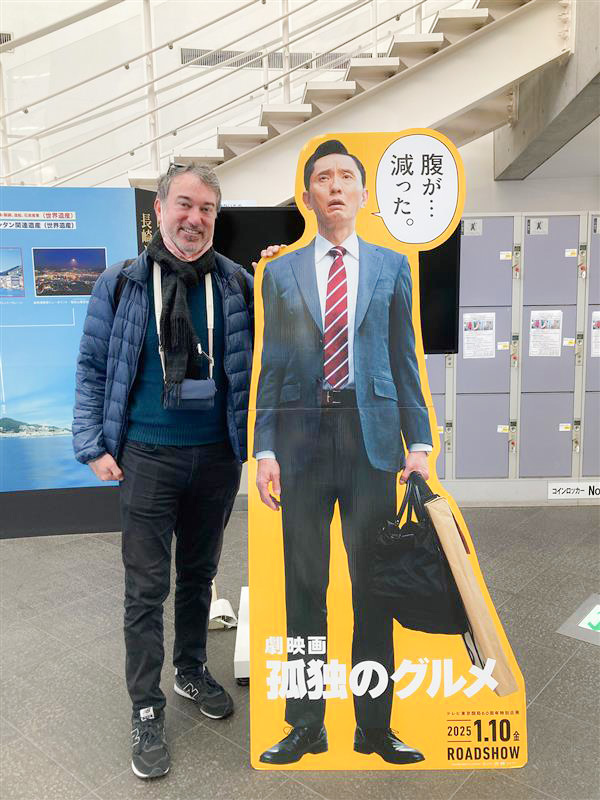
PH: For many years, we have regularly visited the northern Kyoto coast. We stay at an onsen ryokan (traditional Japanese inn) in Miyazu that is almost 300 years old. The food there is incredible; they use fresh local ingredients, including locally-caught seafood, and serve some nice jizake (locally-made sake). We’ve become quite friendly with the owners, who are a lovely family. Staying there for a night or two, soaking in the onsen, is one of the most refreshing things I do. Every year, I try to go swimming at the beach in Amanohashidate, but you have to make sure you get there in early summer before the jellyfish show up! I also really enjoy exploring the other seaside towns in that area, like Kumihama, Maizuru, and Ine. I think the Kyoto seaside is generally underappreciated.
Looking Ahead
R: Finally, what exciting projects are coming up for you in your research at Ritsumeikan?
PH: Right now, I’m working on some experimental hardware and software applications that explore the psychological and artistic connections between musical notes and color. I’m using Isaac Newton’s original color wheel—which mapped the seven notes of the Western music scale to colors—as a starting point for this. More broadly, I’m continuing my deep investigation into the connections between traditional arts and crafts and contemporary design, including architecture. I’m also writing a book focusing on Japanese design, which I plan to incorporate into my teaching. I maintain active collaborations both within Ritsumeikan and with my former colleagues at TMU, and I continue to participate in exhibitions of my design and artworks when the chance arises.