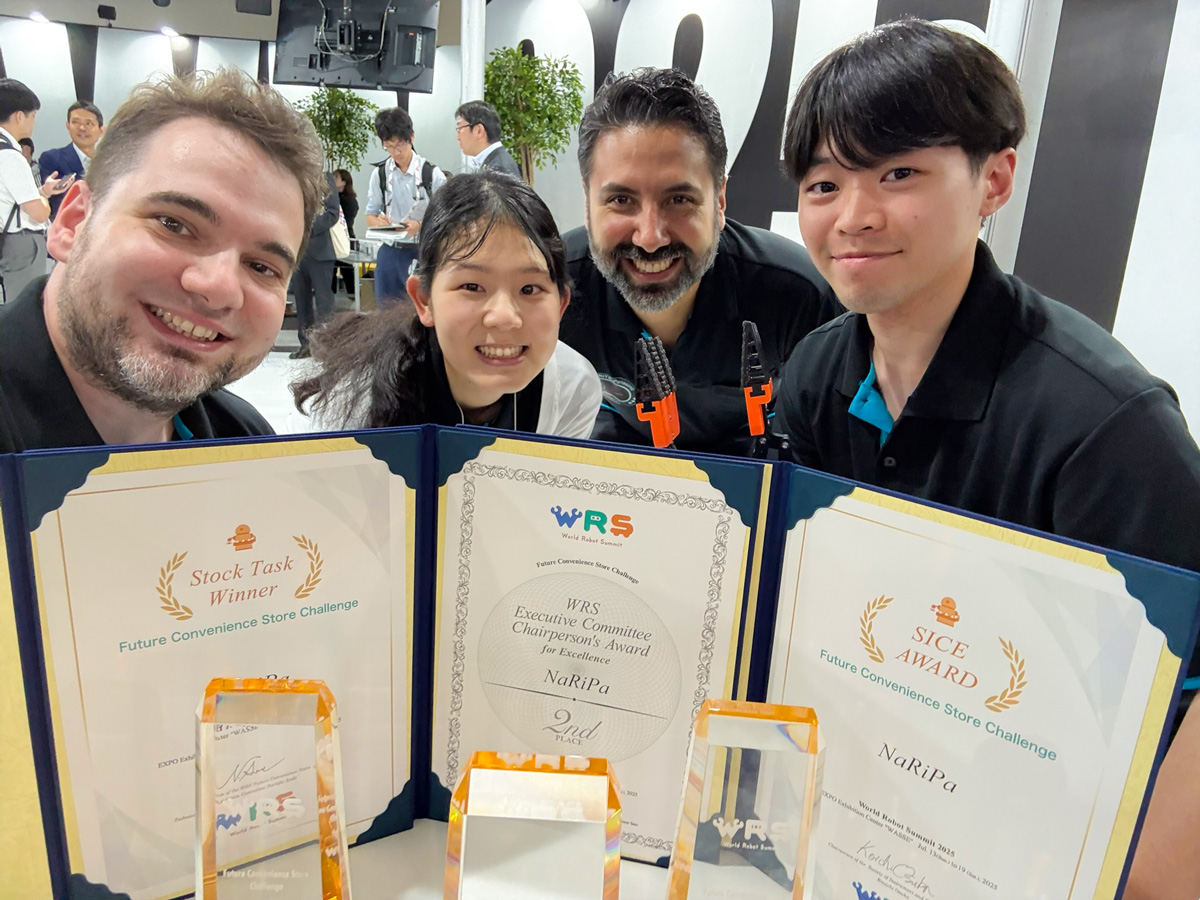


In commemoration of RADIANT's 10th anniversary, we have launched a feature showcasing interviews with international researchers, in the hope that it helps prospective international researchers envision life at Ritsumeikan University.
The Academic Journey and Ritsumeikan
RADIANT, R hereinafter: Could you start by telling us a bit about yourself, your current role, and how you ended up here at Ritsumeikan University?
Dr. Lotfi El Hafi, LEH hereinafter: Certainly! My name is Lotfi El Hafi, and I’m an Associate Professor at the Research Organization of Science and Technology (SOKEN). I received my MScEng in Mechatronics from UCLouvain (Belgium) in 2013 and later my PhD in Engineering from NAIST (Japan) in 2017. I’ve been at Ritsumeikan since 2017—that’s about eight years as of 2025. Before settling here, I even contributed to the TICO compression for UHD 4K/8K video (later standardized as JPEG XS) during my master’s internship in collaboration with intoPIX.
R: That’s been quite a journey! What was the major draw that convinced you to join Ritsumeikan specifically?
LEH: The main pull was the opportunity to work with Prof. Tadahiro Taniguchi (now Professor at Kyoto University). We had connected through international robotics competitions, like the Amazon Robotics Challenge 2017. I joined his Emergent Systems Laboratory to work on service robotics and artificial intelligence (AI) within the Ritsumeikan Global Innovation Research Organization (R-GIRO). His vision closely aligned with my interests in embodied AI and real-world deployment alongside novel user interfaces such as extended reality (XR).
R: Moving across cultures for research must have presented unique challenges. What was the steepest learning curve when you first arrived?
LEH: The biggest challenge was definitely adapting to Japanese research culture and implicit communication styles. This required deliberate learning and practice, as it goes beyond just language proficiency. Administrative hurdles, such as navigating visas, taxation/accounting when dealing with industry, and public grant applications, also took some time to learn. However, these experiences helped me develop durable, cross-cultural collaboration practices with colleagues across Japan, which was really worth the effort in the long term.
Research & Innovation
R: Could you give us the elevator pitch for what you are working on right now?
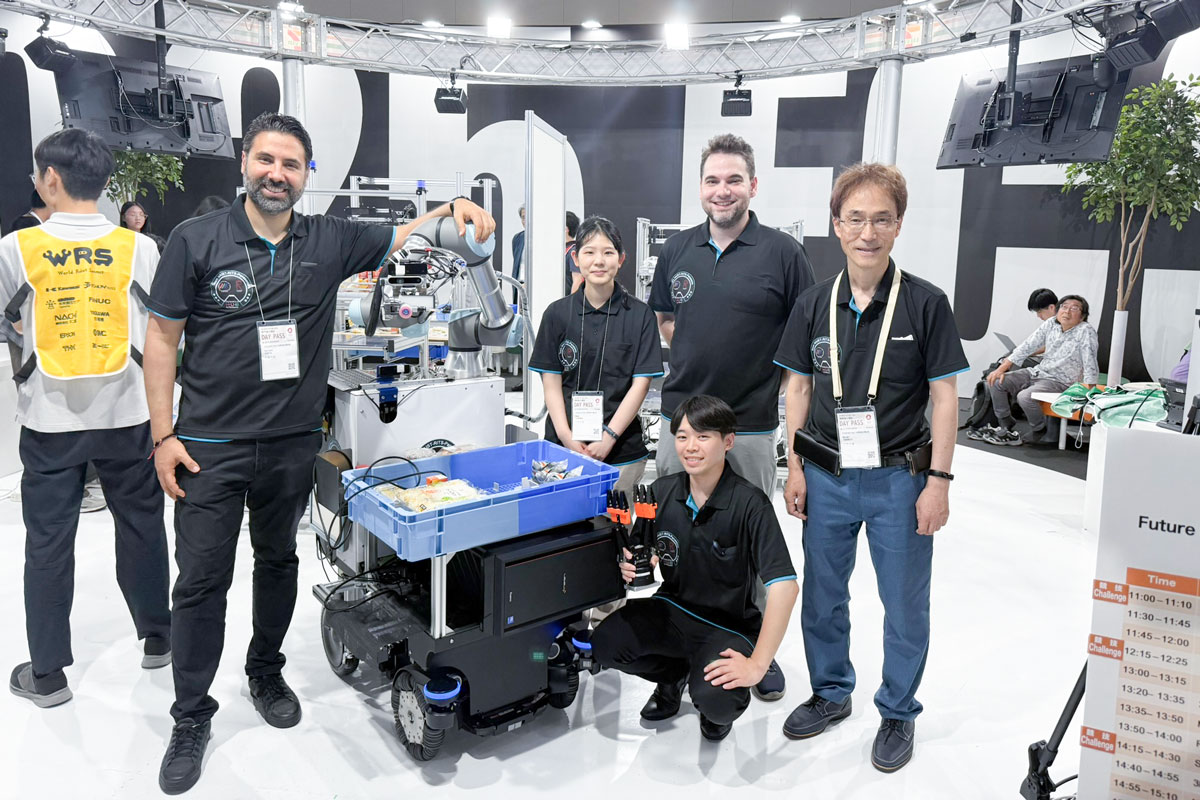
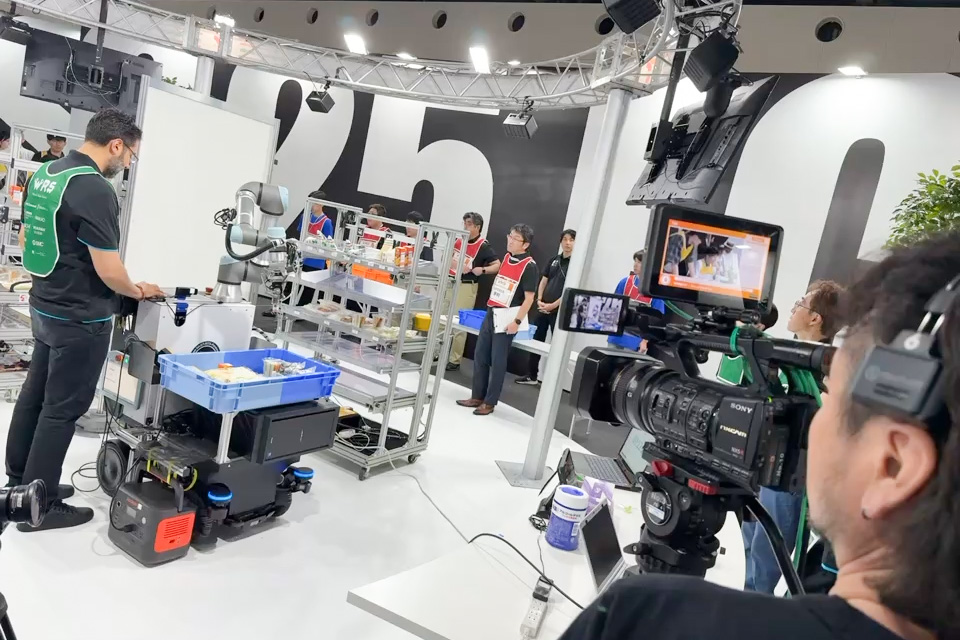
LEH: I primarily contribute to the JST Moonshot R&D Program, led by Prof. Hiroshi Ishiguro of Osaka University, which aims for “The Realization of an Avatar-Symbiotic Society where Everyone Can Perform Active Roles without Constraint.” My work sits at the intersection of service robotics and AI, focusing on multimodal robot learning in XR and ensuring robust system integration. I also build open, containerized software development environments (SDEs) to accelerate cross-institutional R&D and technology transfer in robotics with my company, Coarobo GK, based in Kyoto Prefecture.
R: How do you find the research environment and support programs here at Ritsumeikan?
LEH: Ritsumeikan University provides a strong, collaborative environment. Research groups like the R-GIRO and the Emergent Systems Laboratory actively support ambitious, interdisciplinary projects, student mentorship, and industry-academia collaboration. I’ve personally received multiple intramural funding as Principal Investigator, including the Ritsumeikan International Collaborative Research Promotion Program. This funding helped me establish a vibrant Japan-EU international research hub with partners including UCLouvain (Belgium), Karlstad University (Sweden), and the University of Southern Denmark. We are focused on developing human-robot collaboration technologies using AI and XR to address critical Industry 5.0 and Society 5.0 challenges, such as labor shortages and an aging population, as outlined by the Cabinet of Japan.
Life Outside the Lab
R: Shifting gears—where do you call home in Japan, and what’s it like living there?
LEH: I live in Nara, near Takanohara Station. It is a wonderful area—very peaceful and family-friendly. It offers convenient access to Nara City’s cultural sites and to the industrial/research centers of Kyoto and Osaka. It’s a great balance between green spaces and research institutions.
R: With such demanding research, how do you spend your days off?
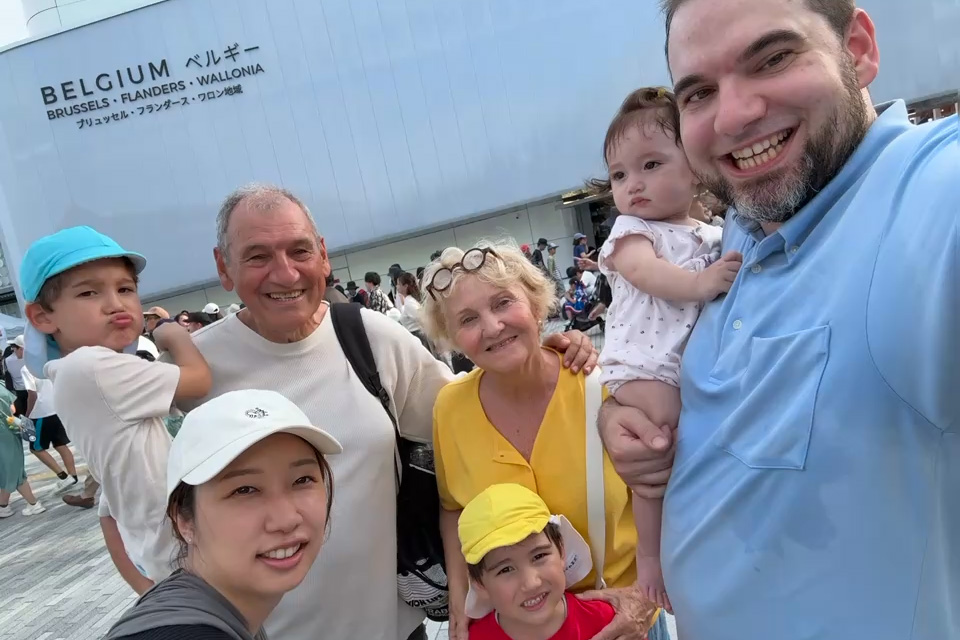
LEH: My wife and I have three young children—ages 1, 4, and 5—so our weekends definitely revolve around family activities and responsibilities! Currently, most of my time off is dedicated to their pursuits, including swimming, programming, and piano classes. When the weather cooperates, we make sure to spend time outdoors in the nearby parks. In the remaining time, I enjoy video games, particularly those with captivating storylines, such as RPGs.
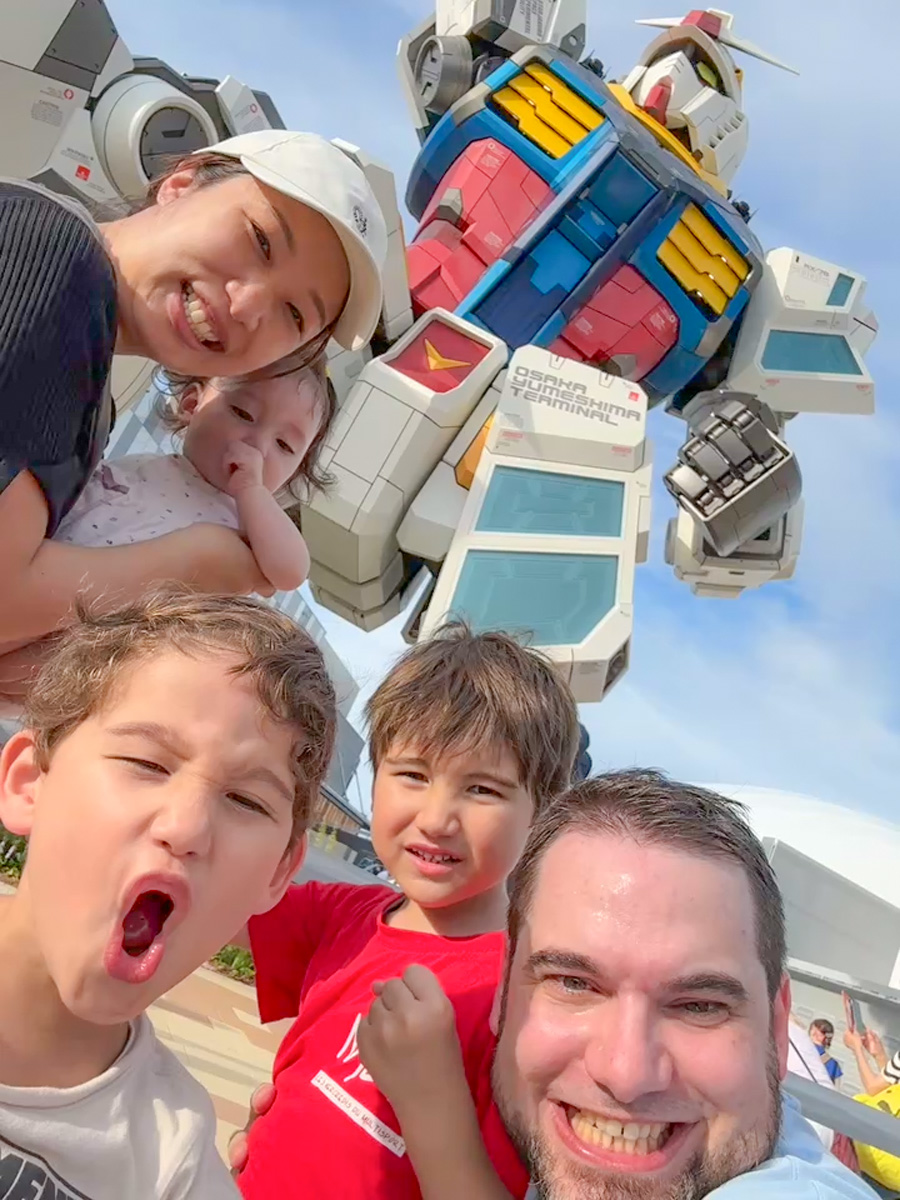
R: That sounds like a busy but happy household! Do you have a favorite family spot in the area?
LEH: We mainly enjoy the surroundings of Nara and parks in the Keihanna area (south of Kyoto Prefecture). However, I have a special secret spot: Mount Wakakusa. It offers beautiful views of the Nara City skyline at night. It also holds sentimental significance for my wife and me, as it’s the location where I proposed to her and where we held our photo wedding.
R: That’s a lovely memory. Speaking of connections, who do you regularly interact with socially at Ritsumeikan University?
LEH: In addition to my supervisor, Prof. Tadahiro Taniguchi, I interact closely with Lecturer Akira Taniguchi (College of Information Science and Engineering) and Associate Professor Gustavo Garcia (R-GIRO/SOKEN). We share projects and responsibilities, especially regarding the supervision of international early-career researchers and visitors. I also engage frequently with other colleagues and students from the Emergent Systems Laboratory and collaborators connected to the R-GIRO and the JST Moonshot R&D Program.
Looking Ahead
R: Finally, what is your main focus for your research at Ritsumeikan going forward?
LEH: My primary current project is the JST Moonshot R&D Program, aiming to realize the avatar symbiotic society. Within this context, I want to advance multimodal robot learning in XR to strengthen the large-scale deployment of intelligent services. In parallel to research, I also aim to deepen industry-academia partnerships and, crucially, mentor the next generation of early-career researchers at Ritsumeikan University.