


In commemoration of RADIANT's 10th anniversary, we have launched a feature showcasing interviews with international researchers, in the hope that it helps prospective international researchers envision life at Ritsumeikan University.
We sat down with Dr. Gian Powell B. Marquez, an Associate Professor at the College of Global Liberal Arts, to discuss his journey, his research, and how he manages a fulfilling academic career alongside family life in Japan.
The Academic Journey and Ritsumeikan
RADIANT, R hereinafter: Could you introduce yourself—your name, position, and affiliation?
Dr. Gian Powell B. Marquez, GPM hereinafter: My name is Gian Powell B. Marquez, and I am an Associate Professor affiliated with the College of Global Liberal Arts (GLA).
R: Before joining Ritsumeikan, where did your academic path take you, and how long have you been with the University?
GPM: Before I joined the GLA program here at Ritsumeikan University in 2019 as an Assistant Professor, I worked as a postdoctoral researcher at the Institute of Materials and Systems for Sustainability (IMaSS) at Nagoya University. Joining Ritsumeikan was an exciting transition, as I became part of the pioneering faculty team that helped launch the GLA program. It’s hard to believe, but six years have already passed since I started—it has been both intellectually rewarding and personally fulfilling.
R: What was the primary factor that drew you to Ritsumeikan University?
GPM: It’s quite an interesting story! Before moving to Osaka, I hadn’t actually heard much about Ritsumeikan. That changed during a chance encounter on a train near Nagoya, where I met my “super senpai”—someone who had studied and lived in Nagoya since the 1980s. She spoke highly of Ritsumeikan, describing it as one of Japan’s top private universities, which immediately sparked my curiosity.
Later, when I visited Osaka Ibaraki Campus (OIC), I was genuinely impressed by the thoughtful design intended to foster collaborative and independent learning, which really resonated with my values. For me, teaching and research are passions that shape how I live and think. The deciding factor was the idea of being able to teach what I research, not just conduct the research itself, in a place that supports this mission with excellent facilities and a forward-thinking environment. That realization made Ritsumeikan the clear choice.
R: Did you face any challenges unique to international researchers when you first arrived?
GPM: Thankfully, I didn’t encounter any major challenges that felt uniquely difficult for international researchers. What truly helped smooth the transition was how supportive and accessible the Research Office was. Whenever I had questions—especially about Japanese documents or administrative procedures—they were always just a message or visit away, which allowed me to focus much more on my academic work.
Deep Dive into Research
R: Could you briefly explain your research field?
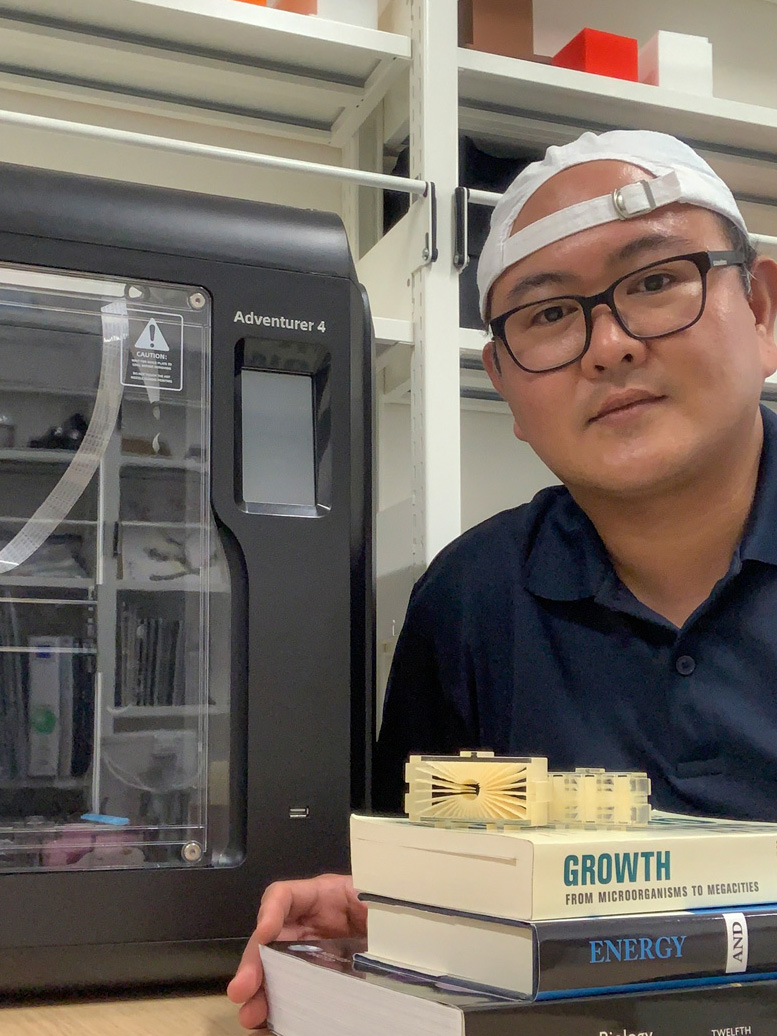
GPM: My research centers on biogas technology, specifically focusing on how to enhance process efficiency using various types of biomass. When I joined Ritsumeikan, I was introduced to the concept of systematic innovation, which opened up new perspectives for my work. I’ve since been integrating innovative ideation methods to reimagine how traditional biogas systems can be adapted for a rapidly modernizing society. This approach enables me to explore not only technical improvements but also broader applications aligned with contemporary environmental and energy challenges.
R: How would you rate the research environment at Ritsumeikan University?
GPM: Overall, the environment is outstanding. From the perspective of prospective students and researchers, the University offers excellent support for research funding, even extending beyond graduation.
For me personally, what truly stands out is the strong emphasis on multidisciplinary collaboration. The facilities are modern and well-equipped, and the organizational structure encourages cross-disciplinary dialogue, which is absolutely essential for tackling complex, real-world problems. It’s an environment that is highly conducive to both research and innovation—a place where ideas can genuinely thrive.
Life in Ibaraki City and Days Off
R: You mentioned the OIC. Where do you live, and what is life like in that area?
GPM: I live in Ibaraki City, Osaka. I chose to settle here primarily because the OIC is located in the area. The OIC’s core concept emphasizes community and regional collaboration, and I felt that the best way to embody this philosophy was to become a part of the community where the University’s impact is most directly felt.
Living in Ibaraki has been a wonderful experience; it offers a peaceful and family-friendly environment. My children particularly enjoy community events like the annual Ibaraki × Ritsumeikan Day, and we often spend time at Iwakura Park. It truly strikes a perfect balance of tranquility and convenience, as we still have easy access to the vibrant heart of Osaka and the cultural richness of Kyoto.
R: How do you typically spend your days off?
GPM: My days off are usually spent with my children. Since they are still quite young, we tend to stick to places that are easily accessible by train or bus, such as kid-friendly malls and nearby attractions. Some of our favorite spots include Expo’70 Commemorative Park, Rose Garden at Wakazono Park, and the View Deck at Osaka Itami Airport. These simple outings are enjoyable and allow us valuable bonding time while exploring the local area.
In the spring, we also participate in hanami—cherry blossom viewing—with my children’s friends around the community. It’s a lovely tradition that brings neighbors together and creates lasting memories.
R: Do you have a single favorite place to visit as a family?
GPM: I wouldn’t say I have a single favorite place—any spot where my kids are smiling and having fun quickly becomes a favorite for me. The memories we create together matter more than the location itself.
That said, if I had to pick one, it would probably be NIFREL Interactive Aquazoo at ExpoCity. My children are huge animal lovers, and getting the chance to interact with them up close is exciting, truly sparking their curiosity and wonder. It’s a special place where learning and play come together for all of us.

R: Given your busy schedule, how are your social relationships with colleagues at Ritsumeikan?
GPM: Most of my colleagues live in Kyoto, so outside of occasional gatherings like the end-of-semester dinner, I rarely get the chance to socialize with them outside of work. Right now, my main priority is balancing the demands of raising my three young children alongside teaching and research publication. It’s a full plate, and social interactions sometimes have to take a back seat. As the saying from Finding Nemo goes, “Just keep swimming”—and that’s exactly what I’m doing until things naturally fall into place.
Looking Ahead
R: What is your future outlook for your research at Ritsumeikan?
GPM: My research, which involves wet-lab experiments at Biwako-Kusatsu Campus (BKC), has been progressing at a slower pace recently, primarily because my third child arrived in May. Due to this, I haven’t been able to visit the BKC as regularly as I would like.
Despite the temporary slowdown in lab work, I’ve continued to integrate innovative ideation into my projects and collaborate with research professors for experimental testing. My current focus is heavily on writing and preparing manuscripts for publication. I am truly grateful for the understanding and support Ritsumeikan University has extended during this period, allowing me to maintain momentum in my research while attending to essential family responsibilities.