

How do children come to understand the human mind, body, and communication from the moment they are born? Professor Shoji Itakura has pioneered a new field of research known as Developmental Cybernetics, using proof-of-concept studies with robots to explore this fundamental question.
Studying interactions and integration between children and non-human agents
After spending more than ten months growing in the womb, how does a newborn infant begin to develop a human mind and perception upon entering the outside world for the first time?
Itakura seeks to answer this question through the lens of Developmental Cybernetics, a new research field he pioneered. A term he coined himself, Developmental Cybernetics is defined as the study of interactions and integration between children and non-human agents (i.e., entities capable of action). “By understanding how infants and toddlers make sense of interactions with agents such as communicative machines, humanoid robots, or even geometric figures, we may be able to uncover something fundamental about what it means to be human,” Itakura explains his motivation for the research.
Toddlers perceive “human-likeness” in a robot’s gaze
To date, Itakura has focused on the concepts of the “mind,” the “body,” and “communication” as key theoretical pillars of Developmental Cybernetics, elucidating the processes and mechanisms through which infants and toddlers come to understand them. One of the central questions he explores is whether infants and toddlers perceive robots as social partners.
It is widely known that infants and toddlers can imitate. “In Meltzoff’s famous experiments on neonatal imitation, infants imitate both human and mechanical actions, but only when imitating humans do they understand the intention or objective behind the action,” Itakura explains. Building on these findings, he has conducted further research using humanoid robots.
In one experiment, toddlers aged 24 to 35 months were shown videos in which a robot received a dumbbell-shaped object from a social partner (an adult) and attempted to separate it into two parts. The study examined whether the children would imitate the action. The toddlers were shown four types of videos. Conditions were set to include cases where the robot successfully completed the task and cases where it failed, and within each of these, cases in which the robot made eye contact with the social partner and cases in which it did not.
The results showed that when the children viewed the videos with the social partner, they were able to complete the action themselves regardless of whether the task was completed or failed. “What proved particularly interesting was when we showed them the videos of the robot. Only when the robot made eye contact with the social partner were the toddlers able to complete the action even if the robot failed. These findings suggest that toddlers do not perceive human-likeness based on a robot’s humanoid form, but rather through social signals such as eye contact,” Itakura notes.
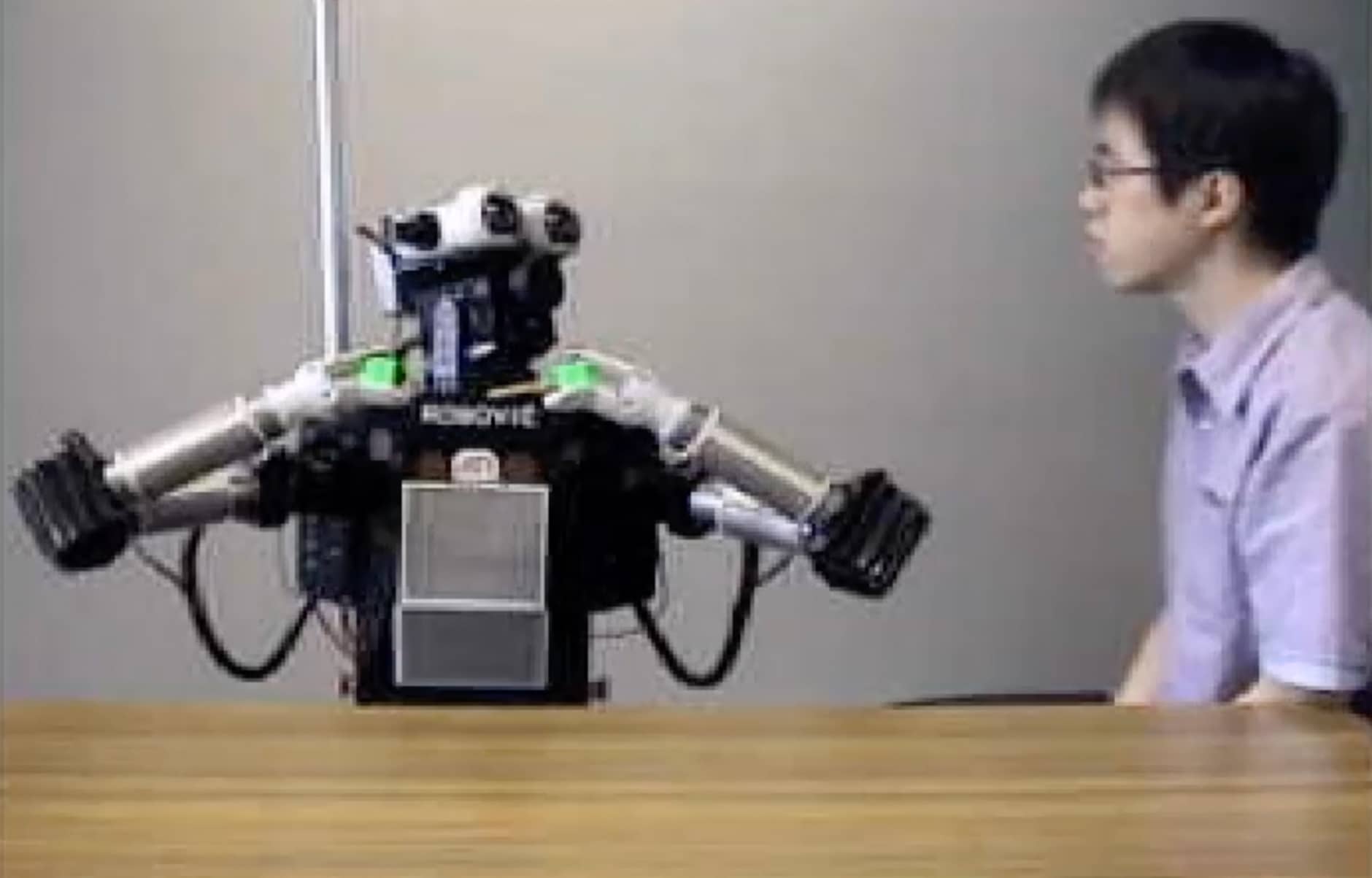
Based on these findings, Itakura offers important insights into the functions required of robots that interact with humans. “If social signals such as eye contact can elicit the same responses from infants and toddlers as human interactions do, then robots designed to interact with humans may not need to be humanoid. This may, in fact, point to the very essence of human communication,” he suggests.
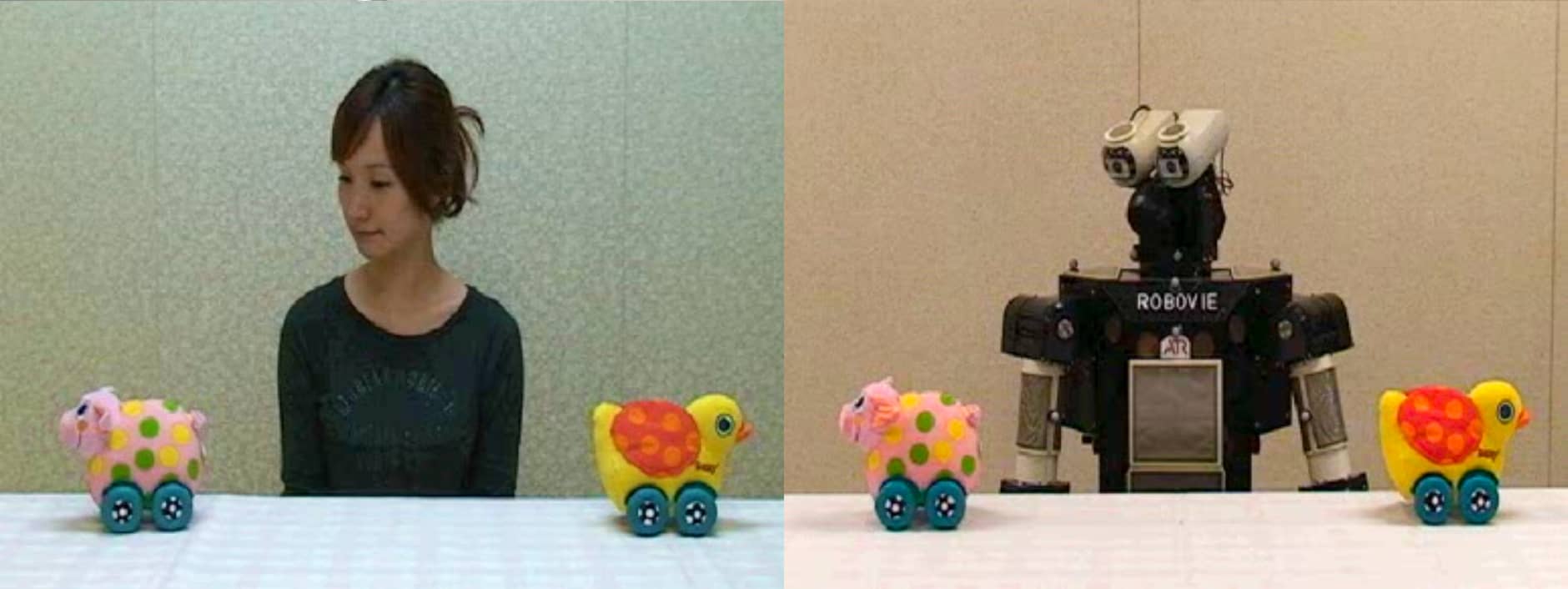
Furthermore, Itakura, along with Okumura and Kanakogi, conducted an experiment that demonstrated the importance of eye contact in communication. Humans possess a trait known as gaze following, in which they direct their attention to the same object another person is looking at, and this ability is acquired at a very early stage of development. Their experiments demonstrated that infants and toddlers are capable of following not only the human gaze but also the gaze of robots. However, they also found that only human gaze facilitates object learning in infants. “In our experiments, infants showed increased recognition and preference for objects that humans looked at, but not for those that a robot looked at. This suggests a unique role of human interaction in learning and may represent one of the mechanisms underlying social learning in humans,” Itakura explains.
How do children begin to understand the structure and functions of the human body?
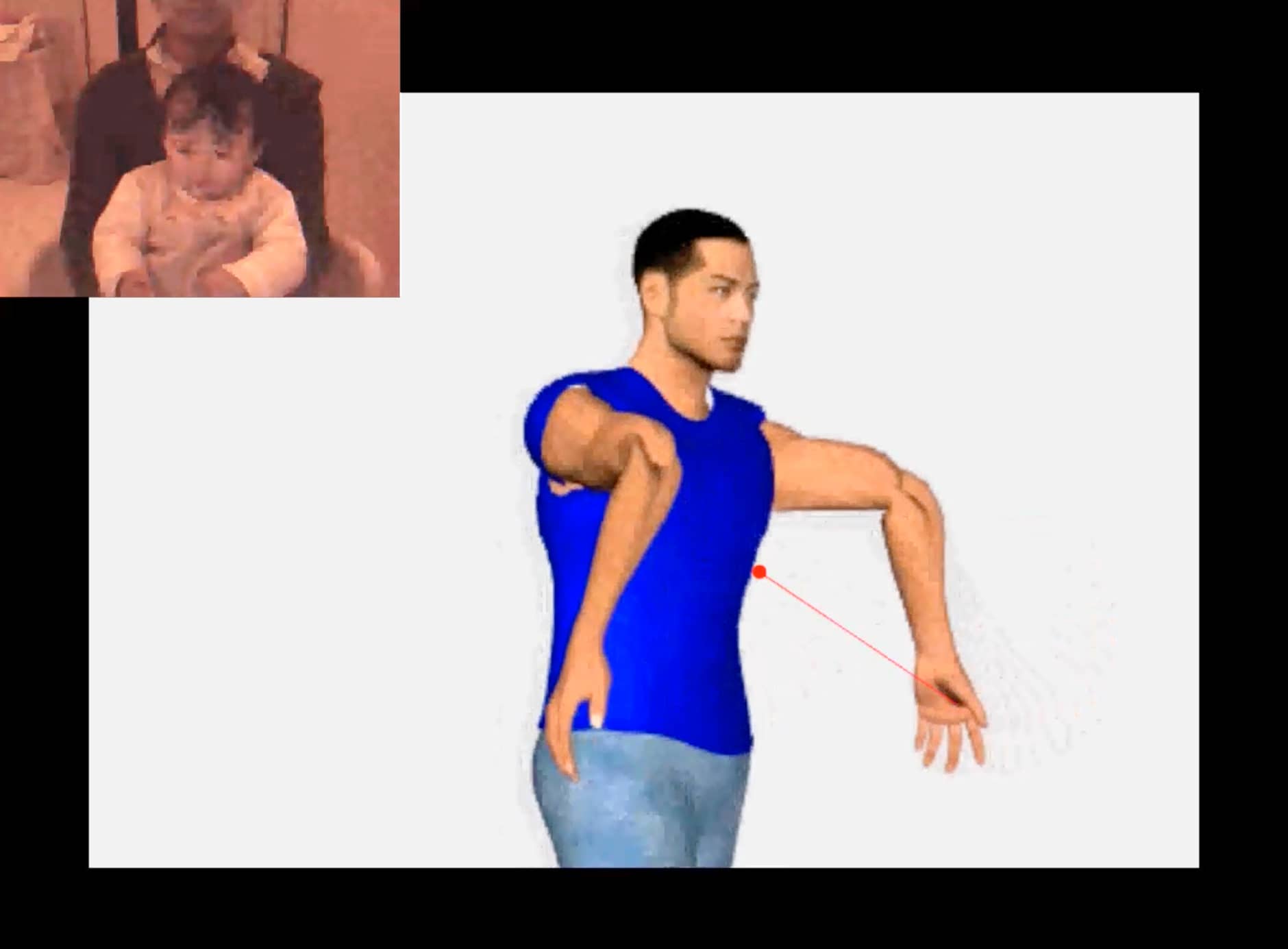
Itakura, together with Morita, is also exploring how children begin to understand the structure and functions of the human body. It is known that infants acquire knowledge about human movement relatively early in development. In their experiments with 9-month-old and 12-month-old infants, as well as adults, participants were shown videos of humans and robots performing both possible movements (such as a naturally bending elbow) and impossible movements (such as an elbow bending backward). The results showed that 12-month-old infants and adults looked longer at the impossible movements, regardless of whether the agent was human or robot, whereas 9-month-old infants made no such distinction. This suggests that by around 12 months of age, infants begin to apply expectations about human movement to robots as well.
“However, when we measured pupil diameter as an indicator of emotional response, only adults showed increased pupil dilation when observing impossible movements. We inferred that this result was not due to 12-month-old infants understanding the functional aspects of human anatomy and focusing on impossible movements, but rather it was the so-called novelty effect—that is, infants seeing something they were not accustomed to,” Itakura explains.
These findings offer important insights into the functions required for robots to elicit appropriate responses from children. As robots become increasingly integrated into daily life and begin to play roles in childcare and education, Itakura’s research in Developmental Cybernetics is expected to make an even greater contribution.