


Expectations for the Graduate School of Frontier Exploration in Earth and Space
ispace

Rise to the challenge! Don’t miss this golden opportunity to experience the maturation of lunar development in real time

Hideari KAMIYA
ispace
Strategy and Business Development
Executive Vice President
* Affiliation and position current as of the time of the interview (March 2026).
COMPANY PROFILE
Company Profile
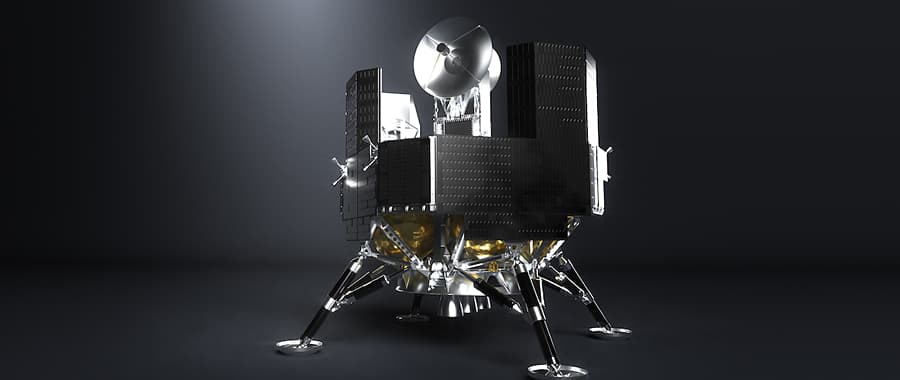
ispace is engaged in the following businesses aimed at building a sustainable world in which Earth and the Moon function as a single ecosystem through the utilization of space resources:
・High-frequency transportation services and data business for lunar orbit and the lunar surface
・Payload development support for lunar orbit and the lunar surface
・Business development with an eye toward the establishment of lunar infrastructure
-
©ispace
We have very high expectations for the graduate school’s efforts to cultivate talent for the space industry. These people will possess not only space technology expertise, but also broad perspectives encompassing management and business creation.
The environmental conditions on the Earth and the Moon differ greatly. Activity on the Moon requires a specialized understanding of the physical environment, systems, safety, and operations unique to the lunar surface and outer space. In the space industry, including startups such as ours, the number of new participants is rapidly increasing, and there is strong demand for work-ready personnel who possess both fundamental expertise and the ability to connect that expertise to implementation and business projects. At the same time, opportunities for students in Japan to systematically and practically study space remain limited. We therefore find it extremely encouraging that the Graduate School of Frontier Exploration in Earth and Space will serve as a place to cultivate people who share the same ambition to dedicate themselves to the pursuit of the Moon and space.
In addition, the development of the space industry requires people capable of crossing fields such as technology, science, business, policy, and social acceptance and integrating different perspectives. In the global space industry, the distinction between “humanities” and “science” backgrounds is considered less important than the ability to think about challenges from multiple angles and collaborate with specialists from other fields. We hope the Graduate School of Frontier Exploration in Earth and Space will cultivate talent equipped with cross-disciplinary knowledge and creativity who can demonstrate value on the global stage.
Furthermore, we find it highly attractive that approximately half of the students will be international students and that the program can be completed entirely in English, creating an international educational environment closely aligned with the realities of the global space industry. At ispace as well, approximately 60% of our employees are non-Japanese nationals, representing about 30 different nationalities. The space industry is fundamentally international, and the ability to communicate in English is a must. In addition, the ability to collaborate with people from diverse cultural backgrounds and produce results through international cooperation is critical. We believe that being able to learn, discuss, and take on challenges within such an international environment from one’s student years will become a tremendous strength for the future.
In addition to engineering positions involved in technology development, we expect graduates to thrive in project management roles that promote projects while maintaining a bird’s-eye view of entire missions, as well as in new business development positions responsible for conceptualizing and launching new lunar-based businesses and services.
Because ispace develops businesses centered on the Moon, employees are expected to possess imagination and conceptual thinking unconstrained by assumptions and conventions taken for granted on Earth. At the same time, it is not enough to remain at the level of ideas alone. The ability to translate ideas into concrete and executable business plans projects is indispensable. As part of this process, in addition to technical understanding, it will be crucial to integrate realistic considerations such as cost, schedules, risks, and partnerships.
Particularly from the 2030s onward, infrastructure development and sustainable activities on the Moon based on stable power supply systems are expected to advance in earnest. At that stage, rather than focusing solely on individual space technologies or component technologies, it will be necessary to integrate multiple elements, such as energy, communications, transportation, habitation, and resource utilization, and conceptualize entire lunar bases and even lunar cities. In other words, we believe that architect-like roles responsible for designing infrastructure and social systems on the Moon will become increasingly important going forward.
Also, from the standpoint of commercialization, marketing-oriented thinking and perspectives are also essential. Rather than relying on unsupported ideas, it is important to think from the perspective of how people live and how society functions on Earth, asking questions such as: “Would something like this be useful on the Moon as well?” or “Could this kind of service provide value to many people?”
Through the learning experience offered by the Graduate School of Frontier Exploration in Earth and Space, we hope students will develop the ability to view technology, business, and society in an integrated manner as well as the ability to integrate complex elements and envision the future lunar society. We hope these kinds of talented individuals will go on to play core roles within ispace.
Knowledge and skills in project management are extremely important. However, it is difficult to manage projects in the space industry while only having studied general management. For that reason, project managers in the space field have traditionally been positions filled only after accumulating a wide range of industry experience. If the Graduate School of Frontier Exploration in Earth and Space can cultivate people who possess both a fundamental knowledge of space and management skills, we believe they will become major assets not only to companies like ours, but to the space industry as a whole.
Related Links
Other company expectations
- ispace
- Axelspace Corporation
- OYO Corporation
- KDDI CORPORATION
- Kohoku Kogyo Co., Ltd.
- Samco Inc.
- Sanyo Chemical Industries, Ltd.
- SkymatiX, Inc.
- Space BD Inc.
- Systems Engineering Consultants Co.,LTD.
- Takenaka Corporation
- Toray Carbon Magic Co., Ltd.
- Panasonic Operational Excellence Co., Ltd.
- HORIBA, Ltd.
- Mitsubishi Chemical Corporation
- Mitsubishi Research Institute, Inc.
- Mitsubishi Electric Corporation
- Japan Manned Space Systems Corporation
- RIKEN / Rans View Corporation
- Warpspace Inc.