


Expectations for the Graduate School of Frontier Exploration in Earth and Space
Warpspace Inc.
We have high expectations for talented individuals who possess an international perspective, skills, and networks and who have studied science, engineering, and business with a clear sense of purpose

Hiromitsu AZUMA
Warpspace Inc.
Chief Executive Officer
* Affiliation and position current as of the time of the interview (March 2026).
COMPANY PROFILE
Company Profile
We manufacture and sell HOCSAI, an optical communication multiprotocol modem, provide engineering services related to optical communications, and license digital twin systems. Data on Earth observed from space has long been utilized for disaster prevention and mitigation, ensuring a stable food supply, and other purposes. In deep space exploration as well, research is being undertaken with the aim of developing technologies and exploring resources for the sustainable advancement of humanity. On Earth, space-based communication services are also expanding rapidly. By building a next-generation open communications platform in outer space, we aim to dramatically improve these kinds of space activities.
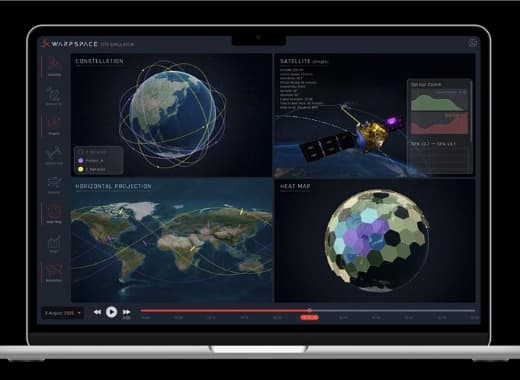
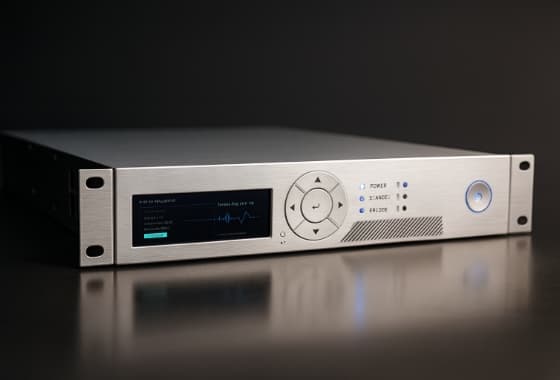
To realize the industrialization of the space industry as a manufacturing field related to optical communications, it is essential to bring together not only industrial knowledge, but also the integrated body of multidisciplinary knowledge and technologies spanning science, engineering, and management. When startup companies seek to apply their technologies to business, broader and more cross-disciplinary knowledge is required beyond the conventional style of simply deepening expertise within a single field and developing products. Therefore, we have very high expectations for the researchers and engineers who will emerge from the Graduate School of Frontier Exploration in Earth and Space after undergoing education centered on the acquisition of integrated knowledge across science, engineering, and management.
Hardware product development (optics, electronics, mechanics, space environments, etc.)
Software product development (analytical software, emulators, etc.)
Business development
Our goal of advancing industry lies beyond the boundaries of individual fields. We believe that practical learning which systematizes specialized knowledge while also incorporating cross-disciplinary understanding will make it possible to cultivate talent who closely align with the industry.
Knowledge related to optics in both outer space and atmospheric environments can be applied in positions such as software engineers building simulation models for satellite-to-ground and inter-satellite communications, as well as hardware and software engineers involved in the development of optical communication terminals. Meanwhile, knowledge related to electrical and electronic engineering can be utilized by software engineers working on hardware and firmware such as signal processing for communications.
In the optical communications field, people working in mechanics, optical systems, and control systems, as well as the software that controls those systems, must collaborate across disciplinary boundaries to build complete systems, making comprehensive knowledge that includes operations essential. Today, AI can efficiently handle tasks such as information gathering, so anyone can collect and utilize knowledge. Going forward, what will matter is focusing on what industries are actually seeking and then working backward from those objectives to determine what must be understood and learned in a systematic manner. Even engineers are expected to decide on research topics based on a holistic view of whether their research can ultimately contribute to the industry. We believe that people who study specialized fields such as engineering and business with this kind of purpose-driven mindset will be able to thrive.
In addition, fields such as space and cybersecurity transcend national boundaries and operate at the cutting edge, making international relationships essential. As a result, it is necessary not only to possess technical expertise, but also to communicate and negotiate in English on international partnerships and legal matters. We believe that combining expertise in science and engineering with knowledge in fields such as law and international relations will further expand the range of opportunities available to students.
Related Links
Other company expectations
- ispace
- Axelspace Corporation
- OYO Corporation
- KDDI CORPORATION
- Kohoku Kogyo Co., Ltd.
- Samco Inc.
- Sanyo Chemical Industries, Ltd.
- SkymatiX, Inc.
- Space BD Inc.
- Systems Engineering Consultants Co.,LTD.
- Takenaka Corporation
- Toray Carbon Magic Co., Ltd.
- Panasonic Operational Excellence Co., Ltd.
- HORIBA, Ltd.
- Mitsubishi Chemical Corporation
- Mitsubishi Research Institute, Inc.
- Mitsubishi Electric Corporation
- Japan Manned Space Systems Corporation
- RIKEN / Rans View Corporation
- Warpspace Inc.